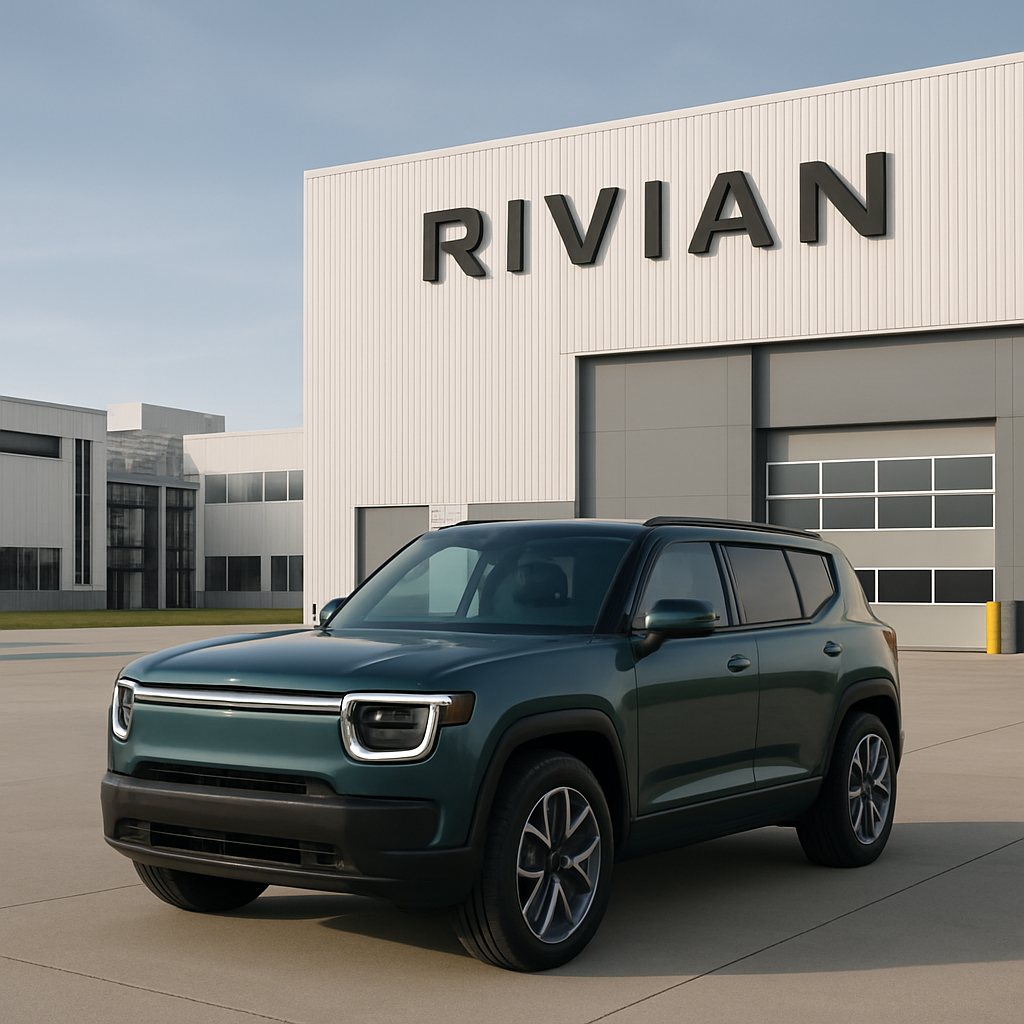
Electric vehicle manufacturer Rivian has announced a workforce reduction affecting less than 2% of its employees, just a week after commencing deliveries of its highly anticipated R2 SUV. The company stated that this restructuring aims to enhance operational efficiency as it scales its business.
The layoffs primarily impact Rivian’s service and customer teams, including sales and marketing departments. This marks at least the fourth round of staff reductions since early 2024, reflecting the company’s ongoing efforts to streamline operations amid financial challenges.
Rivian had initially projected achieving profitability by 2027. However, in March, the company revised this timeline, citing substantial investments in autonomous vehicle technology development. This delay was disclosed alongside news of a potential investment from Uber, which plans to invest up to $1.25 billion in Rivian and purchase as many as 50,000 R2 SUVs for use as robotaxis. Despite these developments, Rivian has yet to demonstrate fully autonomous capabilities, currently offering only a hands-off, eyes-on-the-road feature.
The R2 SUV is a pivotal product for Rivian, aiming to capture a broader market segment with its more affordable pricing compared to the company’s earlier models. The base model of the R2 is priced at approximately $58,000, with plans to introduce versions under $50,000 by 2027. This strategic move is intended to make Rivian’s vehicles more accessible to a wider range of consumers.
In April, Rivian faced production challenges when an EF-1 tornado damaged part of its manufacturing facility in Normal, Illinois. Despite this setback, the company managed to roll the first customer-ready R2 SUVs off the production line shortly after the incident, demonstrating resilience in its operations.
Rivian’s recent workforce reduction underscores the company’s commitment to optimizing its operations as it navigates the competitive electric vehicle market. While the R2 SUV’s launch represents a significant milestone, the layoffs highlight the financial pressures Rivian faces in its pursuit of profitability and technological advancement. The company’s ability to balance cost-cutting measures with innovation and market expansion will be crucial in determining its long-term success in the evolving EV landscape.