Apple’s CarPlay has been a staple in the automotive industry for over a decade, offering iPhone users seamless integration with their vehicle’s infotainment systems. Despite widespread adoption, Tesla has notably abstained from incorporating CarPlay into its vehicles, opting instead for its proprietary software. However, recent developments suggest a potential shift in this stance.
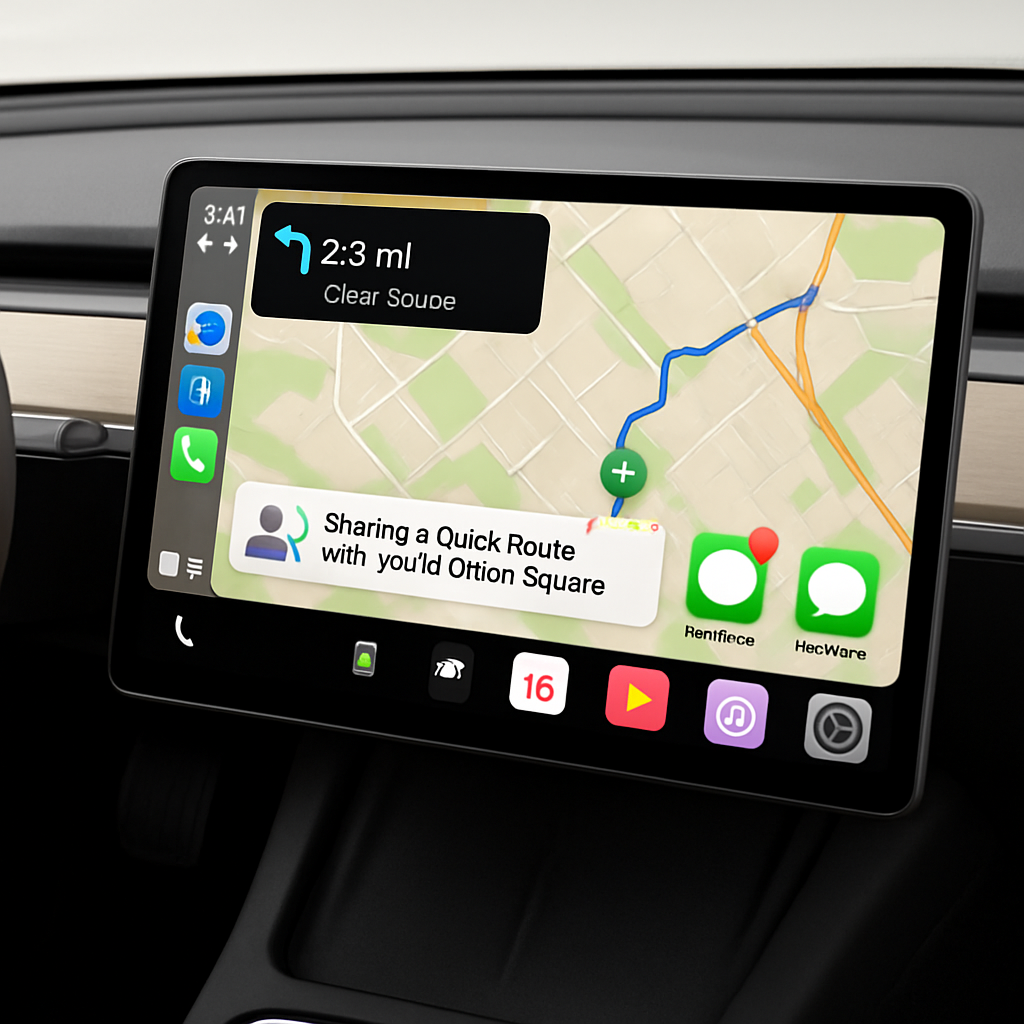
During the Worldwide Developers Conference (WWDC) 2026, Apple introduced a new CarPlay feature called route sharing. This functionality allows navigation apps to share routing data directly with the vehicle’s system. Such integration is particularly beneficial for electric vehicles (EVs) like Tesla, where efficient route planning must account for charging stops and battery levels.
Historically, Tesla has maintained a closed ecosystem, preferring to develop and control its in-house software solutions. This approach has led to the exclusion of third-party platforms like CarPlay and Android Auto. However, reports from late 2025 indicated that Tesla was internally testing a limited version of wireless CarPlay, which would operate within a window of Tesla’s existing interface rather than taking over the entire screen. This version would provide access to Apple apps such as Maps, Music, and Messages without integrating with vehicle controls like climate settings.
The introduction of route sharing in iOS 26.4, released in March 2026, addresses a significant technical hurdle that previously complicated CarPlay integration in Tesla vehicles. By enabling synchronization between Apple Maps and Tesla’s native navigation system, this feature mitigates potential conflicts that could arise when both systems are active simultaneously. Such conflicts were reportedly a primary reason for delaying CarPlay support in Tesla vehicles, as they could lead to a confusing user experience.
In addition to route sharing, CarPlay has expanded its capabilities to include support for voice-based chatbot applications. For instance, SpaceXAI’s Grok Voice mode became available on CarPlay in May 2026, allowing users to interact with the chatbot hands-free directly from their vehicle’s dashboard. This development indicates a broader trend of enhancing CarPlay’s functionality to meet the evolving needs of drivers.
While Tesla has yet to officially announce CarPlay support, the alignment of Apple’s recent CarPlay enhancements with Tesla’s requirements suggests that integration may be on the horizon. For Tesla owners eager to use CarPlay, third-party solutions remain the only current option. However, the introduction of features like route sharing and voice-based applications could serve as the missing links that facilitate native CarPlay support in Tesla vehicles.
As the automotive industry continues to evolve, the integration of third-party platforms like CarPlay into proprietary systems like Tesla’s represents a significant step toward a more interconnected and user-friendly driving experience. The potential collaboration between Apple and Tesla could set a precedent for future partnerships between tech companies and automakers, ultimately benefiting consumers through enhanced functionality and choice.