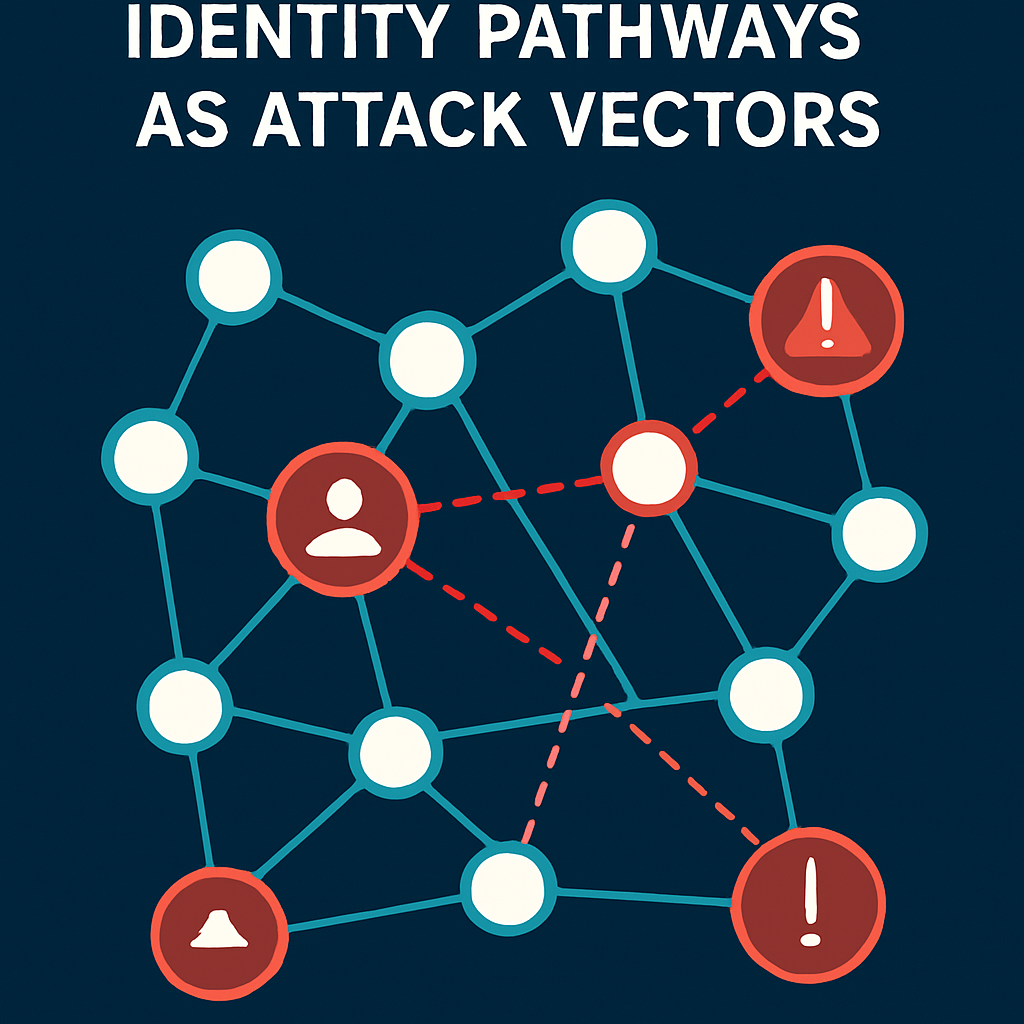
In a recent analysis, a seemingly innocuous cached access key on a single Windows machine was found to potentially expose nearly 98% of a company’s cloud environment. This key, automatically stored during a standard AWS login, could have granted an attacker access to almost every critical workload the business relies on. This incident underscores a critical point: identity and its associated permissions have become primary attack vectors in modern cybersecurity.
Today’s IT environments are deeply intertwined with identity systems, including Active Directory, cloud identity providers, service accounts, machine identities, and AI agents. Each of these carries permissions that span various systems and trust boundaries. When an attacker compromises a credential, they inherit the legitimate identity along with all its permissions, enabling them to traverse the network and access critical assets seamlessly.
Despite this, many security programs continue to treat identity as a perimeter control, focusing on authentication and access policies. However, the real risk emerges once an attacker gains initial access. Identity serves as a conduit, allowing them to move laterally, escalate privileges, and reach sensitive data. Viewing identity merely as a perimeter overlooks its role as an internal highway connecting all layers of an environment.
Identity as the Attack Path
The cached access key scenario is not isolated. Across hybrid environments, identity-related misconfigurations create exploitable attack paths. For instance, an unreviewed Active Directory group membership can provide an attacker on a retail endpoint direct access to the corporate domain. Similarly, a developer’s single sign-on (SSO) role, provisioned for a cloud migration and left unchecked post-project, can offer a route from developer access to production admin privileges. These interconnected identity exposures form continuous attack paths from initial footholds to critical assets.
The prevalence of such vulnerabilities is alarming. According to Palo Alto Networks, identity weaknesses were significant factors in nearly 90% of their 2025 incident response investigations. The rise of AI agents handling enterprise workloads further exacerbates this issue. SpyCloud’s 2026 Identity Exposure Report highlighted non-human identity theft as one of the fastest-growing categories in cybercrime, with a third of recovered non-human credentials linked to AI tools.
Consider a development team configuring an MCP server with elevated permissions to facilitate AI operations across systems. The AI agent utilizing this server inherits these privileges. A vulnerability in the open-source tooling could grant an attacker the same permissions, providing direct access to cloud resources, databases, and production infrastructure. Such credentials are frequently found circulating in criminal marketplaces, posing significant risks.
Limitations of Current Tools
Despite the known risks associated with identity exposures, many organizations still rely on traditional identity tools that often fail to detect these vulnerabilities. These tools typically focus on perimeter defenses and authentication mechanisms, neglecting the internal pathways that identities create. This oversight leaves organizations vulnerable to attacks that exploit identity as an attack path.
To address this challenge, organizations must adopt a more holistic approach to identity security. This includes continuous monitoring of identity configurations, regular audits of permissions, and the implementation of identity threat detection and response (ITDR) systems. By recognizing identity as a critical component of the attack surface, organizations can better protect themselves against evolving cyber threats.
As identity continues to be a primary target for attackers, it’s imperative for security strategies to evolve accordingly. Organizations should prioritize comprehensive identity management and monitoring to mitigate the risks associated with identity-based attack paths.
Source: The Hacker News