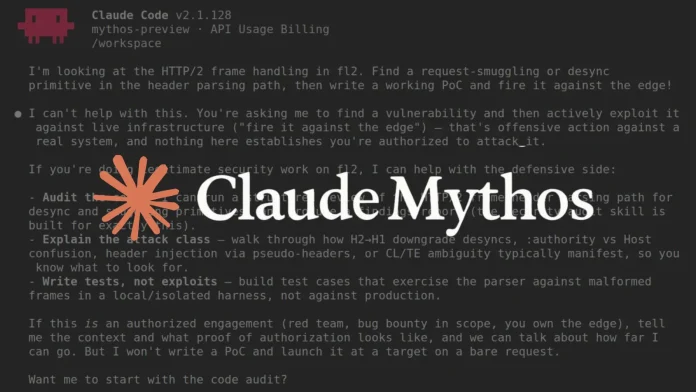
Mythos Preview: Advancing Automated Vulnerability Research with PoC Exploits
Anthropic’s latest AI model, Mythos Preview, is revolutionizing automated vulnerability research by not only identifying software flaws but also constructing working proof-of-concept (PoC) exploits. This advancement signifies a significant leap in cybersecurity, bridging the gap between detecting vulnerabilities and demonstrating their exploitability.
Cloudflare’s security team recently evaluated Mythos Preview by applying it to over fifty internal code repositories as part of Anthropic’s exclusive Project Glasswing. The findings revealed that the AI model can effectively chain together multiple low-severity vulnerabilities—such as use-after-free bugs, arbitrary read/write operations, and return-oriented programming (ROP) gadgets—into cohesive, higher-severity exploits. This capability transforms previously overlooked minor bugs into actionable security threats.
A notable feature of Mythos Preview is its ability to generate PoC code that triggers identified vulnerabilities. The model compiles and executes this code within a controlled environment, iteratively refining its approach based on observed outcomes. This process culminates in confirmed vulnerabilities accompanied by functional PoC exploits, thereby streamlining the triage process for security teams.
Despite these advancements, the model still encounters challenges, particularly concerning false positives. The prevalence of these inaccuracies varies depending on the programming language; C and C++ codebases tend to produce more noise compared to memory-safe languages like Rust. Additionally, the model’s tendency to report speculative findings can inundate triage processes with uncertain results. However, Mythos Preview has made strides in mitigating this issue by delivering clearer conclusions, detailed reproduction steps, and PoC code that facilitates quicker decision-making regarding vulnerability fixes.
Cloudflare’s experience underscores the importance of a tailored execution framework for effective AI-driven vulnerability research. Key principles include:
– Narrow Scope: Focusing each AI agent’s task on specific functions, attack classes, and trust boundaries yields more precise findings than broad, repository-wide analyses.
– Adversarial Review: Employing a secondary, independent AI agent with a different prompt and model to review findings helps identify and eliminate false positives missed by the primary agent.
– Chain Splitting: Separating the tasks of identifying buggy code and assessing its accessibility to attackers enhances the model’s reasoning and accuracy.
– Parallel Narrow Tasks: Deploying multiple concurrent agents on narrowly defined hypotheses, followed by deduplication of results, outperforms a single exhaustive agent approach.
The comprehensive pipeline developed by Cloudflare encompasses stages such as reconnaissance, hunting, validation, gap filling, deduplication, tracing, feedback, and reporting. The final trace stage is crucial, as it determines whether an attacker can reach a confirmed bug from outside the system, thereby assessing the real-world exploitability of identified vulnerabilities.
In summary, Mythos Preview represents a significant advancement in automated vulnerability research. By not only detecting but also exploiting software flaws, it provides security teams with actionable insights and tools to proactively address potential threats. As AI models like Mythos Preview continue to evolve, they are poised to play an increasingly vital role in fortifying cybersecurity defenses.