NASA’s Artemis II Crew Captures Stunning Lunar Journey with iPhone 17 Pro Max
In a groundbreaking fusion of cutting-edge technology and space exploration, NASA’s Artemis II mission has unveiled a series of breathtaking images captured by astronauts using the iPhone 17 Pro Max during their historic lunar flyby. This marks a significant milestone, as it’s the first time consumer-grade smartphones have been officially sanctioned for use in documenting space missions.
A New Era in Space Documentation
Traditionally, space missions have relied on specialized, rigorously tested equipment to capture images and videos. However, the Artemis II mission signifies a paradigm shift. Months prior to the launch, NASA granted approval for the crew to carry iPhones, allowing them to document their journey around the Moon with devices familiar to millions on Earth. This decision underscores the remarkable advancements in smartphone technology, particularly in imaging capabilities, and reflects a growing confidence in their reliability even in the harsh environment of space.
The Journey to Approval
Integrating consumer devices into space missions is no trivial task. The iPhone 17 Pro Max underwent a comprehensive evaluation process to ensure its safety and functionality aboard the Orion spacecraft. This rigorous assessment included:
1. Safety Panel Review: Initial checks to assess the hardware’s overall safety for space travel.
2. Hazard Identification: Examination for potential risks, such as the presence of glass components that could shatter.
3. Mitigation Strategies: Development of plans to address identified hazards, ensuring they wouldn’t compromise the mission or crew safety.
4. Validation: Testing the effectiveness of the mitigation strategies to confirm the device’s readiness for space conditions.
This meticulous process highlights NASA’s commitment to crew safety and mission success, even when incorporating everyday technology into their operations.
Capturing the Cosmos
The images released by NASA offer a unique perspective of the lunar mission. Among the highlights are:
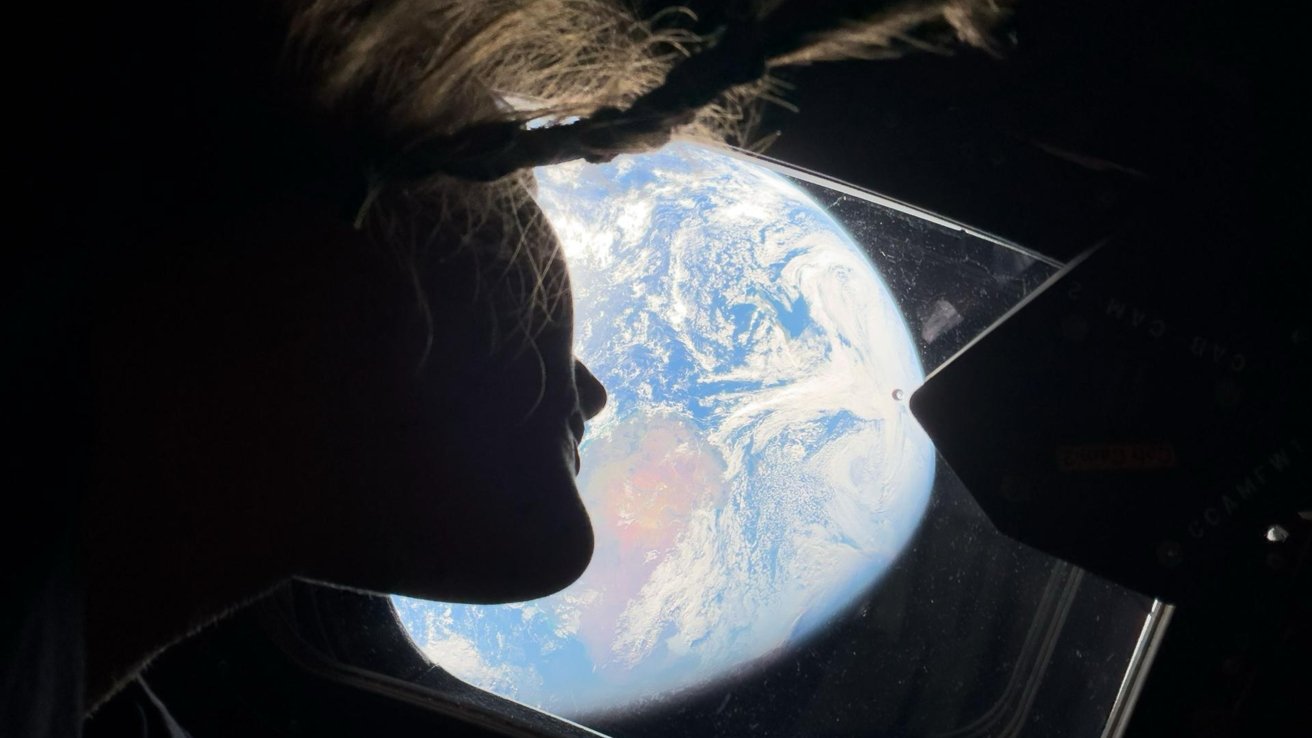
– Earth from Afar: Stunning shots of our planet as seen from the Moon’s orbit, showcasing the delicate beauty of Earth against the vastness of space.
– Crew in Action: Candid photos of astronauts inside the Orion spacecraft, providing an intimate glimpse into life aboard during the mission.
– Lunar Landscapes: Detailed images of the Moon’s surface, capturing its craters and terrain with remarkable clarity.
These photographs not only serve as scientific documentation but also as a source of inspiration, bridging the gap between space exploration and the public by using a device many hold in their hands daily.
Technical Considerations
While the iPhone 17 Pro Max boasts impressive imaging capabilities, its use in space required certain limitations:
– Connectivity Restrictions: To prevent interference with spacecraft systems, the iPhones were restricted from connecting via Wi-Fi or Bluetooth and had no access to the internet during the mission.
– Mounting Solutions: In the microgravity environment, the devices were secured using Velcro to prevent them from floating freely and potentially causing harm or disruption.
– Operational Constraints: The smartphones were designated solely for capturing photos and videos, ensuring they didn’t interfere with critical mission operations.
These measures ensured that the integration of consumer technology did not compromise the mission’s integrity or safety.
A Glimpse into the Future
The successful use of iPhones in the Artemis II mission opens the door for broader incorporation of consumer technology in space exploration. It demonstrates that devices designed for everyday use on Earth can be adapted for the rigors of space travel, provided they undergo thorough testing and are used within defined parameters.
This development also reflects a shift towards making space exploration more relatable and accessible to the public. By using familiar technology to capture and share their experiences, astronauts can foster a deeper connection between their missions and people on Earth.
Conclusion
NASA’s decision to equip the Artemis II crew with iPhone 17 Pro Max devices for documenting their lunar journey represents a significant step in the convergence of consumer technology and space exploration. The stunning images captured serve as a testament to the advancements in smartphone capabilities and offer a unique, personal perspective of space travel. As technology continues to evolve, we can anticipate even greater integration of everyday devices into the extraordinary realm of space exploration.