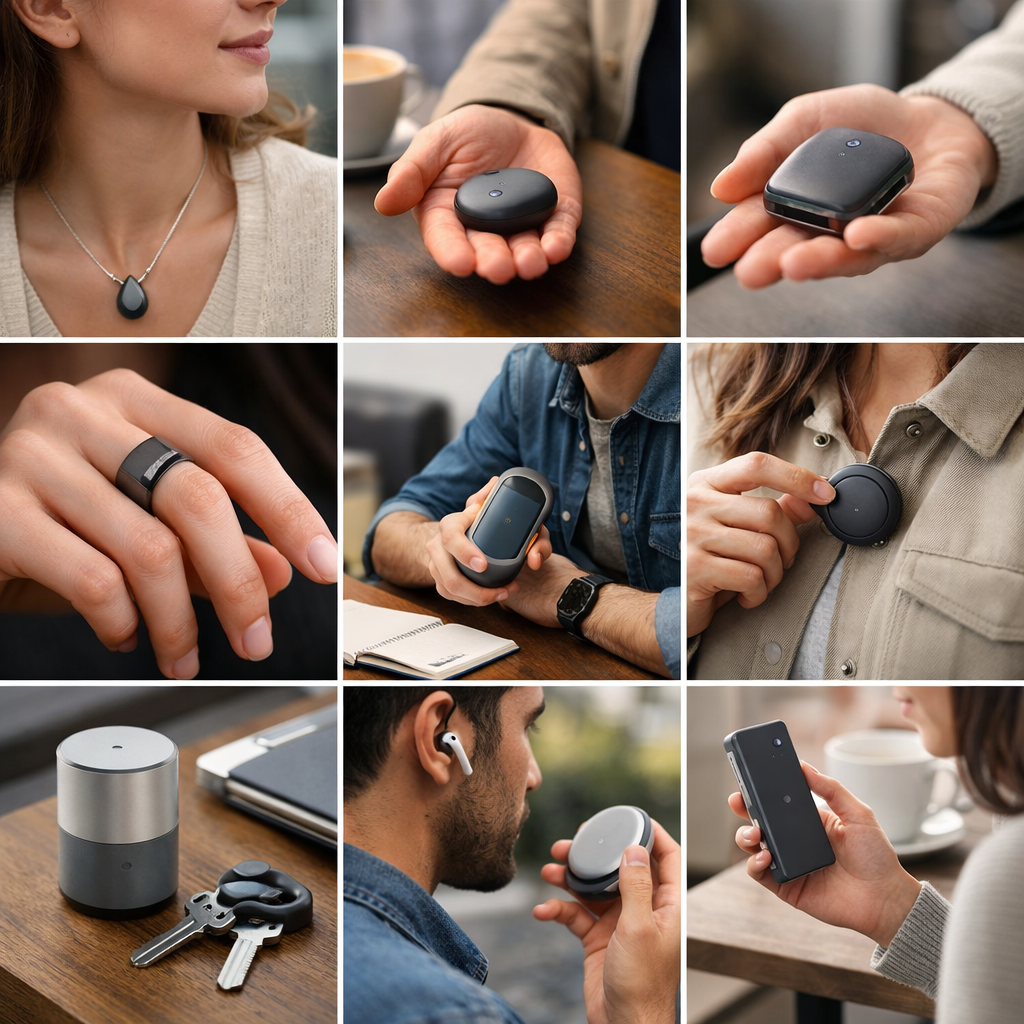
AI has moved out of the lab and onto your body. We’re seeing a wave of wearables—pendants, rings, handhelds—designed to blend into daily life while offering continuous support through voice, emotion recognition, note-taking, and more. We rounded up eight of the most interesting AI wearables and gadgets redefining productivity, wellness, and companionship.
Standout Devices to Watch
Bee: This $49.99 pendant clips to your clothing (or wristband-style) and records audio to learn your routines, preferences, and speech habits. You can mute it if privacy is needed. There’s a companion iOS app (subscription-based at $19/month) that lets you talk to Bee, see summaries of your day, and scan transcripts. Earlier this month, Amazon rolled out refreshed versions of Bee—the Frontier and the Eclipse—priced at $74.99 and $99.99. The Frontier can be worn or clipped; the Eclipse is credit-card-sized and attaches to the back of your phone.
Friend: Designed as an emotional support device, Friend is a $129 pendant worn around the neck. It detects tone and mood and can proactively send messages tailored to your emotional state. A recent upgrade—Friend 2.0—adds a built-in speaker so it can speak with a more distinctive voice. The company has also weathered criticism over its subway ad campaign, which raised privacy questions.
Limitless: Earlier known as Rewind, this pendant (around $99) scans and transcribes conversations, calls, and meetings to build a searchable archive and highlight important moments. The included plan gives you 10 hours of voice features per month; unlimited access costs $29/month.
Muse Charm: Meta’s first answer to AI wearables, Muse Charm hasn’t shipped yet but introduces “Jolly,” a digital avatar visible on a tiny screen that users can interact with via voice. It’s pocket-sized or keychain-sized, designed to bring AI assistance anywhere.
Nirva: Made by ex-Meta Reality Labs team members, Nirva focuses less on productivity and more on personal growth. Clip or wear it as a pendant, let it listen to your speech, and use the companion app to journal daily experiences. Early orders open in November, shipping to early users at year’s end. Price: $249.
Omi: For $89, Omi listens, answers, summarizes conversations, suggests tasks, and offers advice—thanks to ChatGPT-powered processing. Wear it like a necklace or attach it to the side of your head (with medical tape) so it knows when you’re speaking to it.
Plaud’s NotePin: Aimed at professionals, NotePin ($159) shines in transcription and summarization. Wear it on your wrist or attach it magnetically. Offers 300 free transcription minutes monthly; upgrade to get 1,200. Plaud is also introducing the ultra-thin Note Pro, now available for preorder at $179.
Rabbit R1: Retro-inspired and phone-adjacent, Rabbit R1 ($199) has had a rough launch but bounced back. It now supports new AI features including “Creations,” which lets users build custom tools and games. The touch-screen device also performs basic app functions so you’ll spend less time pulling out your phone.
What These Devices Signal
Beyond the specs, this category tells a bigger story: people are craving AI tools sewn into everyday life, not strapped onto wrists or shut behind screens. These gadgets take different angles—emotion, productivity, wellness—but what unites them is always-on listening, personalized learning, and proactive assistance. Still, there are trade-offs. Continuous audio capture brings privacy concerns. Monthly subscription tiers are common. Design and wearability matter: pendants, rings, or tapes on skin flatten the barrier between human and machine.
What to watch next: how privacy safeguards evolve, how social acceptability shifts (especially for wearables that listen), and what new AI services might emerge once these devices are in many hands. The potential is big—if people can trust what’s listening, remembering, and speaking back.