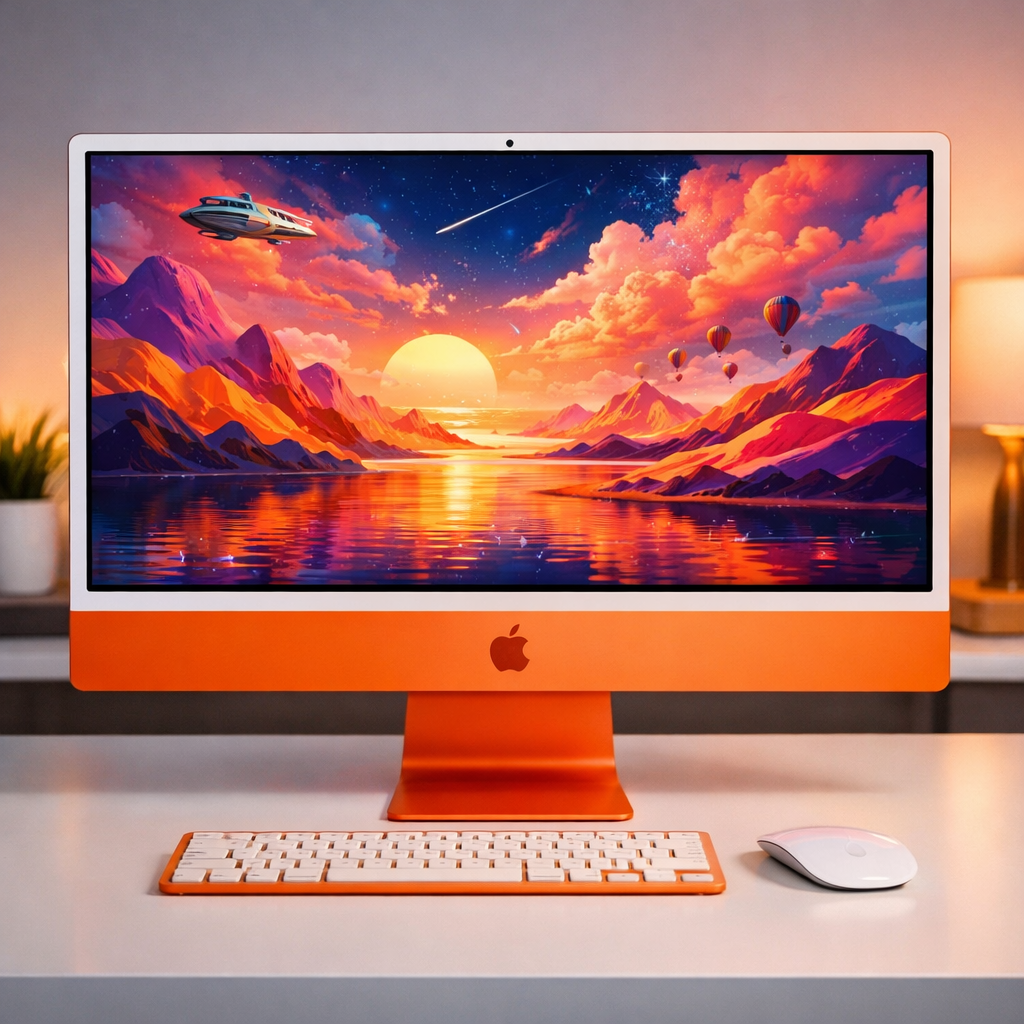
The redesigned 24-inch iMac is back — same sleek aluminum shell, same vibrant colors — but underneath its familiar exterior, the new M6 chip introduces a serious step forward, especially for those craving better on-device AI performance. For users who already own a recent iMac, it’s a modest update. But for anyone with pre-M4 gear, or moving up from Intel, there’s a lot to like here.
What’s new inside
Apple has kept the signature 4.5K Retina display (24-inch) and the seven bold color options intact. The stand still lacks height or tilt adjustments, and ports remain clustered at the rear, preserving the clean, all-in-one aesthetic—at the cost of reachability. Users who want larger screens will still need to plug in an external display; no larger iMac size appeared this cycle.
The real change is the introduction of the M6 system-on-chip, offered in two configurations. The base model features a 10-core CPU and 10-core GPU; the higher-end version moves up to 12 cores on both. Both come equipped with a new dual 16-core Neural Engine, which powers the enhanced on-device AI claims. Integrated Neural Accelerators on the GPU cores further assist these workloads.
Memory starts at a healthier 16 GB, rising to 24 GB in the base chip, and 32 GB in the upgraded model. Though better than before, the 32 GB ceiling still feels low for power users focused on AI workflows. Connectivity has been modernized: Wi-Fi 7, Bluetooth 6, and up to four Thunderbolt 4 ports are offered, replacing older wireless standards. Thunderbolt 5 remains a premium-Mac feature and is not included here.
Performance gains & pricing
Apple claims the new chip delivers up to 2× improvement in graphics tasks like photo editing, up to 5× faster on-device AI processing, and modest speed increases for everyday tools like Excel. Solid-state storage is also rated at up to double the read/write performance compared to previous generations.
Benchmarking confirms meaningful gains. Single-core Geekbench 7 scores for the M6 hover around 3,900—well ahead of M4’s 3,000 level. Multi-core scores jump from roughly 15,000 (M4) to 18,000 on the base 10-core M6, while the 12-core model tops 20,000. Metal graphics performance nearly doubles, with the new models scoring between 81,000 and 87,000.
Pricing begins at $1,499 for the base 10-core model. The upgraded 12-core version is offered at $1,699 and includes features such as two additional Thunderbolt ports, support for dual external displays, built-in Touch ID, option for nano-texture glass, and standard 2.5-gigabit Ethernet (while the base model offers that upgrade separately at modest cost). Several retailers are already offering discounts—up to $180 off in some cases.
What works—and what doesn’t
There are clear strengths: the display remains among the best for home, office, or creative use; the design is classic for Apple; and the added AI hardware makes newer AI tools more usable locally. For users upgrading from M1 or Intel machines, the leap feels substantial.
But there are trade-offs. The base model is stripped back in ways that may matter: fewer ports, lower GPU cores, no nano-texture glass or built-in Touch ID. For demanding AI workflows or power users, this iMac is already maxed out. Plus, the limited memory ceiling and lack of Thunderbolt 5 or movable stand will frustrate certain professionals.
Rating it overall, this iMac lands a solid 4 out of 5. It’s improved, and in many everyday and light creative scenarios, noticeable. Yet it’s far from revolutionary. It sits comfortably as a home/education machine—or a colorful centerpiece for a tidy desk—while heavier use or AI-intensive tasks will push buyers toward Mac Studio or higher-end Mac minis.
In short: if you care about looks and color and want reliable performance for screens, photos, web, and mild AI tasks, the M6 iMac delivers value. If you need serious power or adjustability, the compromises matter.
Analysis: The M6 version of the 24-inch iMac demonstrates Apple’s strategy: steady, meaningful internal upgrades without shaking up its signature design. The bigger Neural Engine and updated internals reflect the growing weight of on-device AI, even in mainstream consumer hardware. Price points and performance suggest Apple is working hard to buttress entry-level offerings without cannibalizing its higher-tier machines. Going forward, key watchpoints will be when displays evolve (larger, movable stands), when memory ceilings rise, and when features like Thunderbolt 5 trickle down. For many buyers, the M6 iMac may hit the sweet spot today—but whether it holds up depends on how fast AI workloads creep into daily use.