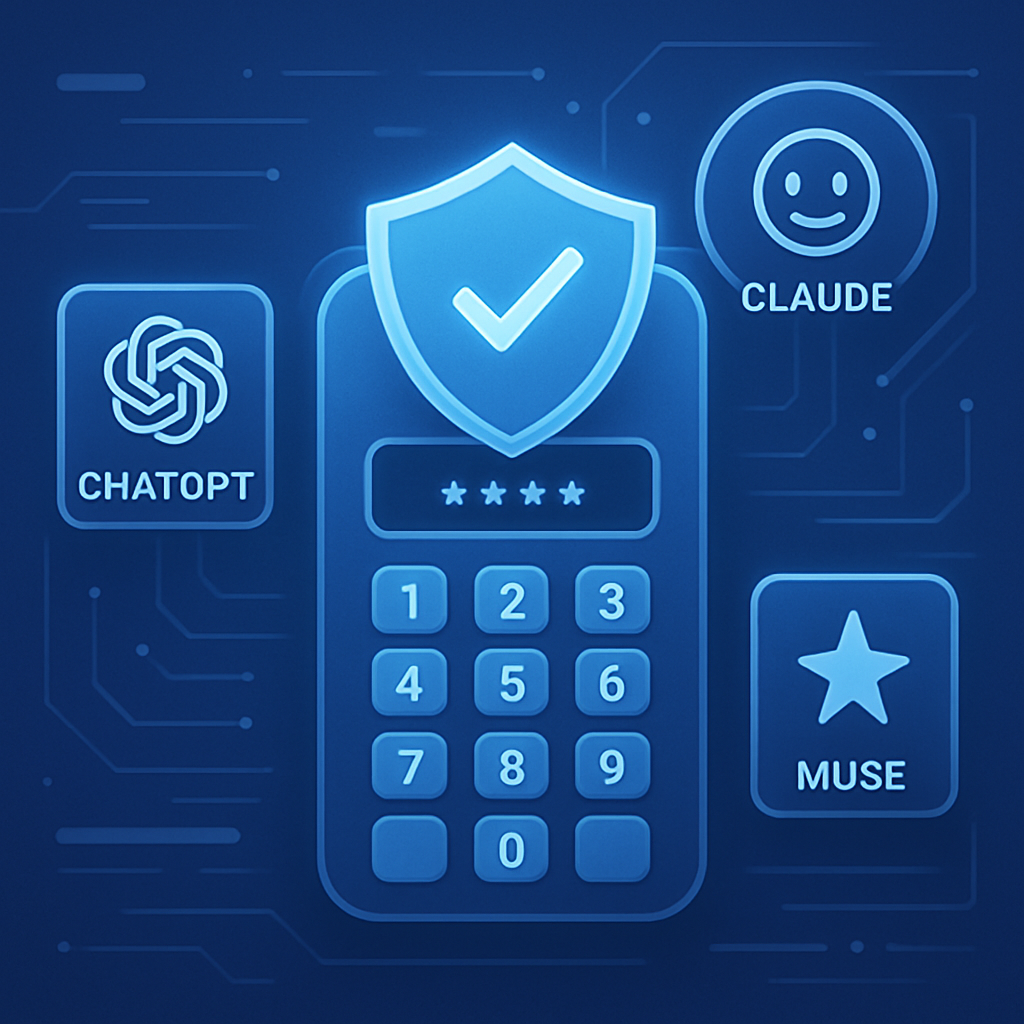
1Password has introduced a new feature that lets users delegate login actions to AI agents—like ChatGPT Work, Claude Duet, Muse, Grok, or Dots—without ever handing over their actual passwords. This platform, called 1Password for Agents, allows the agent to log in to a user’s account by using a secure digital key system instead of password sharing. Users receive a notification whenever an agent attempts to log in, and must explicitly approve each request. Once approved, 1Password handles the login and fills in credentials on behalf of the agent.
How It Works: Delegated Access Without Credentials
When an AI agent initiates a login, it is first identified through a unique digital key that 1Password verifies. The user then gets alerted to the attempted access and must confirm manually. Only after this confirmation is the login executed, with 1Password supplying the credentials directly to the agent. In this process, the agent never sees, stores, or learns the user’s password or other sensitive data.
Agents Supported & Broader Implications
The new service supports a range of agents out of the box—OpenAI’s Dots & ChatGPT Work, Anthropic’s Claude Duet, Meta’s Muse, Grok, and the agents built by Town. 1Password has indicated plans to collaborate with more parties to expand agent compatibility. Users retain full control over which agents are permitted and when.
This launch coincides with mounting concerns over “agentic activity”—AI systems acting on behalf of users—in settings like banking. Some banks are detecting behavior from agents within customer accounts but cannot always distinguish between authorized agent actions and suspicious activity. Financial institutions have expressed alarm at the risk, noting the potential exposure when users simply hand over credentials to agents or services outside their control.
1Password emphasizes that people often take shortcuts by giving AI agents full access to passwords for convenience, but that practice can leave sensitive information vulnerable. By contrast, 1Password for Agents aims to let people delegate tasks securely: agents perform actions, but users keep what really matters—the secrets.
What this means going forward: As AI agents become more common in personal and professional workflows, preventing credential leakage is a major concern. 1Password’s system tackles this directly, introducing a layer of control over agent interactions. For organizations and individuals considering AI-assisted workflows—especially in sensitive areas like finance, healthcare, and enterprise—this could set a new standard for safe delegation. Key things to watch: how resilient the system is against impersonation attacks, the speed and UX of agent approvals, and adoption outside early partners. This could be a turning point in making AI agents trustworthy collaborators without compromising security.