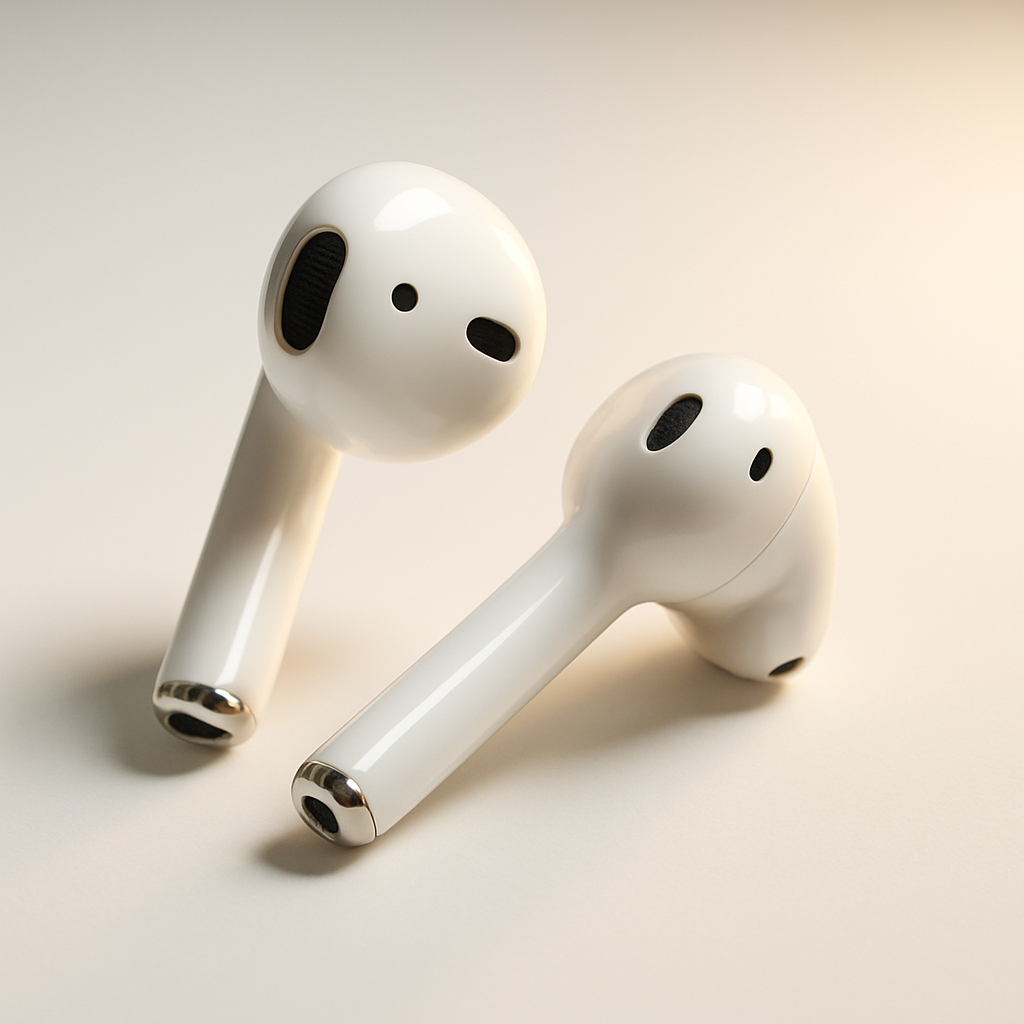
Ten years ago, Apple introduced the first AirPods—its wireless earbuds now considered game changers in audio and design. Officially unveiled on September 7, 2016, they didn’t begin shipping until December that same year. With this milestone, the original AirPods have not only aged gracefully—they’ve cast a long shadow over the audio industry.
At their launch, the AirPods helped fill a sudden gap left when Apple removed the 3.5mm headphone jack from the iPhone 7 and 7 Plus. With physical ports gone, the company leaned into wireless tech to keep its audio offerings competitive. Alongside AirPods, Apple still sells wired EarPods—available with Lightning or USB-C connectors and featuring the traditional 3.5mm jack—for customers who prefer cables or have legacy devices.
Early Innovation, Big Impact
The original AirPods revolutionized expectations for wireless audio in several ways. Among their earliest standout features were auto-pairing with Apple devices, touch controls, and robust integration into Apple’s broader ecosystem. Even in their first iteration, they proved that true wireless earbuds could leave behind cords without sacrificing ease of use or sound quality.
Over the past decade, Apple has steadily updated the AirPods line. Later models introduced active noise cancellation, spatial audio, improved battery life, water resistance, better microphones, and more compact charging cases. Each refresh sharpened the user experience—especially for those using multiple Apple devices. While AirPods were rarely the absolute leaders in every technical metric, their balance of features and ecosystem integration kept them ahead in popular opinion. (Note: the specific specs of each model aren’t covered here.)
Why This Anniversary Matters
Here in 2026, AirPods are more than just accessories—they’re part of Apple’s identity. They represent how Apple bets on convenience, design, and ecosystem synergy. Their success helped normalize wireless earbuds across brands, pushing audio companies to prioritize seamless connectivity and design polish as much as spec sheets.
This anniversary comes at a moment of new launches in Apple’s lineup. Rumors suggest AirPods 5 are set to debut alongside the next generation of iPhones and Apple Watches. Improvements may include further enhancements to noise cancellation, spatial audio tweaks, possibly even new form factors or sensor upgrades. Apple is clearly keeping the pressure on competitors in a space that’s now crowded.
Over ten years, AirPods have transformed from a bold gamble into a foundational product. They shifted consumer expectations, carved out a dominant market position, and led Apple to push the boundaries of what earbuds can do.
Analysis:The AirPods’ 10-year journey is a reminder that incremental improvement often wins over flash. Their rise shows the power of marrying hardware quality to software and services—and why ecosystem lock-in, once derided, can become a core strength. Going forward, what matters isn’t just what AirPods can do next, but how Apple keeps feeling essential for users. In the next decade, breaking away from commodity earbuds will demand even bolder innovation—or risk losing ground to rivals who offer strong features at lower cost.