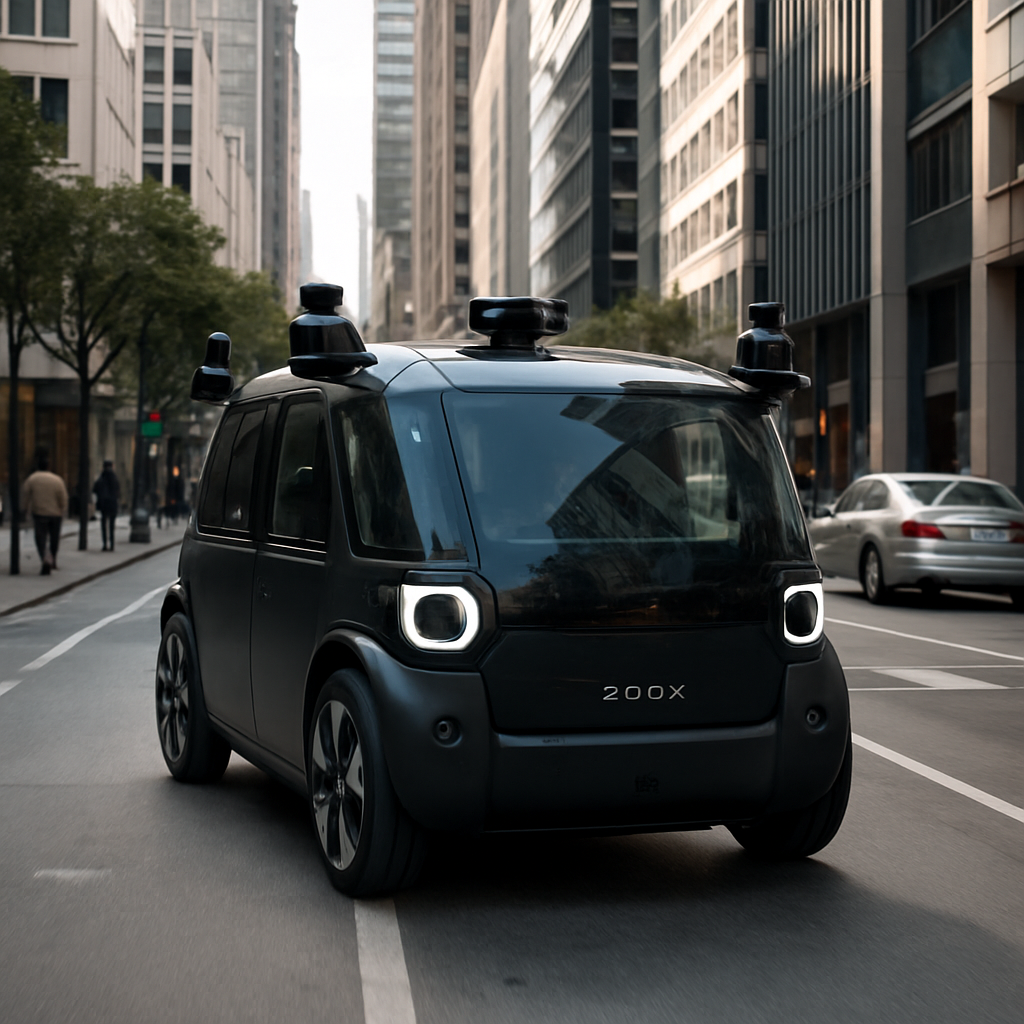
Amazon-owned autonomous vehicle company Zoox has received a temporary exemption from the National Highway Traffic Safety Administration (NHTSA), allowing it to charge customers for rides in its custom-built robotaxis. This exemption marks a significant milestone, enabling Zoox to transition from offering free rides to launching a commercial robotaxi service.
Zoox’s vehicles are uniquely designed without traditional controls such as steering wheels or pedals, which do not comply with certain federal motor vehicle safety standards. The NHTSA’s exemption covers eight specific standards, including those related to windshield defrosting and light vehicle braking systems. This decision follows a previous exemption granted nearly a year ago that permitted Zoox to demonstrate its robotaxis on public roads and offer free rides in cities like San Francisco and Las Vegas.
The current exemption imposes specific conditions: Zoox is limited to deploying up to 2,500 vehicles annually for two years and will be subject to an adaptable oversight structure that evolves with the company’s technological advancements. A Zoox spokesperson indicated that the company plans to begin charging for its service in Las Vegas, with additional markets to follow as state-level requirements are met. In California, Zoox still needs to obtain driverless deployment permits from the state Public Utilities Commission and the Department of Motor Vehicles before commencing commercial operations.
Zoox CEO Aicha Evans emphasized the significance of this development, stating that the exemption enables the company to take another step toward bringing autonomous ride-hailing to more communities.
In conjunction with Zoox’s exemption, the NHTSA announced updates to the exemption process, allowing automakers to temporarily sell a limited number of non-compliant vehicles to test new technologies. Additionally, the agency is partnering with SAE Industry Technologies Consortia to fund a three-year, $5 million project aimed at gathering data and accelerating the creation of autonomous vehicle performance standards. The goal is to establish a unified national standard for autonomous vehicle safety.
NHTSA Administrator Jonathan Morrison highlighted the agency’s commitment to supporting the safe development and deployment of automated vehicles. He noted that by removing unnecessary barriers to innovation, developing industry guidance, and providing strong enforcement oversight, the NHTSA aims to ensure that the United States continues to lead in autonomous vehicle technology in a safe and responsible manner.
Zoox’s approval to launch a paid robotaxi service signifies a pivotal moment in the autonomous vehicle industry. As the company moves forward with commercial operations, it will be essential to monitor how it navigates state-level regulatory landscapes and addresses safety concerns. This development also underscores the broader trend of increasing regulatory support for autonomous vehicle deployment, potentially accelerating the adoption of driverless technologies in urban transportation systems.