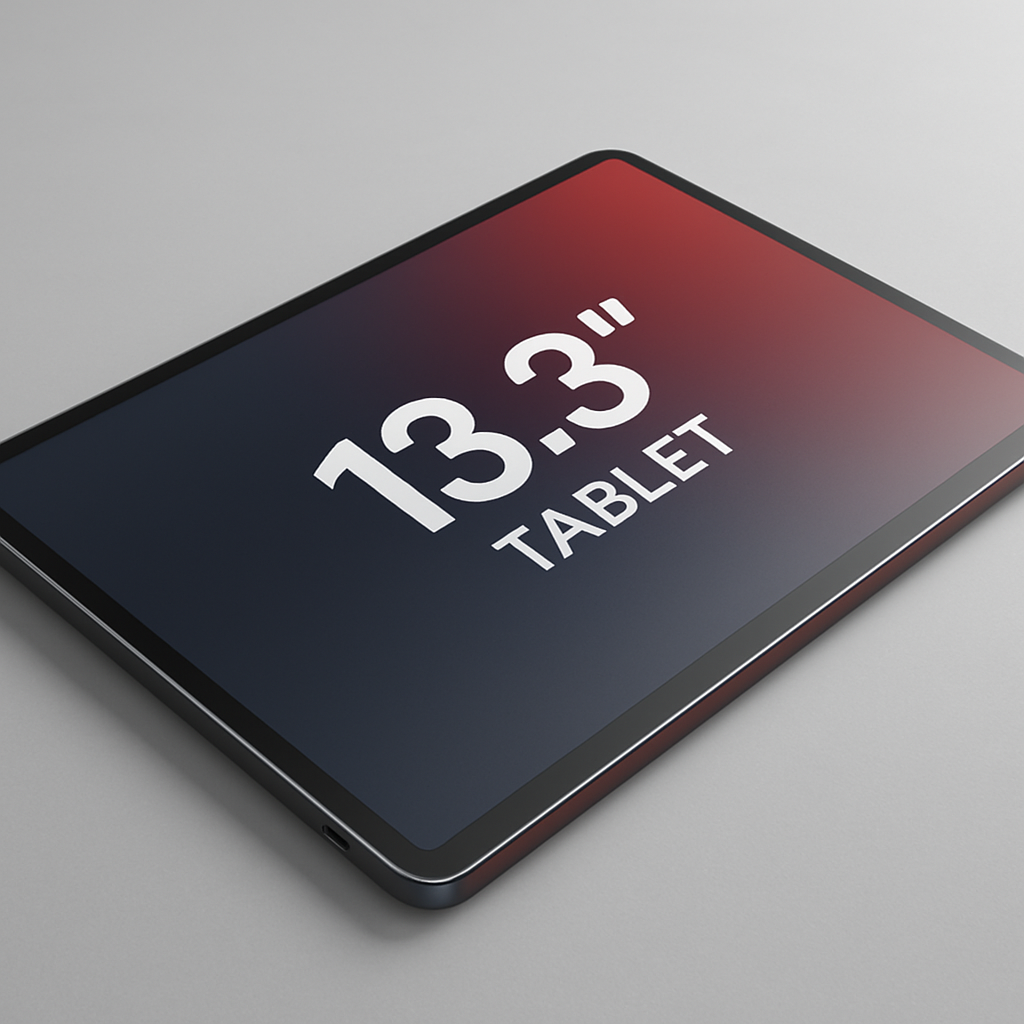
Xiaomi has revealed its latest Android flagship tablet: the Xiaomi Pad 9 Pro Max. Launched in China first, it boasts high-end specs that aim to compete in the premium tablet space.
Display, Design & Performance Highlights
At the heart of the Pad 9 Pro Max is a 13.3-inch LCD panel with an unusual 3:2 aspect ratio, offering a resolution of 3408×2272. The display supports a 144Hz refresh rate and can reach up to 1,000 nits in peak brightness, plus an optional matte finish on the glass. The tablet’s body is impressively slim as well, measuring just 5.67mm thick and tipping the scales at 645g, or slightly more if you go for the matte glass option. Color choices include two shades of gray and a deep red, all in a metal chassis.
Under the hood is Xiaomi’s in-house XRing O3 chip—the same processor used in the Xiaomi 18 Fold—paired with RAM options of 8GB, 12GB, or 16GB, and storage tiers of 256GB, 512GB, or 1TB. It ships with Android 17 right out of the box.
Battery Life & Other Features
Despite its slim profile, the Pad 9 Pro Max packs a hefty 12,000 mAh battery, an unusually large capacity for a tablet this sleek. That suggests strong potential for long usage, especially under lighter workloads. Other features include minimal bezels around the display and the option for a matte finish that adds just a few grams.
In terms of pricing, the base model starts at 4,799 Chinese yuan, which converts to around $715 USD. There’s no confirmation yet on when—or if—the tablet will be available globally beyond China.
The Pad 9 Pro Max enters a competitive market where devices like the iPad Pro, Samsung’s Galaxy Tab series, and Lenovo’s tablets already dominate. Its focus on a large, high-refresh-rate display, massive battery, and powerful chip positions it toward users who want performance and media consumption in portable large format—students, digital artists, or professionals on the move.
Analysis: This tablet shows Xiaomi pushing hard on display size, battery, and general specs rather than chasing ultra-thin components or foldables. The 3:2 aspect ratio—rare outside of Microsoft’s Surface line—suggests a tilt toward productivity and content creation. If Xiaomi brings this model overseas, it could shake up the Android tablet market, especially among creators and power users concerned with battery life and display quality. Watch pricing and availability closely—those will decide if this becomes a major contender or remains a China-only luxury.