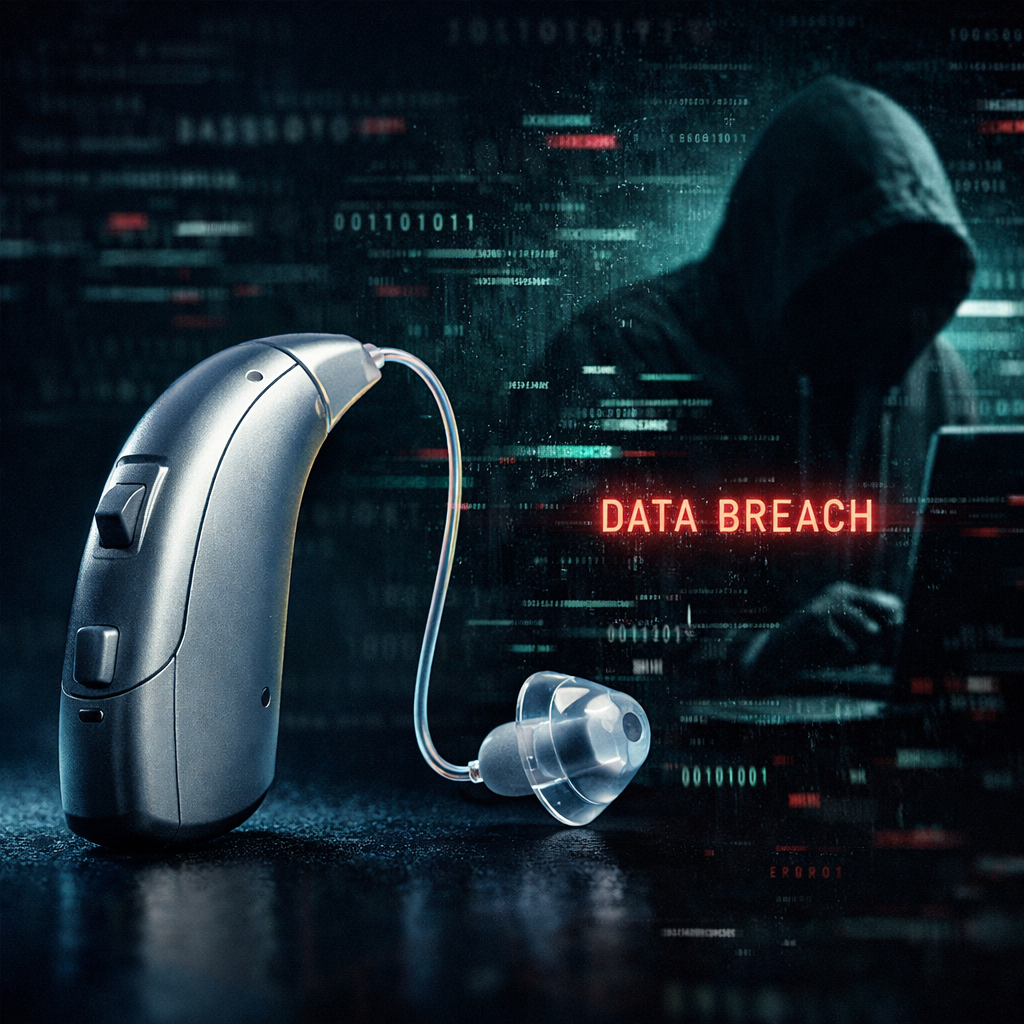
WS Audiology, which owns the Widex and Signia hearing aid brands, confirmed an IT breach that forced it to take key systems offline, disrupting apps used by hearing aid wearers and care professionals. While hearing aids themselves weren’t compromised, vital support tools like fitting software and remote services were disabled or degraded. Such incidents highlight how vulnerabilities in infrastructure—as opposed to device firmware—can still have serious real-world impact.
What Went Down
The breach was discovered recently when WS Audiology noticed unauthorized access to portions of its internal IT systems. In response, it proactively disconnected both internal and customer-facing systems to contain the incident. Critical business operations continued, but several support systems were taken offline, causing service interruptions for users. The hearing aids themselves kept functioning.
Services Affected and Recovery Timeline
Among the services taken offline was the Widex Compass Cloud, a service used by professionals to tune and fit hearing aids. By October 30 it was reported fully restored, enabling normal fittings including Widex Allure and Allure AI models. The Widex MOMENT app was also disrupted—users lost access to settings and preferences, even though their devices continued amplifying sound. Signia TeleCare was expected to return early the following week after that date. Notably, e-commerce sites and order fulfillment remained active throughout.
What’s Not Yet Known
WS Audiology has not disclosed how attackers gained access, which systems were affected, or whether any data was stolen. No malware family, exploited vulnerability, or compromised account has been confirmed. That lack of clarity leaves open key questions: Was patient data exposed? Were credentials compromised? What internal controls failed?
There were earlier incidents: in July 2024, a breach affecting WS Audiology’s retail system reportedly exposed patient and employee information in one of its US operations. However, the company hasn’t connected that event to the current breach.
The company is restoring services in stages, with priority systems coming back online first. Recovery efforts are underway, though some users may still experience limited access until full restoration is achieved.
This breach illustrates how preventive responses—like shutting down non-essential systems—can protect core assets but still severely impact users. When medical device supporting software falters, people’s ability to interact with their devices—including critical hearing functions—can be impaired.
What this means going forward is that medical device makers and healthcare tech providers need to treat supporting software with as much care as hardware. Strong incident response plans, clear communication, and redundancy in cloud and remote systems are now non-negotiable. Watch closely for WS Audiology’s follow-up: whether internal reviews uncover exposed patient data, or regulators demand disclosures. The takeaway: even when devices are safe, their software ecosystems cannot be overlooked.