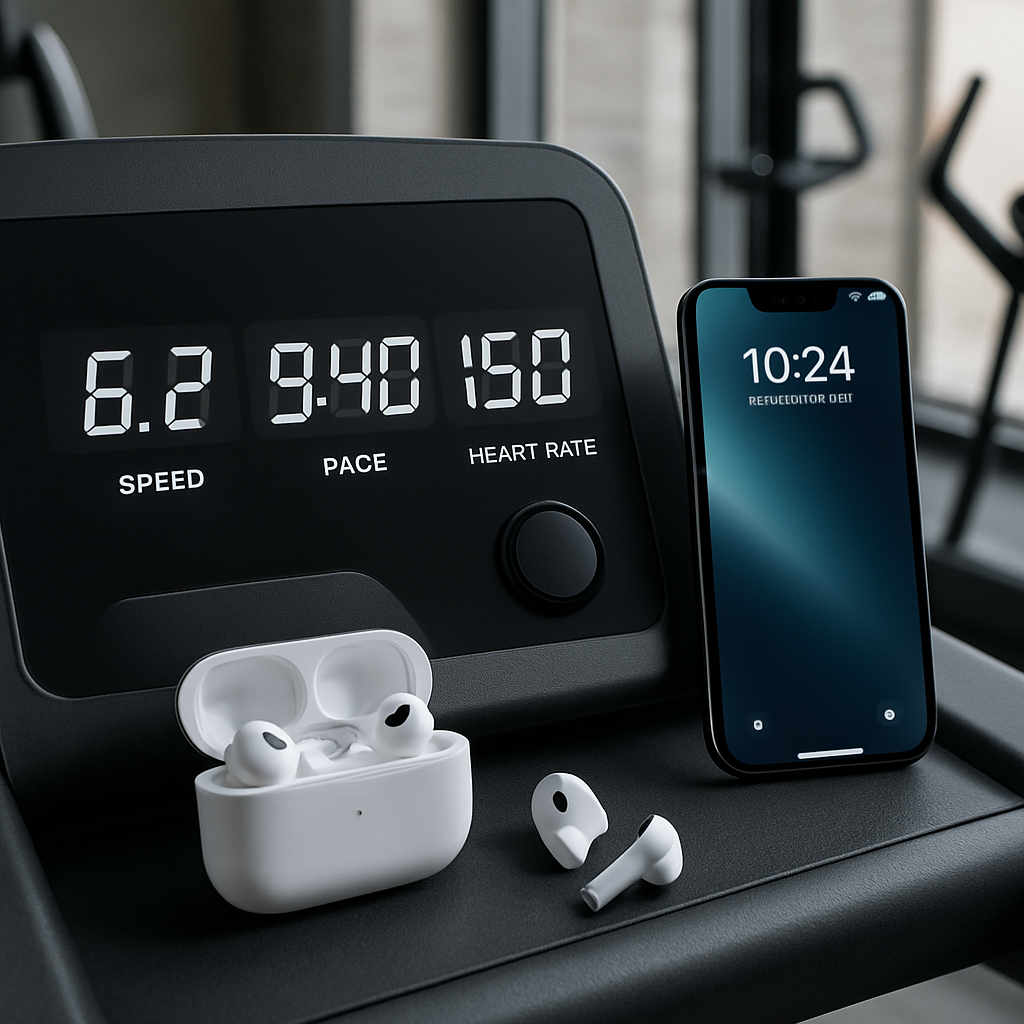
GymKit, Apple’s feature for synced workout metrics with gym equipment, has been exclusive to Apple Watch wearers—until iOS 27. With the latest update, iPhones paired with compatible AirPods can now offer the same hands-free setup: sharing heart rate via AirPods and gathering treadmill statistics directly to your Fitness app, effectively replicating the Apple Watch GymKit experience without needing the watch itself.
How It Works
After installing iOS 27, a user can tap their iPhone on a GymKit-enabled treadmill, select a workout type like Indoor Walk or Run, and begin. The treadmill sends performance data—pace, incline, distance, calories—to the iPhone; the AirPods Pro 3 handle heart rate. The data is stored on the iPhone and never lingers on the equipment. This setup removes the need for touching metal sensors or wearing separate HR straps. When the session ends, all stats appear in Apple’s Fitness app as if tracked via Apple Watch—but without the watch.
Why It’s a Big Upgrade
This change builds on two recent innovations: iPhones increasingly functioning without an Apple Watch in Apple’s fitness ecosystem, and AirPods Pro 3 now supporting heart rate tracking. Previously, Watch users had more accurate treadmill tracking with watchOS 27, especially regarding incline and belt distance—metrics that iPhone alone can’t fetch. But when Watch isn’t available, the new combo gives you fit-level data that’s surprisingly accurate.
During beta testing, a 16-minute treadmill session without the Apple Watch recorded exactly the same stats one would see wearing it: estimate of active and total calories, distance, elevation gain, and average heart rate. If your AirPods are off or not permitted to share heart rate data, iOS prompts to enable those options. If Watch is used, Apple still directs workouts there; the new setup serves as a dependable fallback or alternative scenario.
This makes iOS 27’s GymKit on iPhone with AirPods a meaningful enhancement for anyone who sometimes leaves their Watch behind or needs a backup when it’s charging or out of battery. It also lowers the barrier for those who haven’t invested in an Apple Watch to get a real fitness tracking experience.
All told, the update brings Apple’s Fitness program closer to being device-agnostic: when your Watch can’t do the job, your iPhone + AirPods step in. That flexibility—and improving data accuracy—marks a step forward in how Apple combines hardware and software for health tracking.
This matters because GymKit has long been among Apple Watch’s standout fitness features, launched in 2017 to sync watch and equipment data seamlessly. Giving iPhones that capability significantly extends its reach. Now, instead of needing a Watch to get the full picture, users can rely on what they carry in pockets and ears. The era when skipping the Watch meant sacrificing metrics is ending—what to watch now is how fitness accessories and gym equipment evolve in response, and whether this encourages more users to try Apple Watch down the road.