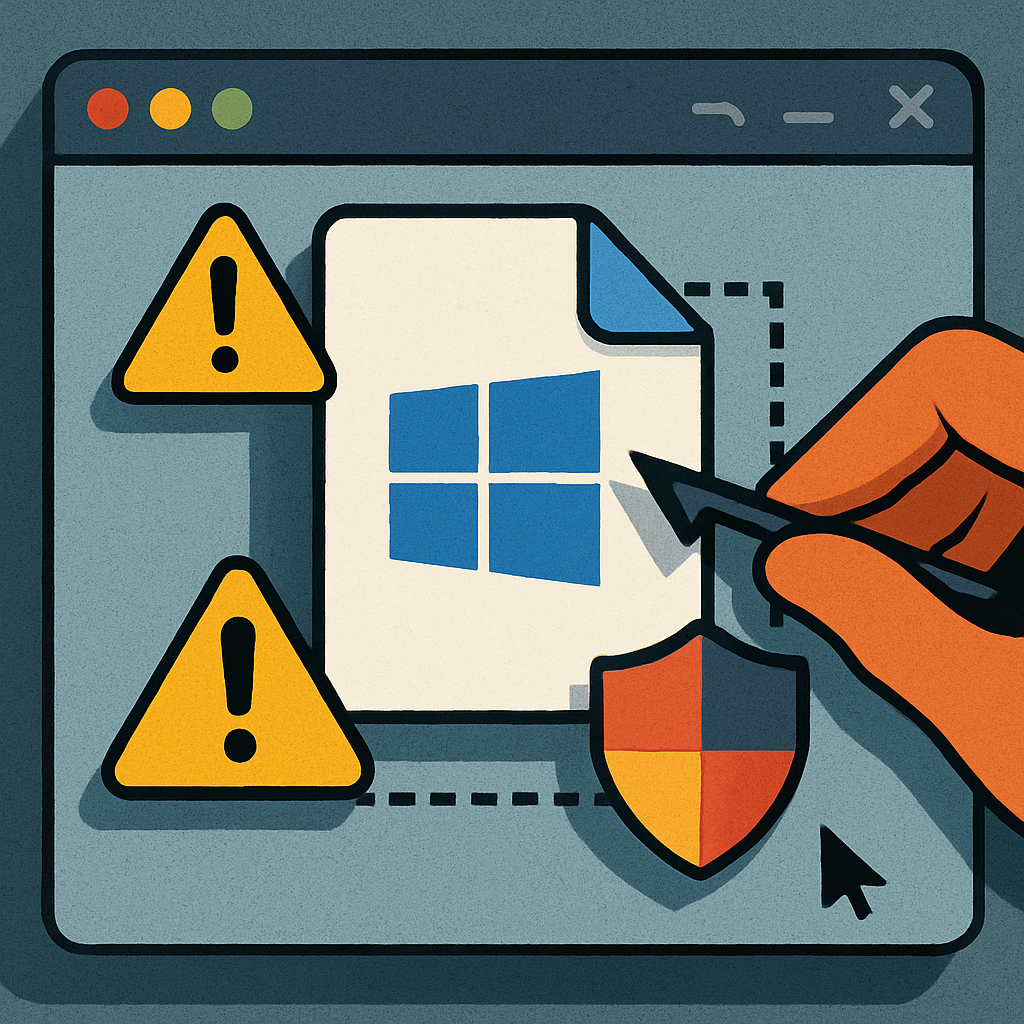
Microsoft has resolved an actively exploited zero-day vulnerability in Windows Shell that allowed attackers to sidestep Mark of the Web protections. Known as CVE-2026-96951, this flaw was patched in Microsoft’s October 2026 Patch Tuesday and given a severity rating of 8.8, marked “Important.” Microsoft confirms that weaponization of the vulnerability occurred prior to the disclosure.
The weakness stems from improper handling of special elements within a command in Windows Shell, enabling what Microsoft describes as a security feature bypass. An attacker with network access could craft a file to exploit this flaw, breaking through safeguards that flag or warn users when opening files from the internet via the Mark of the Web mechanism. Crucially, this does not constitute remote code execution on its own.
How the Exploit Works
Exploitation requires a user to open a specially tailored file—delivered via email or messaging—and persuaded to take action. In other words, the attack is not zero-click despite its network-delivery method. An attacker must trick someone into interacting with the malicious content. This contrasts with exploits that activate without any user involvement.
While earlier vulnerabilities—such as those involving Windows shortcut (LNK) manipulation or archive extraction tools that strip internet-origin metadata—also bypassed Mark of the Web protections, Microsoft confirms those are separate issues and not tied to this current campaign.
What Microsoft Knows — and What It Doesn’t
The fix credits researchers Riku Bamba and Yuya Chudo of Fujitsu Limited, Benoit Sevens using Claude with Anthropic, and a researcher known as yhw. But Microsoft has withheld details about the attacker’s identity, the malicious file type, and scope of attack, making it difficult to assess who specifically was targeted and how widespread this abuse has been.
Since exploitation has been confirmed, organizations should prioritize applying the patch. Checking affected product lists in Microsoft’s Security Update Guide is recommended. Additionally, users are urged to be wary of unexpected attachments—especially those delivered via email or messaging tools—as this attack depends on user interaction.
Impacting systems without realizing it, the flaw allows removal of an important safety barrier between the origin of files and user-initiated opening—an increasingly dangerous gap as social engineering and phishing tactics grow more sophisticated.
The takeaway: apply Microsoft’s October 2026 update immediately, monitor for suspicious file delivery, and maintain user awareness. This vulnerability underscores that even mechanisms like Mark of the Web, designed to protect against risky files, are not invincible. It’s a reminder that vigilance, patching, and user education remain essential components of digital security.