In today’s highly dynamic enterprises—where cloud services, automated workloads, and distributed systems dominate—traditional identity management no longer suffices. Identity Fabric, an architectural framework rather than a single product, has become essential for making sense of how identities are created, managed, and used across design time and runtime. It closes the gap between what access policies intend and how they’re actually carried out during operations. The concept is particularly relevant in hybrid and multi-cloud environments that lack the clarity found in smaller, single-directory setups.
Understanding Identity Fabric: How It Works
Identity Fabric connects all identity sources—such as identity providers, governance tools, applications, and infrastructure—into a unified, observable layer. On one side is design-time: provisioning, founding workflows around joiner-mover-leaver (JML) processes, and defining access policies. On the other is runtime: authentication, enforcement of authorization, single sign-on, and actual access checks. The reality of how identities behave often diverges from how they were intended to function. That discrepancy gives rise to risk, drift, and gaps where attackers can operate unnoticed. Identity dark matter—unmanaged or lightly observed identities—is what this framework aims to expose.
Why It Matters in 2026
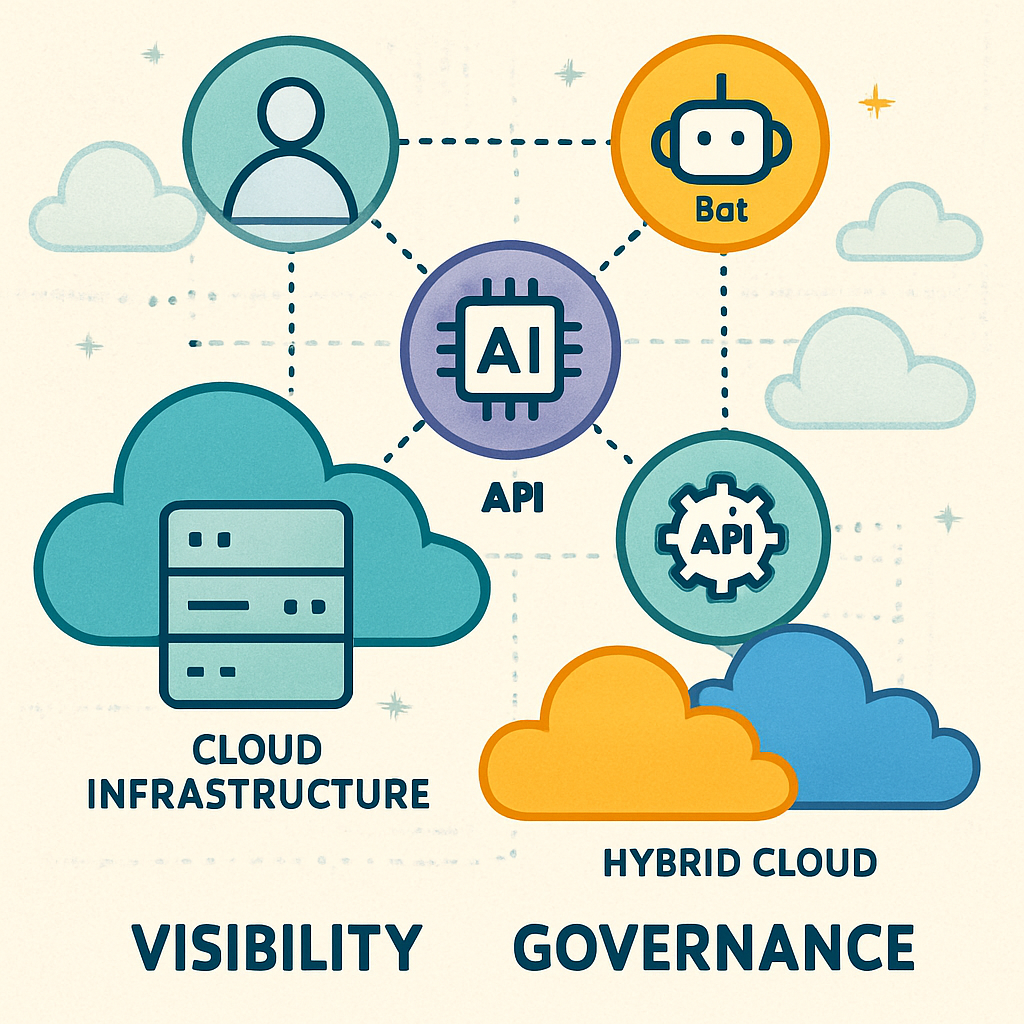
Modern infrastructures are no longer contained ecosystems; they span tangled web of SaaS apps, APIs, cloud-native services, and fast-moving workloads. Without overarching visibility, these complex footprints lead to identity sprawl—huge numbers of human and non-human identities, many with undocumented or excessive privileges. Identity Fabric offers much-needed governance, preventing undetected risks such as orphaned accounts or unexpected trust relationships between systems.
Human identities are only part of the story. Non-human entities—service accounts, automation bots, workloads, API keys and tokens—form a large and often underrated portion of identity exposure. These machine identities are typically born from infrastructure automation and not managed by HR systems, often escaping traditional controls. Without clear ownership, defined purpose, and active monitoring, these accounts drift into overprivileged, inactive, or unmonitored zones, growing into powerful vulnerability vectors.
The growing prevalence of AI agents introduces another layer of complexity. These agents are tasked with goals, but their actual execution can stray significantly from intent, especially under chained actions or manipulated inputs. AI identities call for governance policies that go beyond granting permissions—they demand runtime monitoring, clarity of boundaries, and human accountability. Tracking AI agent behavior across systems becomes the only reliable way to detect when access has been misused.
Deploying an Identity Fabric is a journey: moving from infrequent static governance to continuous oversight grounded in behavioral observability. Key steps include discovering all identity sources and trust relationships, prioritizing high-risk identities, and defining concrete metrics. Examples include how many identities fall outside IAM systems, what percentage of machine identities have clear owners, how many accounts are overprivileged, and how quickly teams can trace the timeline of an identity breach.
Some vendors are better positioned than others depending on where an organization is in this journey—governance-heavy platforms may work for some, while others should favor tools focused on observability and runtime behavior. Leading options include providers with strong secrets management, entitlement control, or identity platform breadth.
This isn’t just another cybersecurity trend—it shapes how access and governance scale into the future. Identity Fabric supports Zero Trust by eliminating assumptions about safety and ensuring identities are evaluated continuously based on actual behavior. It also accelerates incident response by simplifying identity timelines and revealing hidden attack paths.
What to watch:how tools evolve around AI identity observability, how continuous access evaluation becomes standard, and how companies bridge discovery gaps across applications. Organizations that invest early in identity visibility and lifecycle governance will gain a significant defensive edge.