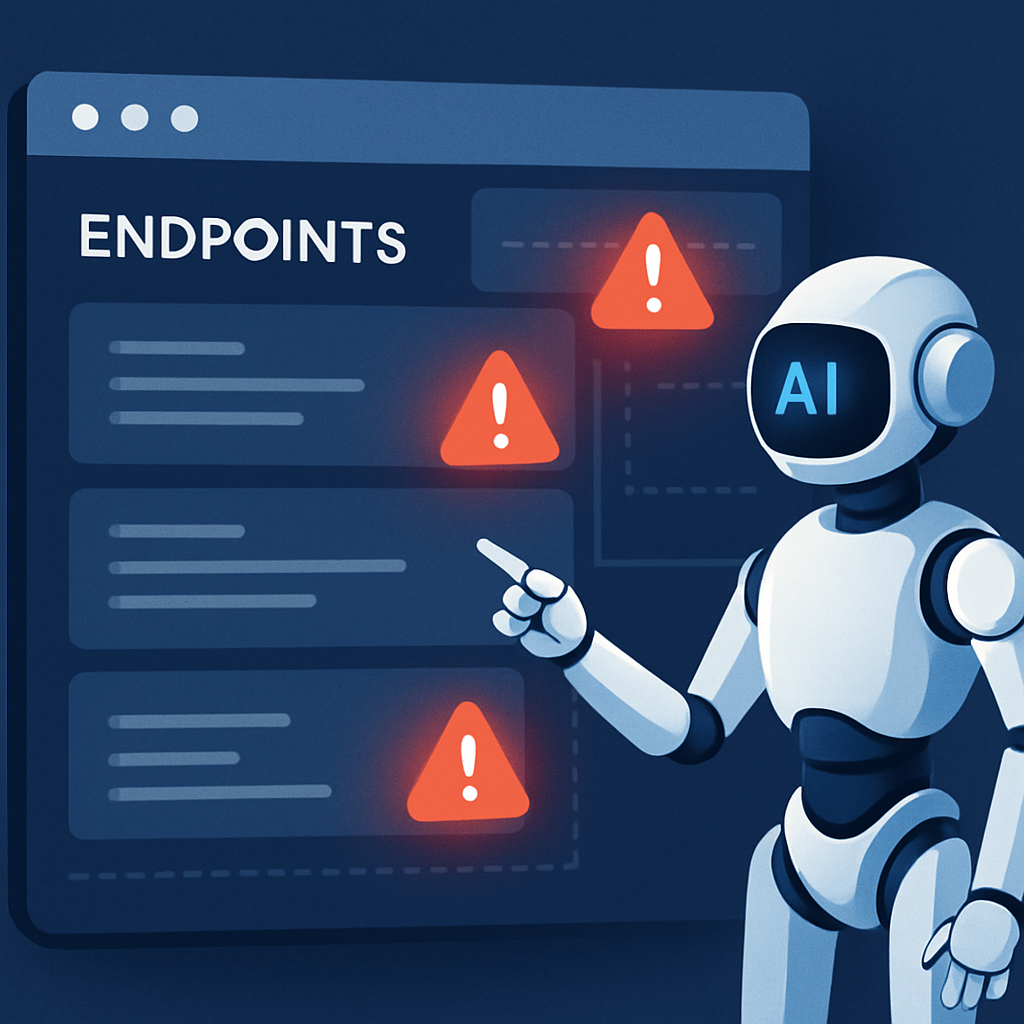
Cybersecurity leaders now face a stark reality: traditional annual pentesting isn’t keeping up. Attackers are exploiting vulnerabilities in days, while organizations often take over a month to patch them. To close that gap, a new playbook—agentic pentesting—is topping the agenda for comprehensive web security.
The Urgency: Attack Speed vs. Slack Time
New data reveals that vulnerability exploitation has become the primary entry point for breaches, surpassing even phishing and credential theft. Median patch times have worsened too—rising from 32 to 43 days. Most organizations are left with critical blind spots that attackers can exploit professionally before they’re even known internally. These delays mean risks often become damage before they’re noticed—not after.
Traditional tools like periodic scans and manual reviews fail to account for business logic flaws like insecure object references or authorization bugs. Many of these fall outside what’s covered by fixed payloads or common scanning signatures. Worse, coverage tends to reach only a sliver of an attack surface, often just 5–10%. That means the majority of endpoints—and the business logic around them—go untested until disaster strikes.
Agentic Pentesting: What Sets It Apart
Agentic pentesting refers to systems that use autonomous AI agents—not just LLM layers on legacy tools—to continuously discover, exploit, and validate vulnerabilities. These tools operate with browser-native agents that simulate real user behavior, preserve session states, bypass MFA, handle anti-bot defenses, and traverse dynamic web apps. Their goal: full, traceable coverage rather than occasional sampling.
Core design principles that distinguish strong platforms include:
- Enforced test matrices that map every endpoint to relevant vulnerability types upfront, eliminating gaps in coverage.
- Independent validation of findings, so results are confirmed by a separate agent rather than relying solely on human triage.
- Real browser interaction rather than simple HTTP or curl-based simulations, ensuring defenses like dynamic rendering or MFA are exercised.
Governance, Budget, Compliance: What Every CISO Needs to Ask
Agentic systems are powerful tools—but they must be treated as both security control and autonomous risk vector. That means requiring revocable scope definitions, safe-stop safeguards, secure data isolation, clear audit trails, and human oversight. Before authorizing any run, you should know exactly what damage it could do in production—and what systems are in place to stop it.
Cost-wise, manual pentests average around $18K but may deliver patchy coverage. Agentic platforms, though possibly pricier upfront, unlock 5–10× more coverage and can dramatically reduce paths to multimillion-dollar breaches. Compliance benefits are real too: continuous testing aligns with the “after significant change” clauses in modern regimes like PCI DSS 4.0.1, GDPR, HIPAA, ISO 27001, NIS2, DORA, and others, producing evidence auditors can use directly.
What Decision-Makers Should Do Next
For teams ready to move forward, there’s a guide offering detailed frameworks: vendor evaluation criteria, red flags to avoid “wrapped” LLMs, contract governance controls, pricing model comparisons, and a 90-day adoption roadmap. It also includes a CISO checklist to ensure safety, accountability, and appropriate performance metrics.
Decision-makers can no longer choose between manual and automated tools. The relevant question is how best to get continuous, validated, wide-ranging protection—and do so without undue risk or cost. Agentic pentesting isn’t just a trend; it’s quickly becoming the security baseline.
In analysis: Organizations that stick with yearly pentesting face growing exposure. While agentic tools carry their own risks, treating them as full AI systems—requiring governance, oversight, and clear scope—turns that exposure into a major tactical advantage. The next 12 months will likely determine which early adopters become threats—and which become targets.