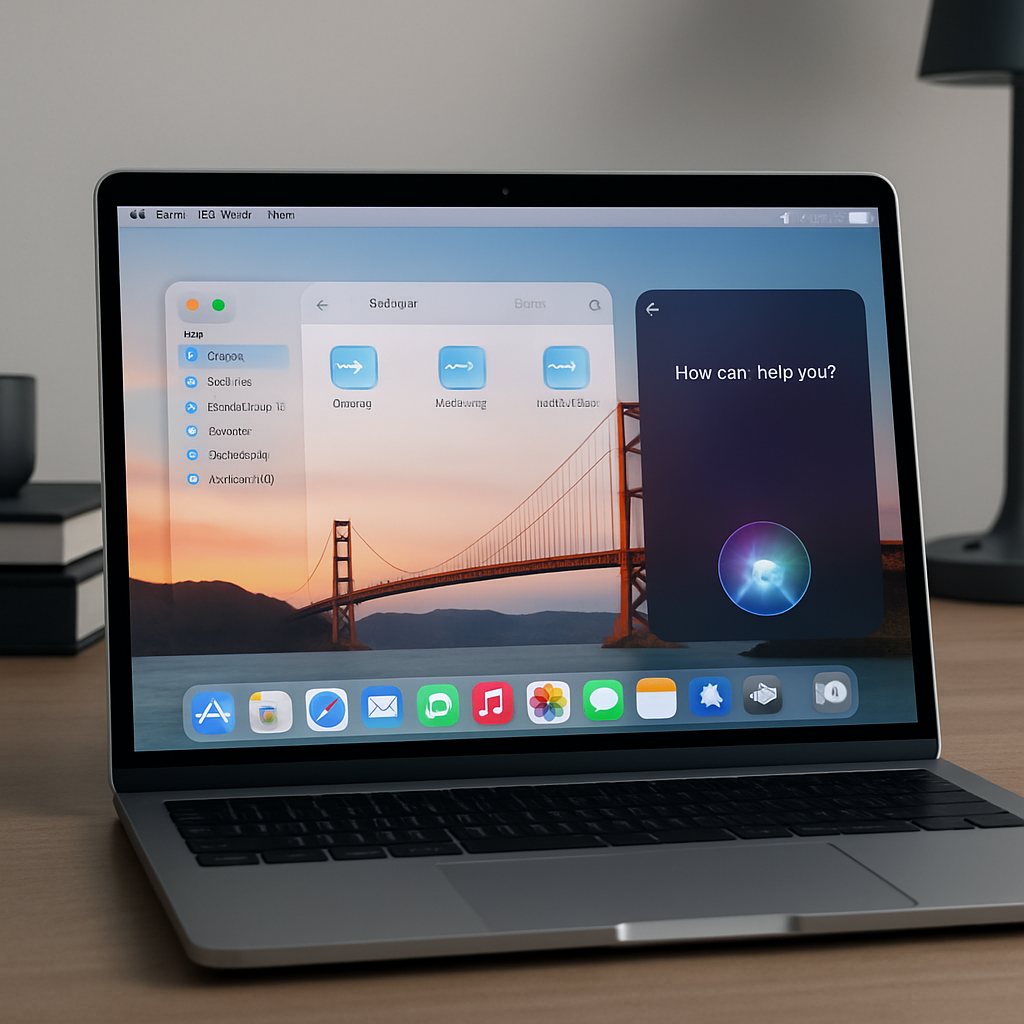
Apple has rolled out several notable changes today across its latest software platforms, including iOS 27 and macOS 27 Golden Gate, aimed at enhancing privacy control, integrating more services into existing subscriptions, and refining user experience with design and AI improvements.
New Privacy Setting for Siri & Foundation Models in iOS 27
With the public release of iOS 27, Apple has introduced a fresh opt-in choice for users when enabling Siri AI. You’ll now see a prompt asking whether you agree to share “Audio and Text” data to help improve Siri and Apple Intelligence, or if you prefer “Not Now.” This replaces the old setup that requested participation to improve only Siri and Dictation. The key shift lies in expanding the use of user interactions not just for Siri, Dictation, and Translate as before, but also to help train and refine Apple’s Foundation Models.
Apple reassures users that this additional data sharing remains detached from identifiable personal accounts. Audio and transcript data is tagged only with a device-generated ID that cycles frequently, and is not linked to Apple IDs or used to build marketing profiles. If you’ve previously opted in, you’ll still be prompted again under the new scheme when enabling Siri AI, giving you a chance to reconsider. Existing preference settings (found under Settings → Privacy & Security → Analytics & Improvements → Improve Siri & Apple Intelligence) allow toggling the new data sharing on or off.
iCloud+ Bundles Get Apple TV & Apple Arcade in Over 100 Countries
In many nations—over 100 now—Apple is adding Apple TV and Apple Arcade to the standard iCloud+ subscription (50 GB tier) at no extra cost. This move is especially targeted at regions where bundled service options like Apple One haven’t gained strong traction, offering more subscription value for users in these markets.
Countries eligible include India, Kenya, Türkiye, the United Arab Emirates, and many others in Africa, Asia, and the Middle East. The United States is notably excluded. The rollout is ongoing through this month. Some local customers are also seeing a new “Apple Music Select” tier under the iCloud+ umbrella—offering limited access to ad-free radio stations, with possible discounted upgrades to full Apple Music.
macOS 27 Golden Gate: What’s New In the Update
macOS 27 Golden Gate, officially released on September 14, brings several design refinements, performance enhancements, and AI-driven features. Design changes include a Liquid Glass appearance with a slider to adjust transparency, restored fixed corner radii (replacing the dynamic radii introduced in the last major update), and updated “traffic light” window controls with a more detailed, layered look. Additionally, UI elements like uniform toolbars, sidebars that extend edge-to-edge, and tidier menus (icons next to menu items have been largely removed) aim to simplify and streamline the visual experience.
The update also overhauls Apple Intelligence across built-in apps. Siri AI is now tightly integrated: it can be accessed via a dedicated Siri app synced across devices, pull context from your messages, photos, and mail, and work across apps on your command. Visual Intelligence allows users to interact with anything on screen (for example, creating a calendar event from text seen in a browser window). Safari adds “Notify Me” to watch a webpage for changes (like price shifts or restocks), natural-language extension definitions, and topic-based tab grouping. Across the system there are improved upload speeds, faster Spotlight searches, better support for external displays, touch enhancements in Sidecar, and more.
Some smaller but important additions: the Photos app now includes tools to remove unwanted objects, reframe photos spatially after taking them, or extend image edges. Shared Albums support full resolution sharing and allow Android or Windows users to contribute via iCloud.com. Finders get content-based name suggestions. Messages improve notification consolidation. Podcasts support video content. And under the hood, things like AirDrop, network file access, and UI animations, including those in Mission Control and Spaces, are all smoother.
Apple also calls this the final version of macOS that supports Rosetta. After Golden Gate, Macs running Apple silicon will not support future Rosetta-based compatibility.
The release adds new child safety tools too: more control over web access in Safari, communication safety in messaging, controls over app time limits, schedules, and filtered access. These privacy and safety tweaks are part of Apple’s continued focus on protecting younger users.
These updates are included in the latest release notes and are generally available globally, though some features depend on hardware (especially new AI tasks) or specific regions. Performance improvements, reliability updates, and quality-of-life enhancements are baked in across the board, making the whole system feel more polished.
Why This Matters & What to Watch For: Apple’s updates today reveal clear strategy: intensifying investment in AI and visual design, while giving users more control over data and expanding service access. The Foundation Models opt-in switch signals deeper learning systems at work behind Siri and related tools, and Golden Gate’s rollout underlines how central Apple Intelligence is to their ecosystem going forward. For users, it’ll be important to check device compatibility (especially for new AI features), monitor regional service availability (as many new bundles exclude the US), and pay attention to privacy toggles. For developers, growing natural-language shortcuts, extension-builders, and Visual Intelligence APIs mean more opportunity—and more responsibility—to build tools that take advantage of what Golden Gate offers. Expect this build to set the stage for what Apple delivers next in hardware and AI services.