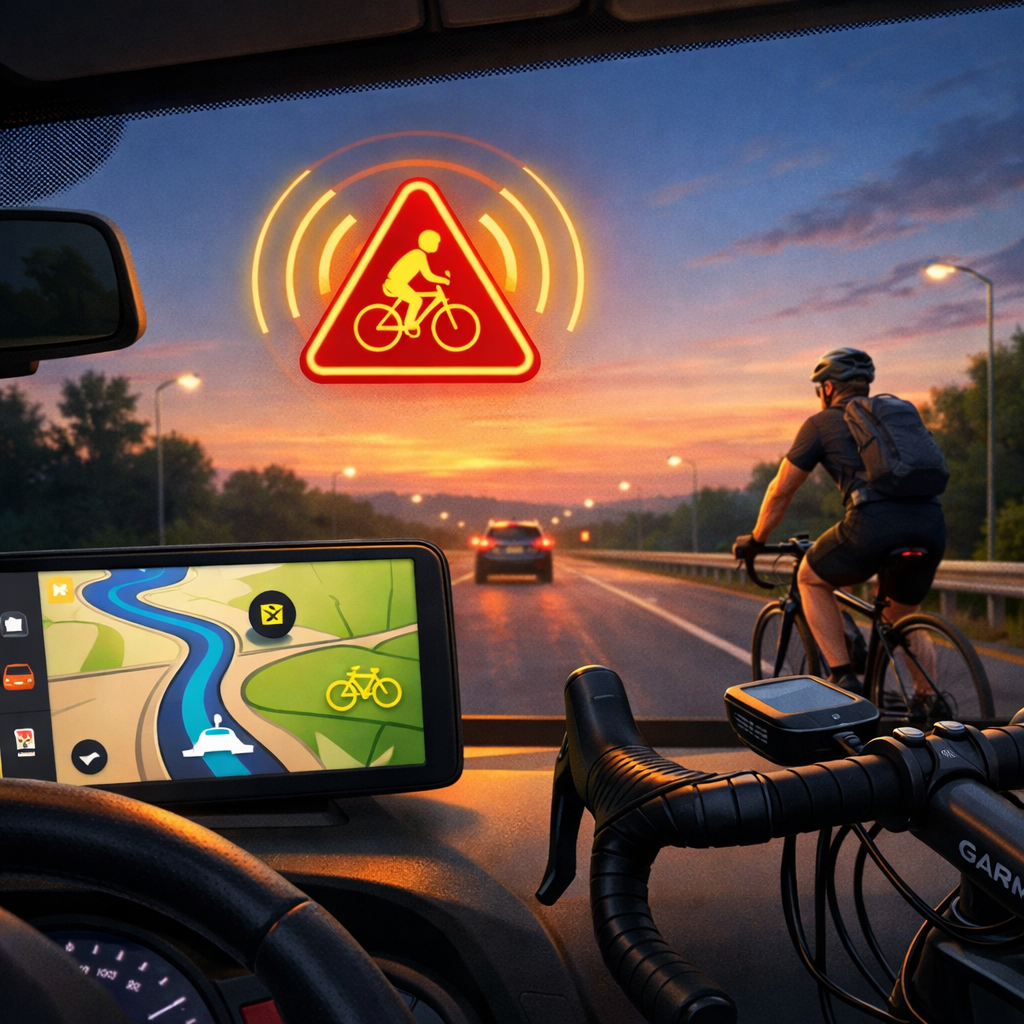
In a move aimed at increasing road safety, Waze and Garmin have introduced a new feature that alerts drivers when cyclists are nearby using Garmin’s LiveTrack. When someone uses Garmin’s Edge bike computer or smartwatch to enable LiveTrack, they can opt to appear as a moving cyclist icon within the Waze app, making their presence visible to passing drivers. The notification system is rolling out globally on both iOS and Android.
How it works & privacy protections
The system is entirely opt-in—cyclists must actively enable LiveTrack for their device to share their presence. Once enabled, drivers using Waze will receive a temporary alert when a cyclist is nearby, helping raise awareness on shared roads. Cyclists’ names, routes, or identities are never shown, and alerts disappear when the ride ends on the Garmin device.
Why this matters
This feature builds on Garmin’s LiveTrack tools, which already let users share basic location info in real time for safety or coordination. Now, it extends that functionality into a co-use scenario—bringing together navigation, cycling, and driver awareness. It addresses a long-standing safety concern: drivers often don’t expect cyclists, especially in mixed-traffic or low-visibility situations.
For drivers, that means Waze now acts not just as a trip planner or traffic adviser but as a more proactive safety tool. For cyclists, the update offers added visibility—potentially reducing conflicts or accidents caused by surprise encounters.
The global rollout means this isn’t just a niche feature—it could reshape how commuters, cycling enthusiasts, and delivery riders are seen on the road.
It’s worth noting that this feature doesn’t replace existing safety tools like bike lanes, helmets, and reflective gear—all of which are essential. Instead, it augments those efforts with tech that bridges gaps between cyclists and motorists.
What to watch next: how cyclists respond to the feature in practice. Will they trust that privacy is upheld? Will drivers actually heed the alerts—and will this lead to measurable reductions in accidents? The effectiveness may depend heavily on location, local traffic laws, and whether alerts are optimally calibrated so they’re helpful rather than annoying.