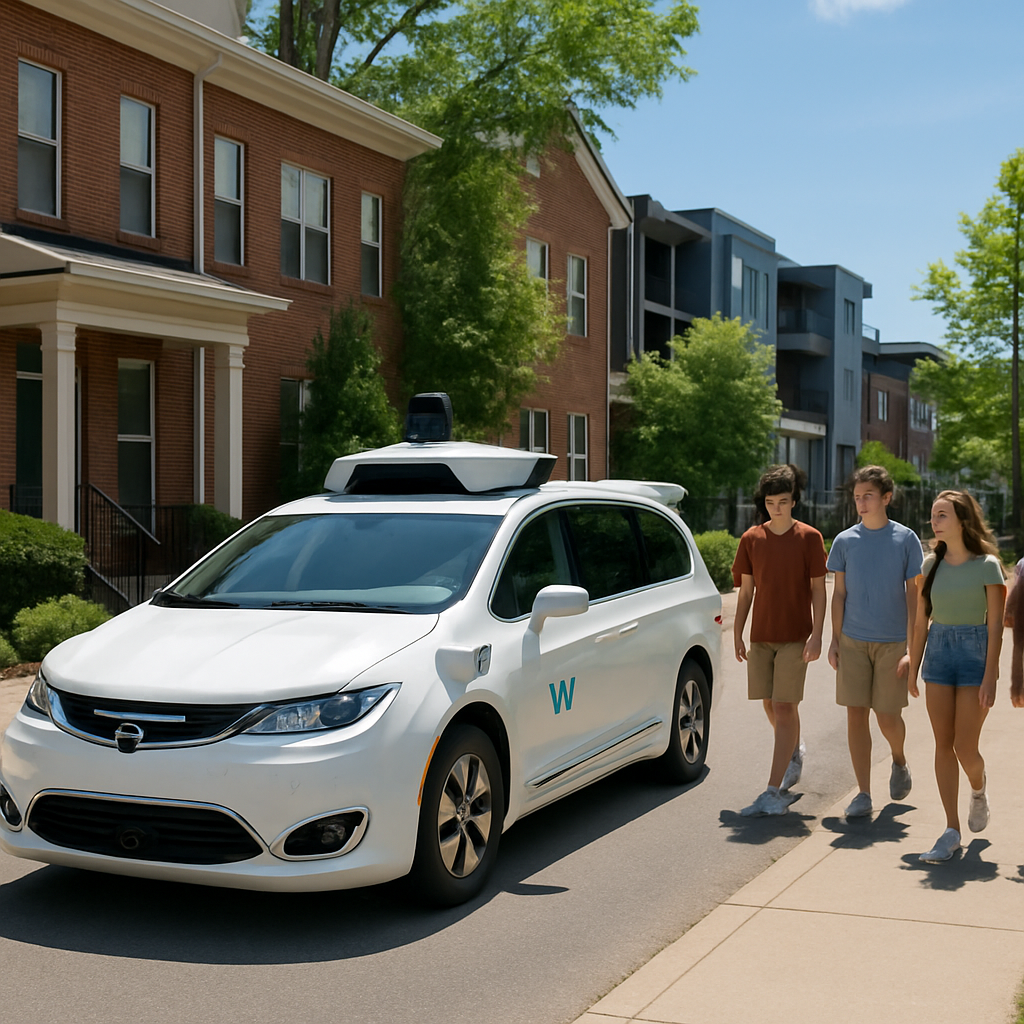
Waymo is expanding its robotaxi service in Nashville by offering “teen accounts” for riders aged 13 and up. This move signals the company’s next growth phase, as it targets younger customers alongside its existing user base.
Nashville Becomes Waymo’s Second Teen-Age Pilot
Currently, Nashville joins Phoenix as the only cities where teens can use Waymo’s self-driving cars. Nashville’s rollout began in April 2026 across a 50-square-mile zone, with Waymo’s robotaxis recently added to the Lyft app in the city. Teen accounts will be added in markets like these where operations are stable and local rules support it.
Under the program, teens linked to a parent or guardian account can request rides anywhere within Waymo’s service area. Teens may also bring along up to three passengers aged 13 to 17. Details on how teens’ ages will be checked haven’t been shared.
A Strategy Built on Ridership Momentum
Waymo’s ridership has surged in recent years. Paid rides per week leapt from 50,000 in May 2024 to over 500,000 earlier this year, helped by rapid expansion into new cities. In just the last month, Waymo added service in Denver, Las Vegas, San Diego, and Tampa. To date, it now operates in a dozen cities nationwide.
This latest teen account offering is aimed at households where teens lack access to a driver’s license or transportation assistance. By tapping younger riders, Waymo hopes to decrease reliance on parents or public transit for getting to school, after-school activities, or part-time jobs.
Potential Risks and Parental Appeal
Letting teens ride solo—or bring friends—raises safety and supervision issues, especially among younger teens. Some may worry about unaccompanied groups traveling without adult oversight. But for many parents, having their child ride in a Waymo vehicle may feel safer than in another teen’s car.
Waymo hasn’t shared its plans for verifying teen ages, how it will handle safety oversight, or whether teen riders will face additional restrictions. But the company sees this as one of its strongest levers for scaling ridership.
Why this matters: Letting 13- to 17-year-olds use an autonomous vehicle service could reshape youth mobility. It shifts access away from dependency on adult drivers and could reduce trips made by less safe modes—or unlicensed drivers. At scale, this model may challenge school bus systems, public transit, and family logistics. What to watch: how Waymo navigates regulations, age verifications, and whether this unlocks new ridership or leads to backlash if problems arise.