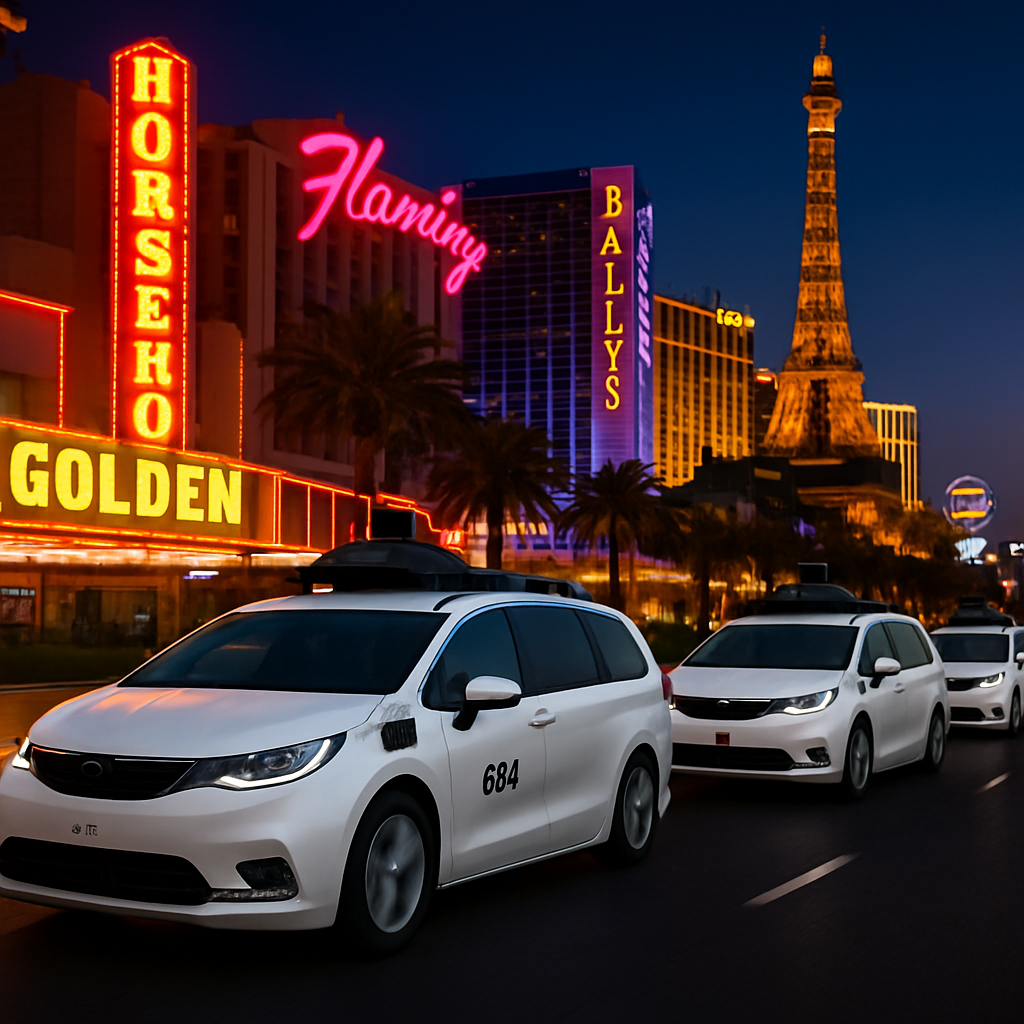
Waymo has officially started offering its robotaxi service to public riders in Las Vegas. The deployment comes shortly after the company received approval from Nevada’s transportation regulators in Clark County, clearing the path for commercial autonomous vehicle operations. The service is being rolled out gradually through invitations, with access codes required to book a ride. Full open access is expected to follow within one to two months of launch.
Service Area, Fleet, and Expansion Plans
The initial fleet includes “dozens” of Waymo’s new Ojai electric minivans, covering an area that incorporates the Las Vegas Strip south of Highway 589 and stretches into Boulder Junction. While the current operations are limited in both vehicle count and geography, Waymo plans to expand its coverage and add more robotaxis over time.
Las Vegas marks Waymo’s 15th market. The company already operates robotaxi services in major cities such as Austin, Dallas, Houston, Los Angeles, Miami, Nashville, Phoenix, and the San Francisco Bay Area. It previously launched in San Antonio, though service there was later paused.
Land Use Permissions and Competitor Landscape
Nevada regulators have authorized Waymo to deploy up to 1,000 autonomous vehicles across Clark County over the next 12 months. Competitors Tesla and Uber received similar permits—Tesla for 5,000 robotaxis; Uber, operating through Motional and Zoox, may use up to 1,000. In total, as many as 8,000 robotaxis could begin serving the region within the year.
Though these authorizations set an ambitious upper bound, the actual numbers deployed may fall short. Waymo currently operates a fleet of over 4,000 robotaxis spread among its existing markets. Tesla has indicated internally that it may aim for approximately 2,500 units within the next year, though reaching even that number may be challenging.
Other robotaxi services—including those from Tesla, Zoox, and Motional—are also eyeing Las Vegas for commercial launch, making the city a growing center of competition in autonomous ride services.
Waymo’s rollout in Vegas mirrors a pattern it’s used in other cities: regulatory approval first, followed by an invitation-based launch, then broader public access. This month, similar openings took place in Denver, San Diego, and Tampa.
With those layers in mind—fleet build-out, operational geography, competition, and regulatory limits—Vegas may soon become a major stage for testing how scalable robotaxi networks can be in high-profile, high-traffic urban environments.