Cybersecurity analysts have uncovered a new Windows infostealer called VOLTA-AUTODOXER—shortened to VOLTA—that blends traditional credential theft with AI to prioritize victims based on how much financial gain an attacker could wring from them.
Stealing Everything—but With a Smarter Follow-Up
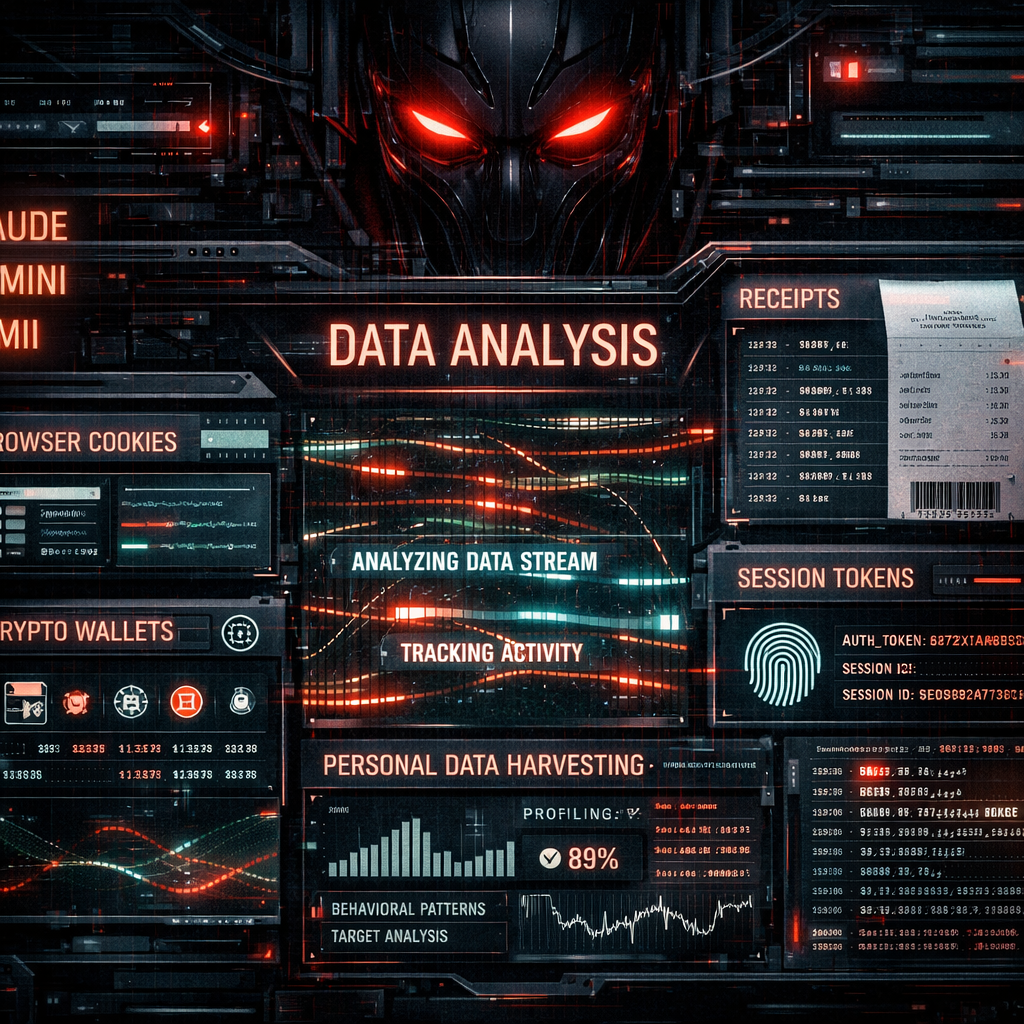
Like many stealers, VOLTA harvests an extensive set of sensitive information: browser passwords and cookies, payment card details, seed phrases for cryptocurrency wallets, Outlook and Slack data, sessions from Discord, Telegram, Steam, and Roblox, Microsoft OAuth tokens, SSH and cloud provider credentials, Wi-Fi profiles, and even screenshots. It goes further by enriching the data with personal details such as IP geolocation, home address, employer info, inferred birth year, card “last-4” digits, metadata from documents, iPhone backup status, and an estimate of a live Roblox account’s value.
To link identity with financial potential, VOLTA uses access to a victim’s Gmail to search for purchase receipts from services like Amazon, DoorDash, Uber Eats, Walmart, Grubhub, and PayPal—using those to verify address and spending behavior. Once all this is collected, it’s packaged into what researchers call a “structured evidence bundle.” That bundle is then fed into a large language model (LLM) pipeline via OpenRouter. The default model is Claude Opus 4.6; if that fails, VOLTA falls back to Kimi K2, then to Gemini 2.5 Flash.
How the AI Layer Works
The malware maintains resilience by cycling through up to three AI models: if a model refuses to comply—or returns uncertainty phrases like “I can’t” or “I’m not able”—VOLTA tries the next one. The LLM is given a 240-word system prompt that puts it in the role of a “forensic intelligence analyst.” The directive demands that it only draw facts from the evidence bundle—not from its own training. The output must include sections like “WHAT THEY’RE WORTH,” which ranks valuables into tiers (low/medium/high), and “THEIR OPSEC,” which assesses the victim’s operational security and password hygiene.
Exfiltration of data happens in three phases over Telegram: immediately after VOLTA runs, then after the AI processes the data, then finally after additional enrichment like Gmail receipts and order histories. At build time, binaries are customized using templates that define things like the Telegram channel destination, API keys, and other configuration settings.
What’s Behind VOLTA—and Why It’s Dangerously Efficient
Experts believe VOLTA may be sold as a builder kit, enabling attackers of all levels to deploy its AI-ranking feature without needing advanced skills. What sets this tool apart isn’t sheer speed or wide distribution—it’s how much effort it offloads from the attacker. Once the malware is active, much of the victim triangulation, data prioritization, and risk assessment happens automatically.
This comes amid a rise in adversaries integrating generative AI into cybercrime workflows—not just for creating phishing lures or disinformation, but for sifting through stolen data to find what’s most valuable. It’s the same trend seen in recent threats, where actors use AI to classify data or generate attack-oriented intelligence based on what they harvest.
VOLTA joins tools like NIK C2, which offer remote access, keylogging, and other exfiltration methods that also leverage AI, sometimes even hijacking victims’ own API keys to cover their tracks and reduce detection risk.
This development matters because it changes the calculus of cyber risk. AI isn’t just making attacks faster or more scalable—it’s altering what attackers prioritize, making them smarter. Organizations need to sharpen defenses around not just data protection, but around metadata, credentials, receipts, session hijacking, and more.
WATCH FOR:
- Detection tools that flag evidence bundle assembly or unexpected AI calls.
- Alerts when personal receipts or order-related emails are accessed for address verification.
- Tighter browser and session token protections to reduce what VOLTA can harvest.
- Monitoring of AI API usage from endpoints to catch stealthy exfiltration.
As attackers like VOLTA adopt multilayered AI pipelines, defenders will need to build countermeasures that address both initial material theft and post-theft analysis automation. The threat has become not just what’s stolen, but how quickly its value can be calculated—and exploited.