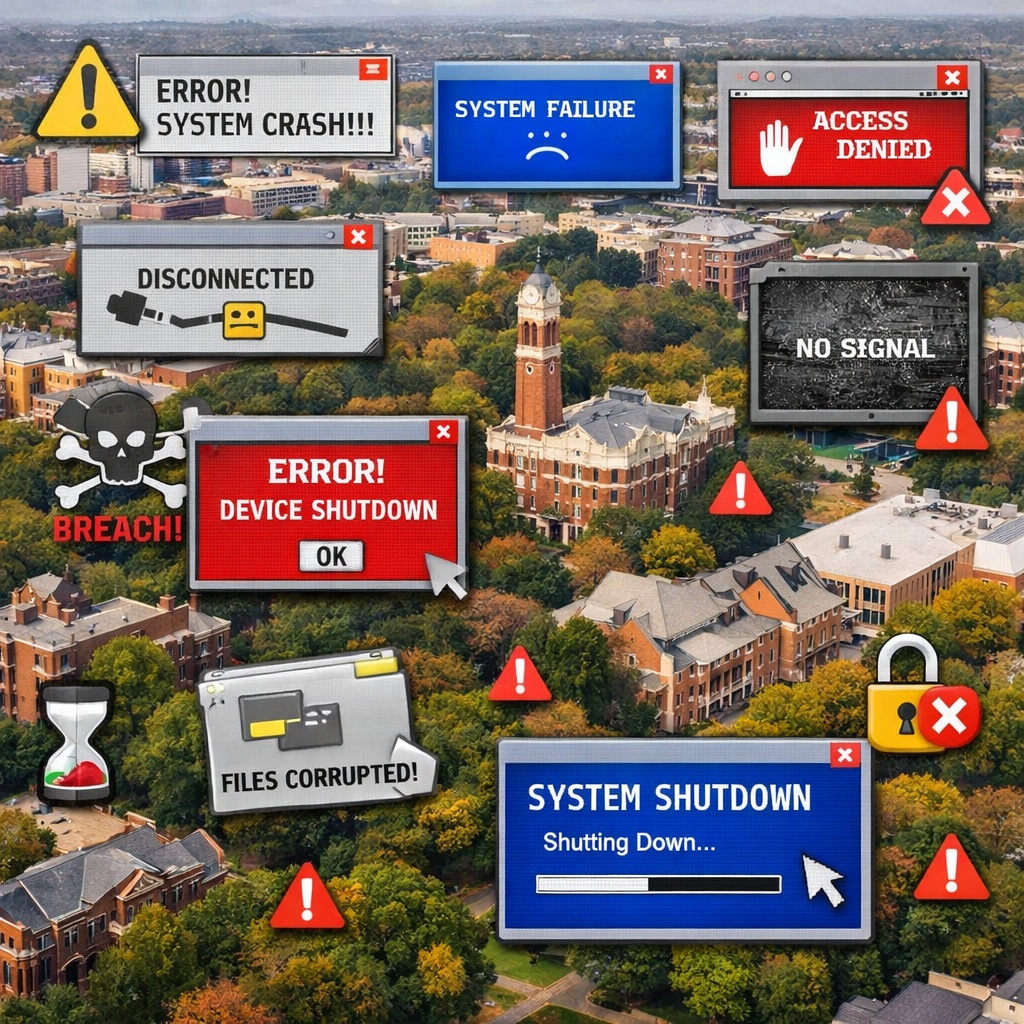
Vanderbilt University urged everyone on campus—students, faculty, and staff—to power down university-owned devices and disconnect from Wi-Fi on November 9, 2026. The move followed reports by a ransomware group known as BYOD, which claimed it had forced access to the university’s network, stolen sensitive data, and locked down critical systems. The university has not yet confirmed BYOD’s allegations.
The group asserted it possessed over one million Social Security numbers, as well as names, emails, phone numbers, and both student and employee records. It also claimed to have exfiltrated research data and taken control of Vanderbilt’s domain controller. While these claims are troubling, none have been officially verified, and Vanderbilt has yet to disclose the number of people affected.
What Vanderbilt Is Saying—and Not Saying
In its public statements, Vanderbilt called the event an “active cybersecurity incident” that could involve devices, internal systems, and cloud-hosted services. Users were urged to be alert for signs like sudden pop-ups, missing files, unfamiliar apps, and unusual password requests—red flags that often accompany malware infections or unauthorized access.
Witnesses reported that files on campus systems were being renamed with a “.byod” extension, suggesting ransomware encryption. Meanwhile, researchers and faculty were finding some university systems inaccessible. Yet details about exactly which parts of the network are compromised—and how back-ups or identity credentials may have been breached—remain unclear.
Response and Remainder of Campus Impact
By the evening of November 9, campus Wi-Fi was restored, though many essential applications and systems remained offline as the IT team continued containment efforts. The university said it would resume normal operations on November 10, keeping classes, student services, and staff presence as usual. Students facing due dates ahead in grants were told to liaise with the research office, while those with coursework deadlines were advised to contact their instructors.
Vanderbilt has aligned with federal agencies and outside partners in its investigation. Users were instructed not to open suspicious links or attachments, avoid trying repairs themselves, shut down compromised devices, and reach out to the service desk using another device or by phone.
Many questions are still unresolved: Was there a vulnerability in the system, or an insider leak? Which systems were properly encrypted—and which only allegedly? What finally led to this intrusion? The university’s incident updates make it clear that full clarity has not yet been achieved.
This event follows other major academic cybersecurity incidents in recent months, underlining how vulnerable institutions remain to coordinated ransomware and data breach threats that can cripple operations and expose private data.
What this means: Universities hold troves of personal data and research, making them high-value targets for ransomware gangs seeking leverage. Vanderbilt’s situation is a reminder that preparedness—not just prevention—is crucial. Watch for further disclosures about what was compromised, how attackers infiltrated it, and what steps Vanderbilt enacts to prevent a repeat. Institutions nationwide will be closely monitoring this as they plan their defenses against future attacks.