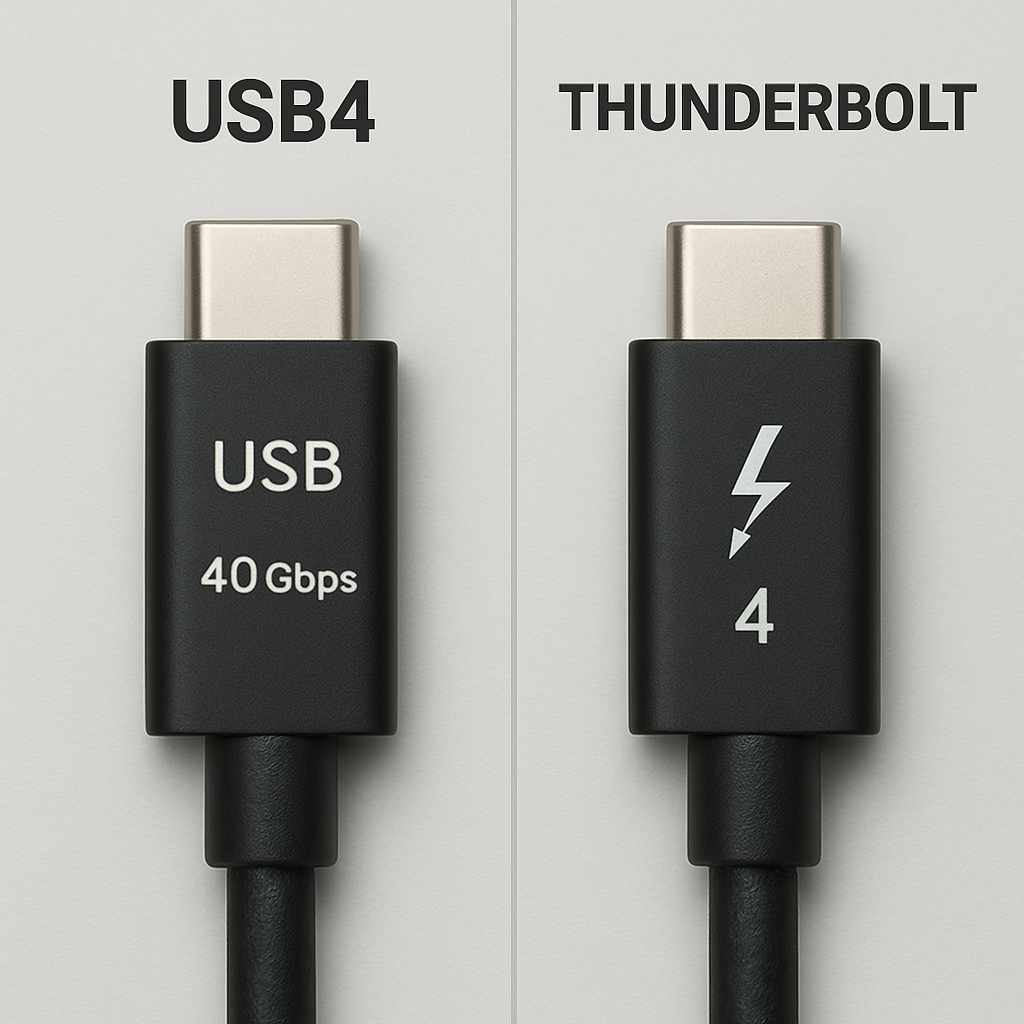
The USB-C connector has become ubiquitous in modern technology, offering a versatile interface for data transfer, video output, and power delivery. However, the term ‘USB-C’ refers solely to the connector type, not the capabilities of the cable or port, leading to potential confusion among consumers.
Two prominent standards utilizing the USB-C connector are USB4 and Thunderbolt 4. While they share similarities, their specifications and performance guarantees differ significantly.
Understanding USB4 and Thunderbolt 4
USB4 is an open standard developed by the USB Implementers Forum (USB-IF). It offers data transfer rates up to 40Gbps, supports DisplayPort 2.0 for video output, and can deliver power up to 100W. However, USB4’s specifications allow for variability. For instance, some USB4 cables and devices may only support 20Gbps data transfer rates, and the standard’s minimum power delivery requirement is 7.5W. Additionally, USB4’s display support can vary, with some implementations supporting only a single display.
In contrast, Thunderbolt 4, developed by Intel, mandates stricter performance standards. It guarantees 40Gbps data transfer speeds over cables up to 2 meters in length, supports dual 4K displays or a single 8K display, and requires a minimum power delivery of 15W. Thunderbolt 4 also ensures compatibility with PCIe at 32Gbps, providing consistent and reliable performance across certified devices and cables.
Cost Considerations: USB4 vs Thunderbolt 4 Cables
Given the stringent certification process for Thunderbolt 4, cables bearing this designation often come at a premium price. This raises the question: can a USB4 cable serve as a cost-effective alternative without compromising performance?
While USB4 cables can be more affordable, they do not inherently guarantee the same performance levels as Thunderbolt 4 cables. The USB4 standard’s flexibility means that not all cables support the maximum 40Gbps data transfer rate or the higher power delivery and display capabilities. Therefore, when considering a USB4 cable as an alternative, it’s crucial to scrutinize the cable’s specifications carefully.
Some reputable manufacturers produce USB4 cables that meet or even exceed Thunderbolt 4’s performance standards but lack official certification. These cables can offer similar data transfer speeds, power delivery, and display support at a lower cost. However, the absence of certification means there’s no formal guarantee of performance, and compatibility with all Thunderbolt 4 features may not be assured.
For example, certain USB4 cables are designed to support 40Gbps data transfer rates, 8K video output, and power delivery up to 240W. These cables can function similarly to Thunderbolt 4 cables in many scenarios, potentially offering savings without significant performance trade-offs.
In conclusion, while USB4 cables can provide a more budget-friendly option, they require careful selection to ensure they meet the necessary performance criteria. Consumers should assess their specific needs—such as data transfer rates, display support, and power delivery requirements—and verify that the chosen USB4 cable aligns with these needs. Opting for cables from reputable brands and reviewing detailed specifications can help mitigate the risks associated with forgoing Thunderbolt 4 certification.