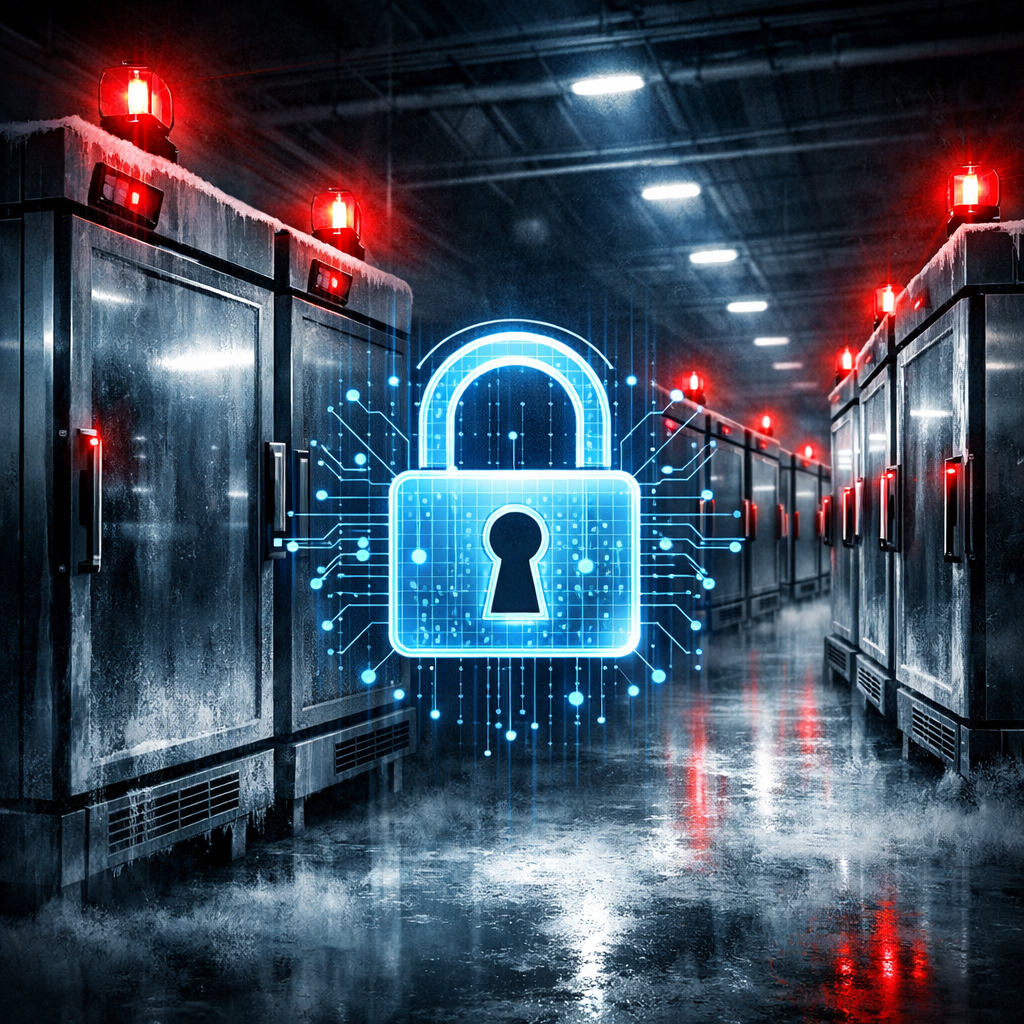
The U.S. government has raised alarm over escalating cyberattacks targeting industrial refrigeration systems—affecting everything from grocery stores and cold storage facilities to military bases and blood banks. Agencies including CISA and the FBI issued a joint warning on November 5, 2026 cautioning that internet-connected freezers and cold-chain monitoring systems are being exploited by hackers. These incidents are threatening critical sectors like food supply, medicine transport, agriculture, and national defense.
Recent incidents overseas have spotlighted the vulnerability of refrigeration infrastructure. In the UK and several European nations, attackers remotely increased temperatures in freezing and chilling units, resulting in substantial spoilage of food and produce. One particularly serious event involved a blood bank in France, where hackers manipulated the cooling systems—though intervention prevented irreversible damage to stored blood products. Meanwhile, the U.S. military has reported similar intrusions into its freezer networks.
One recurring target is refrigeration equipment manufactured by a Danish company whose freezers were found to be running without vendor-issued security updates. The issue underscores risks associated with aging or minimally maintained devices—especially those connected to the internet without adequate protection. Although U.S. authorities have not officially attributed the attacks, security analysts believe Iran is the likely source.
To prevent further breaches, the government advised businesses and institutions using refrigeration systems to remove remote-control capabilities from internet exposure, strengthen or replace weak passwords, apply patches or updates, and decommission equipment that is no longer supported by its maker. A supplemental guidance sheet warns bad actors may force units into nonstop heating or defrost cycles, which can cause inventory loss or even equipment damage.
Technical Risks and Strategic Implications
If successfully exploited, compromised refrigeration systems could be used to alter temperatures in ways that damage goods, trigger fire risks, or drastically reduce equipment lifespan. For example, defrost heaters might be engaged or units repeatedly cycled, leading to both physical damage and significant economic loss. These scenarios pose elevated risk in sectors requiring precise temperature control—food production, pharmaceuticals, blood supplies, and defense logistics.
The scale of recent attacks demonstrates a shift: attackers are no longer just probing vulnerabilities but targeting essential infrastructure. Refrigeration systems once considered low-stakes are now front-line targets in broader cyber threats that could impact supply chains and operational readiness across multiple industries.
Analysts say this development marks a growing intersection between cybersecurity and physical safety. As more industrial systems operate online, risk grows—not just to data but to tangible assets, public health, and national security.
This surge in attacks comes at a time when supply chain integrity is already under pressure. With industries heavily reliant on cold-chain systems for perishable goods and critical medicine, any disruption could have cascading effects—from food spoilage and wasted resources to public health crises. Companies and government agencies must prioritize cybersecurity hygiene in areas historically overlooked.
What to watch next: how quickly affected organizations deploy network segmentation, implement remote-access controls, and replace legacy units still exposed online. Also important will be attribution efforts and whether new sanctions or retaliatory cyber defenses emerge in response to suspected state-sponsored activity.
Analytical Take: These attacks underscore a critical shift in cyber threat strategy—one that doesn’t just steal data but targets physical infrastructure and essential services. Freezers may seem mundane, but they are keystones in food safety, medical logistics, and military readiness. The takeaway: cybersecurity for industrial systems can no longer be an afterthought. Defenders will need not only better technology and stricter policies, but also increased collaboration across sectors to ensure resilience against threats that cross the digital-physical divide.