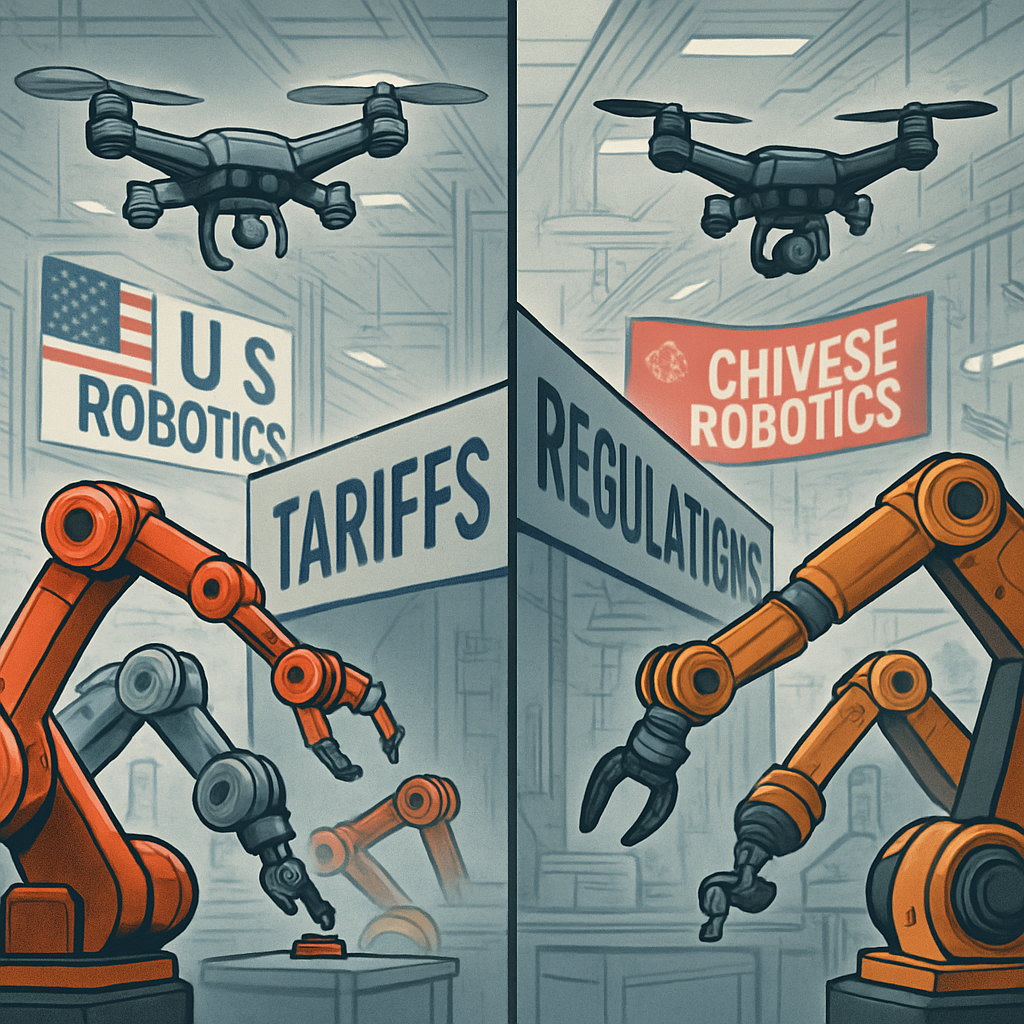
In recent months, the U.S. has introduced tighter rules on robotic systems and imposed steep tariffs on imported drones and related components, citing national security risks. These new policies include restrictions on foreign-made advanced robots by the FCC and component-specific tariffs starting in September, with further measures slated for 2027.
The U.S. Pushes Back Against Foreign Drone and Robotics Imports
This summer, Washington expanded its regulatory effort, adding foreign-made drones and advanced robotic devices to the FCC’s Covered List—a framework initially aimed at telecom and surveillance gear—thereby limiting how these technologies from overseas can be used in the U.S. market. Simultaneously, the administration rolled out high tariffs on imported drones and is preparing additional penalties on drone components for next year.
China’s Manufacturing Edge Remains Dominant
China still holds a commanding lead in manufacturing humanoid robots. In the first half of 2026, it produced roughly 22,000 units globally, making up almost all such shipments. The top five global players—AgiBot, Unitree, Galbot, UBTECH, and Leju Robotics—are all Chinese and together captured 86% of worldwide shipments during that same period.
Part of China’s advantage comes from its ability to vertically integrate more of the robot supply chain. Companies like Unitree are internalizing components, while automakers like XPeng are leveraging their experience in electronics and vehicle manufacturing to push cost reductions. As prices fall, they can deploy more units, gather more data, and further improve performance.
Splintered Markets and New Competition Frontiers
Observers suggest that what we’re seeing isn’t a hard U.S. vs China divide so much as a shift toward regional technology ecosystems. Where security regulations are strict—like in the U.S. and among its allies—there could be demand for domestically made or NDAA-compliant systems. In contrast, price-sensitive markets in Latin America, Southeast Asia, Europe, and the Middle East may favor lower-cost, China-led products.
The drone sector is already splitting this way. U.S.-based companies are directing efforts toward long-range autonomous and defense-grade platforms where reliability and oversight matter most. Chinese manufacturers continue to dominate low-end consumer drones by volume, while the real competition is moving upstream to batteries, power systems, and payload technologies.
Allies and Alternatives Rise
Other countries aren’t standing still. Japan, Taiwan, and South Korea are building on strengths in automotive, manufacturing, semiconductors, and precision engineering to stake out positions between low-cost Chinese robotics and high-security Western options. For example, corporations like Hyundai (which owns Boston Dynamics) and Toyota are increasingly investing in humanoids.
Domestic U.S. robotics firms have welcomed the new FCC rules, which may prevent foreign robots from becoming entrenched before foundational regulations are in place. Yet even those companies acknowledge they need access to advanced components and materials currently tied to global supply chains to remain competitive.
Why This Matters: For decades, China has leveraged its manufacturing scale to dominate emerging tech markets. The U.S. is starting to erect substantial regulatory hurdles in robotics and drones—but it hasn’t yet built matching industrial scale. What’s likely to emerge is not a clean split between U.S. and Chinese technology dominance but a global market divided by policy, safety, and cost. The key battlegrounds ahead will be component architecture—batteries, AI modules, payload systems—and whether Western, allied, or Chinese ecosystems can sustain innovation under different economic pressures. Watch where trade blocs, regulation, and automation investment intersect—they’ll shape who builds, sells, and sets standards in robotics for years to come.