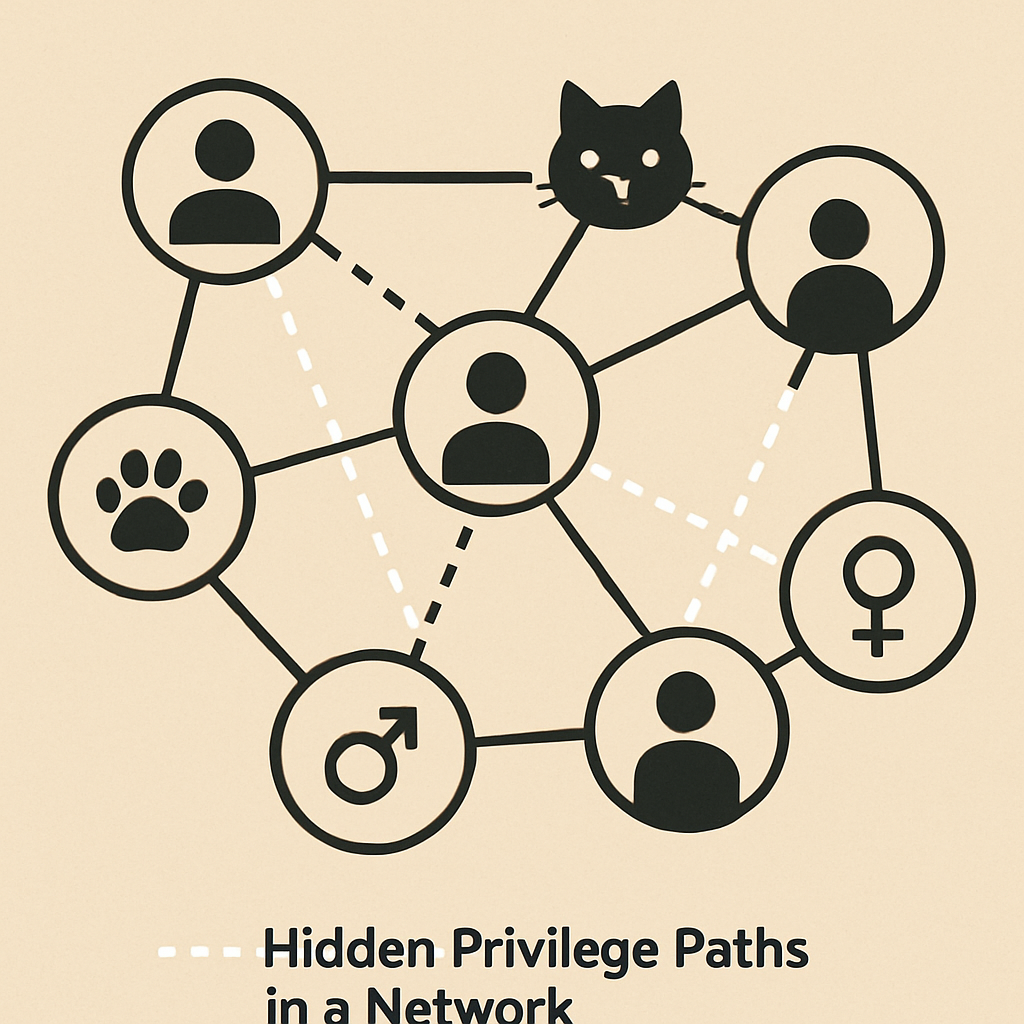
Identity management is at the core of modern cybersecurity, yet many organizations struggle to fully comprehend the extent of privileges associated with each identity. This lack of visibility creates opportunities for attackers to exploit hidden privilege paths, leading to significant security breaches.
The Overlooked Identity Challenge
Recent data highlights the severity of this issue. Credential abuse is implicated in 39% of all breaches, as reported in the 2026 Verizon Data Breach Investigations Report. Additionally, non-human identities—such as service accounts, API keys, and machine credentials—now outnumber human users by ratios ranging from 45:1 to 80:1 in typical enterprises, according to research from Rubrik Zero Labs and KPMG. Alarmingly, 97% of these machine identities possess excessive privileges beyond their functional requirements.
Understanding Privilege Escalation Paths
The primary risk lies not in individual over-permissioned accounts but in the interconnected chains of access they form. For instance, an attacker might compromise a contractor’s VPN credentials through malware. This contractor’s account could have local admin rights on a shared workstation due to nested group memberships. From there, the attacker could access a file server via a cached service account credential, ultimately reaching a production cloud environment through an API key. Such multi-step escalation paths are often invisible to security tools that operate in isolation, each monitoring only a segment of the environment.
The Proliferation of Non-Human Identities and AI Agents
The rapid growth of non-human identities exacerbates this challenge. Entro Labs research indicates a 44% year-over-year increase in non-human identities between 2024 and 2025, with enterprises managing over 250,000 machine identities across cloud environments. In cloud-native and DevOps settings, the ratio of non-human to human identities can reach 144:1. Many of these identities are over a year old without credential rotation, increasing vulnerability. The introduction of AI agents further complicates the landscape, as they often inherit extensive access permissions without adequate governance, creating new vectors for potential breaches.
Addressing these hidden privilege paths requires a comprehensive approach to identity security. Organizations must implement integrated solutions that provide visibility across all identities—human, machine, and AI—to effectively manage and mitigate the risks associated with privilege escalation.