Active Directory (AD) serves as the backbone of identity management in numerous enterprises, storing critical information such as user credentials and security policies. This central role makes it a prime target for cyber attackers, with the DCSync attack emerging as a particularly stealthy and potent method of compromising AD environments.
What is a DCSync Attack?
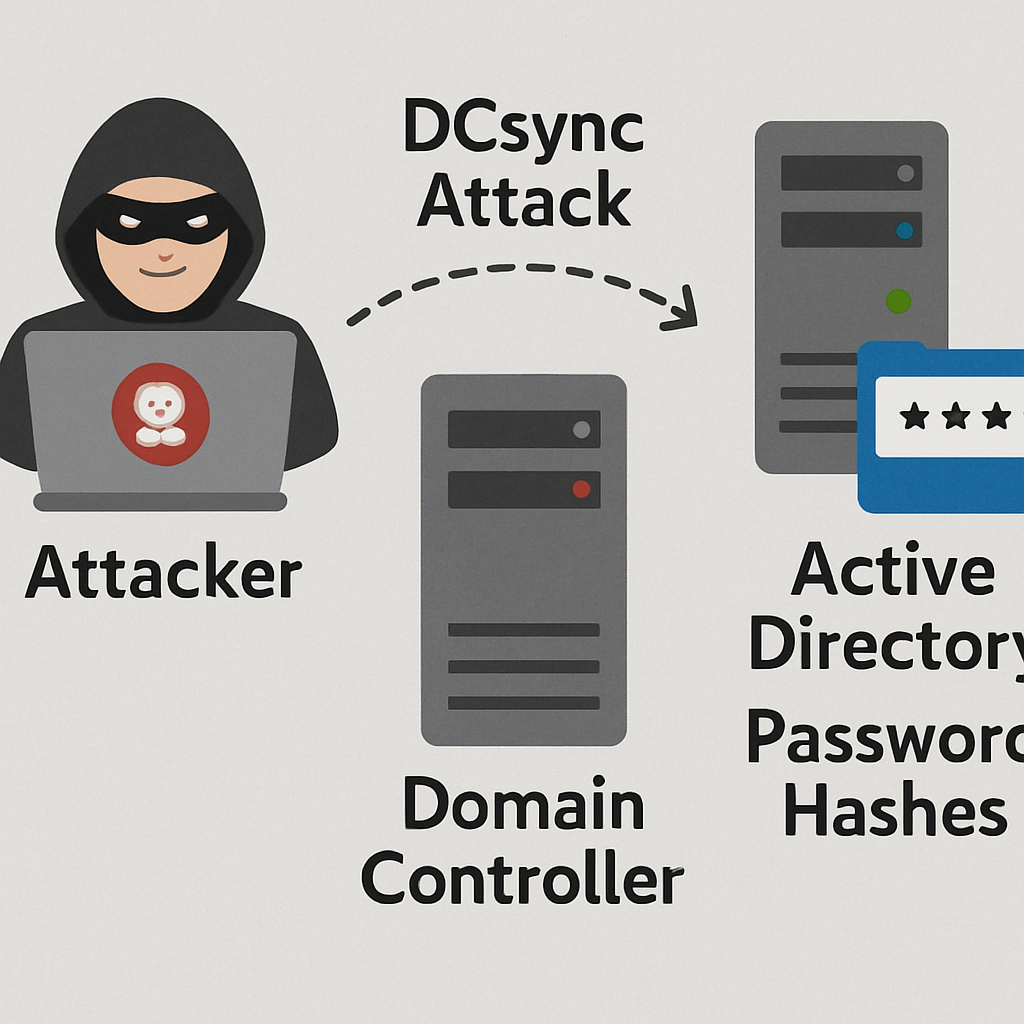
A DCSync attack is a technique that allows an attacker to impersonate a domain controller (DC) and request sensitive information, including password hashes, from another DC. By exploiting the Directory Replication Service Remote Protocol (MS-DRSR), the attacker can retrieve credentials without executing code on the target DC or accessing its database files directly. This method leverages the legitimate replication processes used by DCs to synchronize data, making it challenging to detect.
How DCSync Works
The attack unfolds in several stages:
- Initial Compromise: The attacker gains control over an account with specific replication permissions within the AD environment.
- Impersonation: Using tools like Mimikatz, the attacker impersonates a DC and sends a replication request to a legitimate DC.
- Data Extraction: The targeted DC, believing the request is from a peer, responds by providing the requested data, including NTLM hashes and Kerberos keys.
This process allows the attacker to obtain credentials for any account in the domain, including highly privileged accounts like the KRBTGT service account. With the KRBTGT hash, the attacker can create Golden Tickets, granting unrestricted access across the domain.
Why DCSync is Particularly Dangerous
Several factors contribute to the severity of DCSync attacks:
- Stealth: The attack mimics legitimate replication traffic, leaving minimal traces and evading many traditional detection mechanisms.
- Scope: By extracting the KRBTGT hash, attackers can generate Golden Tickets, facilitating persistent and widespread access within the domain.
- Minimal Requirements: The attack doesn’t require code execution on the DC or access to its database files, reducing the risk of detection.
Defending Against DCSync Attacks
To mitigate the risk of DCSync attacks, organizations should consider the following measures:
- Audit Permissions: Regularly review and restrict accounts with replication permissions to only those that absolutely require them.
- Monitor Replication Requests: Implement monitoring to detect unusual replication requests, especially those originating from non-DC machines.
- Enhance Logging: Enable detailed logging of replication activities to facilitate the detection of unauthorized requests.
- Regularly Rotate KRBTGT Passwords: Periodically changing the KRBTGT account password can invalidate any previously obtained hashes, reducing the risk of Golden Ticket attacks.
Understanding the mechanics and implications of DCSync attacks is crucial for organizations relying on Active Directory. By implementing stringent access controls, continuous monitoring, and proactive security practices, enterprises can bolster their defenses against this silent yet formidable threat.