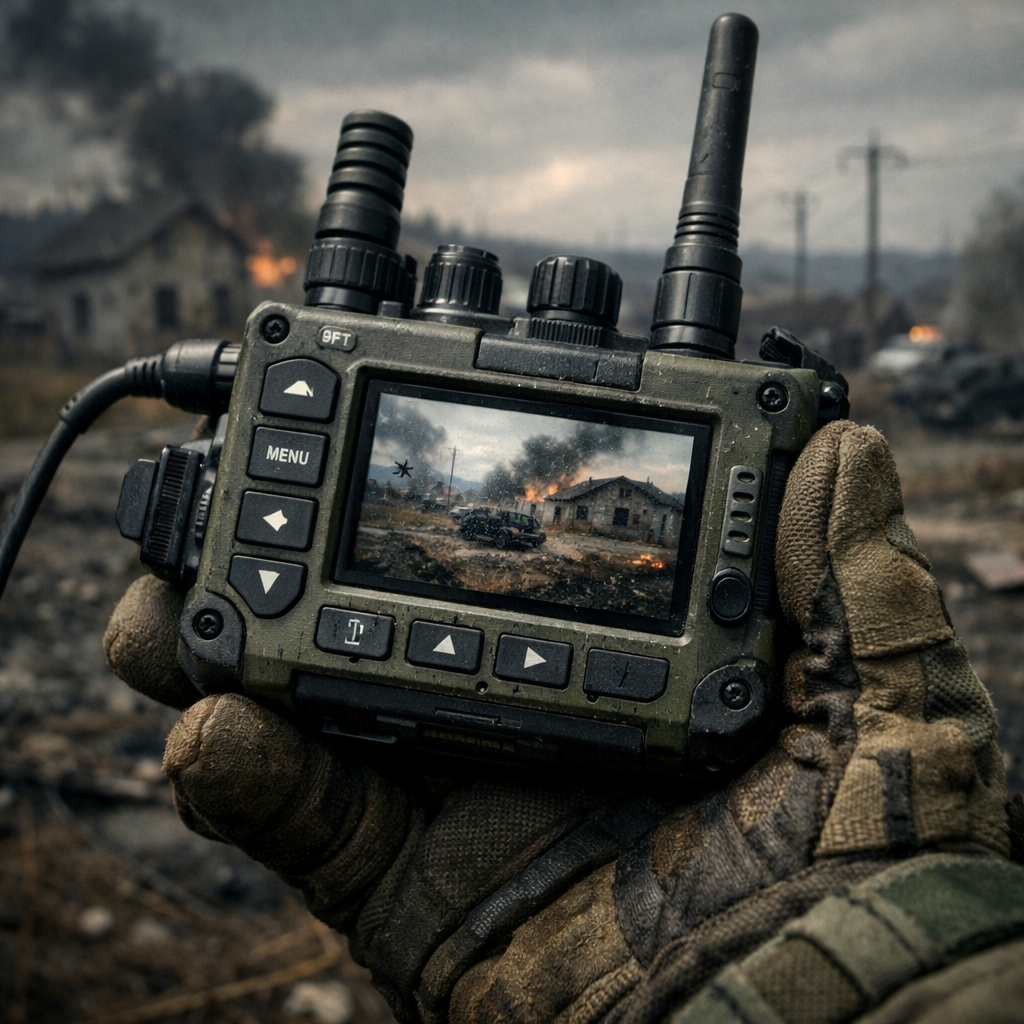
Ukraine’s frontline tech teams now carry a new weapon: a palm-sized receiver that intercepts live video from Russian drones. Built by Kyiv-based startup CODE380, the D·Vision SDR lets operators see exactly what a drone is streaming — real images of its target — before it reaches its destination.
The D·Vision SDR picks up unencrypted video signals broadcast by Russian drones, displaying the feed on a small screen. That capability gives Ukrainian defenders early insight into attack paths and targeting intentions.
How It Works
Weighing around 10 ounces, the D·Vision SDR is significantly lighter than earlier Ukrainian models, some of which tipped the scales by multiple pounds. It also works on the newer radio channels adopted by Russian Molniya drones as of June. Previous detectors often failed to pick up or barely captured those frequencies.
A Ukrainian radio expert known as “Flash” Beskrestnov warned that the shift in channels has left many traditional detectors blind. He’s also cautioned that a future move toward digital video would render receivers like this one ineffective.
Broader Context & Implications
The development comes amid growing evidence that Russia is expanding its drone tech. Some Molniya versions now use AI chips and avoid transmitting any signals, making them harder to detect or intercept. Without radio emissions, tools that rely on signal detection are helpless.
That trend highlights why tools like the D·Vision SDR matter — they fill the gap when drones are still broadcasting. But as adversaries adapt, by encrypting video or going silent via AI guiding, the balance could shift again.
Ukraine’s investment in compact, accessible electronic warfare gear like this reflects a shift toward agile, distributed capabilities rather than large, centralized systems. Lightweight reconnaissance tools help defenders react faster and with more precision.
Why It Matters: The D·Vision SDR demonstrates how signal intelligence and open-source vulnerabilities are now as central to modern warfare as missiles and armor. But its effectiveness depends on adversaries continuing to use unencrypted, analog signals. As drone technology moves toward encryption and AI-driven non-emissive operation, defense teams will need faster innovation. This device is a stopgap — effective now, but one that will need successors in a rapidly evolving electronic battlefield.