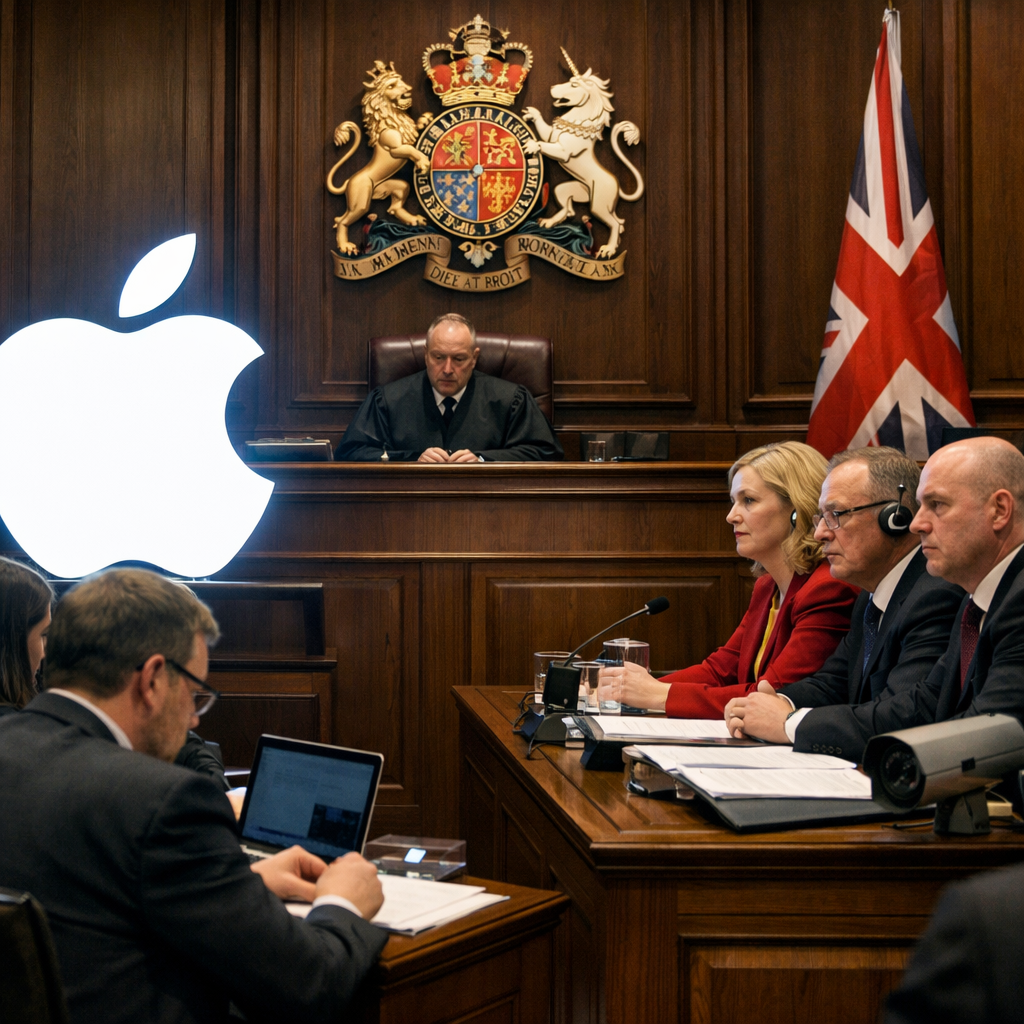
The UK Home Office has lost a legal bid to keep secret its order demanding that Apple allow access to encrypted user data. A tribunal ruled that the government failed to prove that making public the existence of a “technical capability notice” (TCN) would harm national security, meaning the request to keep it under wraps has now been rejected. The order compels companies to hand over data even if it’s end-to-end encrypted.
What’s a Technical Capability Notice?
A TCN is a government tool that can force tech firms to alter or add features that let security services access user data, even if that data is normally protected by strong encryption. In this case, the Home Office had made such a demand of Apple. Prior secrecy policies meant the government would typically neither confirm nor deny whether it ever issued such notices.
How the Secrecy Fight Turned
The tribunal found that the government’s policy was undermined by its own actions. Media reports and conversations with U.S. officials had already made public that Apple had been served with a TCN. Because of this, keeping the order secret any longer was seen as hollow — the tribunal called suggestions that public confirmation would offer new intelligence to malicious actors “fanciful.”
The decision now opens up legal challenges initiated by Apple — alongside ongoing lawsuits from civil liberties groups — to be heard largely in public. Apple’s most recent challenge followed a second TCN. Earlier, the Home Office withdrew an earlier TCN affecting both UK and U.S. customers, then replaced it with a notice believed to target only UK users.
Impact on Apple’s Encryption Policies
In February 2025, Apple ceased allowing new users in the UK to enable its Advanced Data Protection (ADP) feature, which adds end-to-end encryption to categories like photos, notes, and backups — data Apple itself cannot decrypt. Users who already had ADP enabled will still have it, but those who didn’t can’t opt-in any longer. Existing UK users are being given a grace period to disable ADP if they wish to keep using iCloud, though no deadline has been announced.
Without ADP, those categories are protected under standard encryption — meaning Apple holds the keys and must comply with legal demands. Services that were already end-to-end encrypted by default, such as iMessage, FaceTime, passwords, and health data, remain unaffected.
Next Steps in the Legal Battle
The tribunal’s decision paves the way for more transparent hearings into whether government demands for backdoors in encryption are lawful. A significant hearing for one of the civil liberties groups is scheduled for December 2026. Apple’s legal team will also press its challenge to the replacement TCN, arguing over what it means for user privacy, encryption guarantees, and trust in its services.
This ruling marks a significant moment in the tension between user privacy and state surveillance powers. While courts and the public now gain access to debates once kept behind closed doors, many questions remain: how far the government can force access to encrypted data, what checks will be imposed on such powers, and whether international norms will shift as a result.