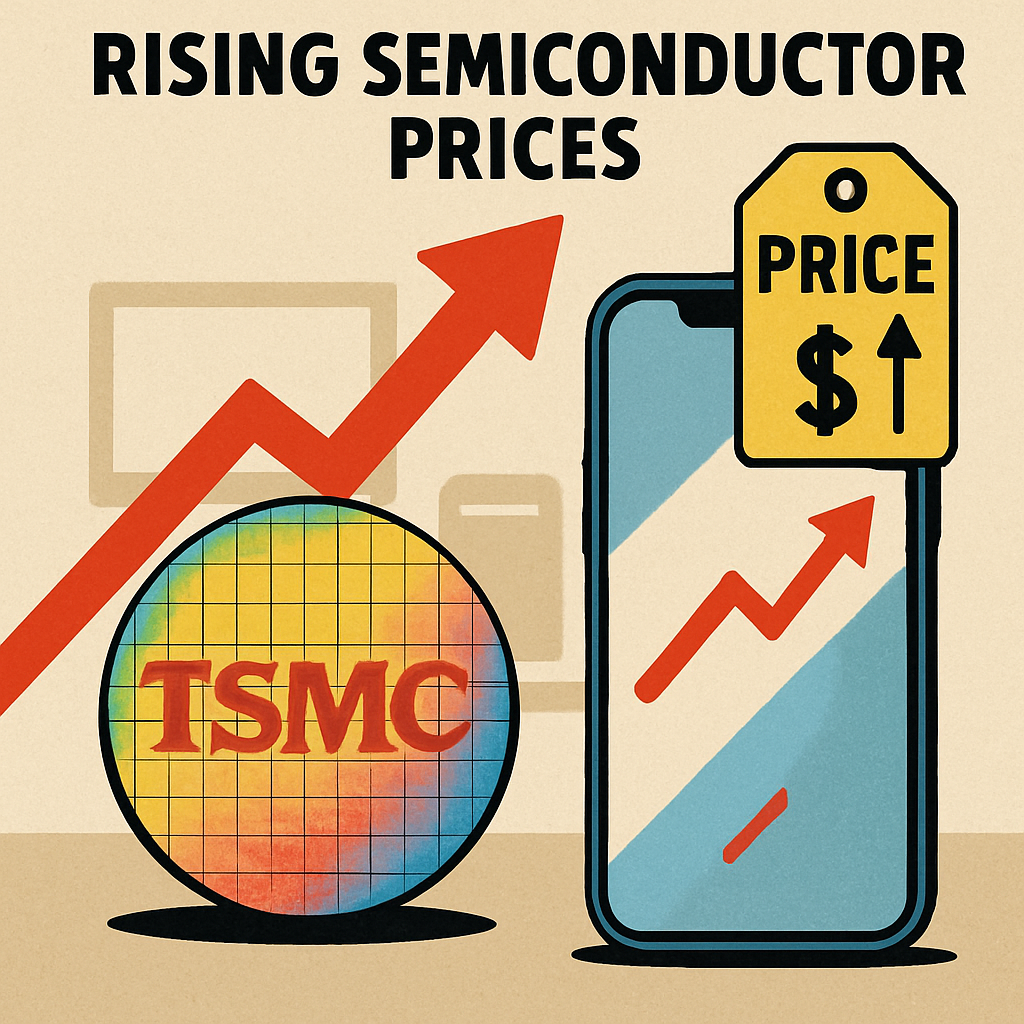
Apple’s longstanding chip supplier, Taiwan Semiconductor Manufacturing Company (TSMC), has announced plans to increase the prices of its advanced semiconductor nodes by 5% to 10% starting in 2026. This decision is expected to impact the production costs of future Apple devices, including the iPhone 18 and subsequent models.
TSMC’s price adjustments will affect chips manufactured using sub-5-nanometer processes, such as the 4nm, 3nm, and the forthcoming 2nm technologies. These advanced nodes are integral to the performance and efficiency of modern smartphones and computers. The 2nm process, in particular, is anticipated to be significantly more expensive, with wafer costs potentially exceeding $33,000 each.
Several factors contribute to TSMC’s decision to raise prices. The company cites increased production costs associated with developing and manufacturing cutting-edge semiconductor technologies. Additionally, external economic pressures, including tariffs imposed by the U.S. government, have further strained the financial dynamics of chip production.
Apple, as TSMC’s largest client, relies heavily on these advanced chips for its iPhone and Mac product lines. The upcoming A20 chip, expected to power the iPhone 18, will be produced using TSMC’s 2nm process. With the anticipated rise in chip costs, Apple faces a critical decision: absorb the increased expenses, thereby reducing profit margins, or pass the costs onto consumers through higher product prices.
Historically, Apple has managed to maintain consistent pricing for its flagship devices despite rising component costs. However, the substantial nature of TSMC’s price hike may challenge this approach. Industry analysts suggest that consumers could see price increases in future iPhone models, particularly the Pro variants, which utilize the most advanced chips.
Beyond smartphones, other Apple products are also likely to be affected. The MacBook lineup, which incorporates Apple’s M-series chips produced by TSMC, may experience more pronounced price adjustments. Reports indicate that MacBook prices have already seen increases, with entry-level models rising by $100 to $300, depending on the configuration.
In addition to TSMC’s price hikes, the broader semiconductor industry is grappling with a global shortage of memory chips, driven by surging demand from AI data centers. This shortage has led to skyrocketing prices for DRAM and NAND storage components, further complicating cost management for device manufacturers like Apple.
As Apple navigates these challenges, consumers should be prepared for potential price increases across the company’s product lineup. While Apple may implement strategies to mitigate the impact, such as optimizing supply chain efficiencies or adjusting product configurations, the cumulative effect of rising component costs is likely to influence retail pricing in the coming years.
In conclusion, TSMC’s decision to raise chip prices underscores the complexities of the global semiconductor supply chain and its direct impact on consumer electronics. As production costs escalate, companies like Apple must balance profitability with market competitiveness, a dynamic that will shape the pricing strategies of future devices.