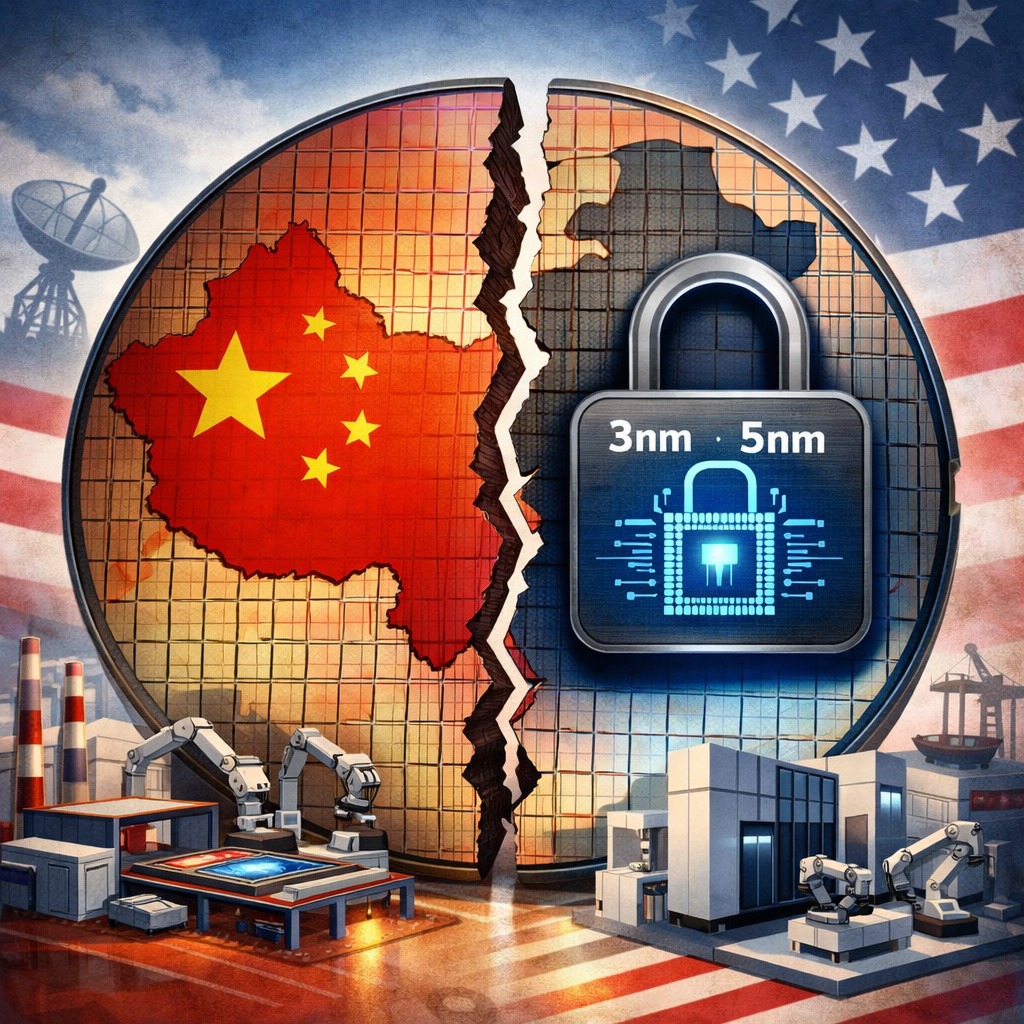
Taiwan Semiconductor Manufacturing Company (TSMC), key supplier to Apple, has suspended processing orders for advanced chips from Chinese clients due to recently tightened U.S. export regulations. These new rules prohibit the supply of chips produced using 16nm processes or finer to companies in China unless they obtain a U.S. export license or qualify for an exemption.
The revised oversight caps Chinese access at older semiconductor technologies—specifically 28nm or 40nm nodes—meaning modern demands like high-bandwidth memory (HBM), used heavily in artificial intelligence (AI) data center applications, are now largely off limits. Chinese firms seeking chips via 16nm or below must now secure explicit U.S. approval before moving forward. Orders placed before receiving approval are subject to suspension. This change represents a sharp shift from previous practice, where TSMC could evaluate customer designs post-order to determine if they needed a license or exemption.
US Export Controls Reshape Global Chipmaking
These export restrictions are part of a broader U.S. strategy aimed at maintaining technological leadership in AI and semiconductors. By curbing China’s ability to acquire more advanced chip fabrication capabilities, the U.S. is protecting firms like Nvidia from rising competition in the AI space. Such moves have already ignited geopolitical tension and placed China in a more constrained position technologically.
TSMC’s own operations depend heavily on U.S. technologies—especially design tools known as EDA (Electronic Design Automation) software—for manufacturing its top-tier chips. Not complying with the expanded restrictions risks severe consequences: loss of access, possible penalties, or even bans from doing business with U.S. firms. Those risks make full compliance a necessity rather than a choice.
TSMC has stated that it will adhere to the enhanced legal requirements around exporting to China. The firm has informed Chinese customers that any orders for chips at 16nm or smaller must pause until the customer obtains the needed U.S. license or exemption. Meanwhile, companies already approved on a U.S. list of compliant clients—such as Apple, AMD, and Nvidia—remain unaffected. To date, no Chinese firms feature on this list.
Disruption is expected along China’s AI supply chain. With semiconductor makers barred from accessing advanced process nodes, Chinese firms will struggle to deploy high-performance AI accelerators and may be forced to rely on less efficient or legacy hardware.
Why this matters: These export control updates mark one of the most aggressive efforts yet to limit the flow of advanced semiconductor tech into China. For TSMC, compliance is not optional: it underpins its relationship with U.S. partners and ensures access to critical software and tools. Companies in China now face major delays or reevaluated product strategies, especially in AI infrastructure.