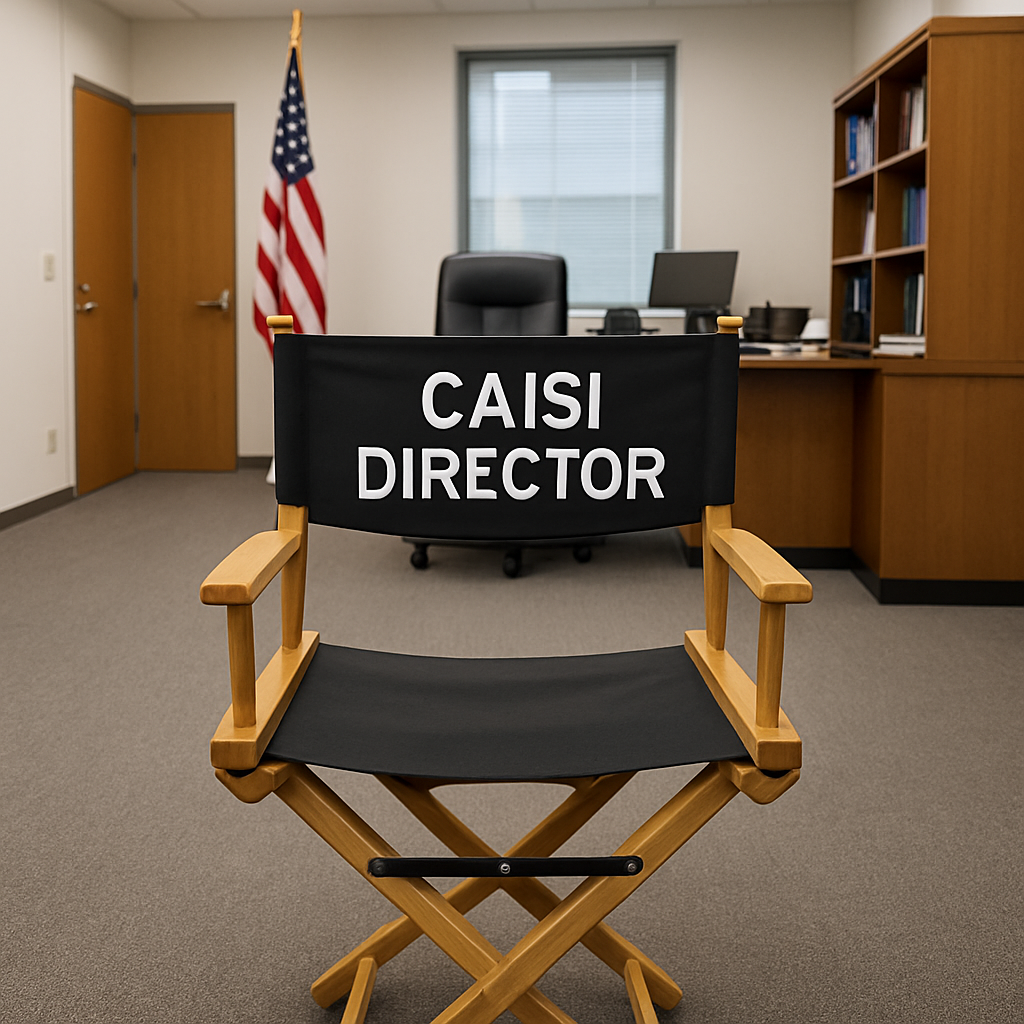
Chris Fall has stepped down as director of the Center for AI Standards and Innovation (CAISI), leaving the Trump administration’s AI safety organization without a permanent leader just three months after his appointment. The U.S. Department of Commerce has not disclosed the reasons for Fall’s resignation.
Arvind Raman, director of the National Institute of Standards and Technology (NIST), will serve as CAISI’s acting director while continuing to lead NIST, according to Commerce Department spokesperson Kristen Eichamer.
CAISI, operating within the Department of Commerce, is designed to support government testing and collaborative research involving commercial artificial intelligence systems. The center is expected to play a crucial role as federal agencies develop methods to assess powerful AI models before their broad public deployment.
Fall’s departure comes amid growing uncertainty regarding AI leadership within the Trump administration. David Sacks, who previously served as the White House’s AI and crypto czar, stepped down in March, and the administration has not publicly named a replacement. This leaves several areas of AI policy, evaluation, and security oversight in transition.
These leadership changes are significant for cybersecurity professionals, as advanced AI systems may introduce new risks such as automated vulnerability discovery, large-scale phishing, malicious code generation, and accelerated exploitation research. Government testing frameworks are becoming vital for AI developers to identify and mitigate these risks before releasing highly capable models.
In June, President Donald Trump signed an executive order on AI that called on developers to voluntarily submit their models for government capability assessments before full deployment. According to an Axios report, the order requires federal agencies to develop an AI evaluation framework within 60 days, creating uncertainty for AI companies. OpenAI stated it limited GPT-5.6 distribution at the U.S. government’s request. Similarly, Anthropic temporarily disabled access to its Fable 5 and Mythos 5 models to comply with a Commerce Department export-control directive, although both companies later expanded access when the restrictions were lifted.
The administration has also begun implementing the Gold Eagle clearinghouse, an initiative aimed at identifying, prioritizing, and coordinating responses to cybersecurity vulnerabilities. The White House announced that the clearinghouse has started accepting and prioritizing reported vulnerabilities while coordinating scanning verification activities. Gold Eagle is expected to influence decisions regarding access to cutting-edge AI models, thereby aligning AI governance with national cybersecurity policy, especially when model capabilities can be used for defensive or offensive cyber operations.
However, CAISI was not listed as a participating agency in the public announcement regarding Gold Eagle. This omission, along with Fall’s resignation, raises questions about how CAISI will fit into the administration’s broader AI security strategy.
Additionally, this change comes at a time when Chinese open-source AI models are gaining attention in the global AI landscape, further emphasizing the need for robust leadership and clear policies in the U.S. AI sector.
Fall’s resignation underscores the challenges in maintaining consistent leadership within critical AI safety and policy roles. As AI technologies continue to evolve rapidly, the absence of stable leadership could hinder the development and implementation of effective AI governance frameworks. It is imperative for the administration to address these vacancies promptly to ensure the United States remains at the forefront of AI innovation and security.