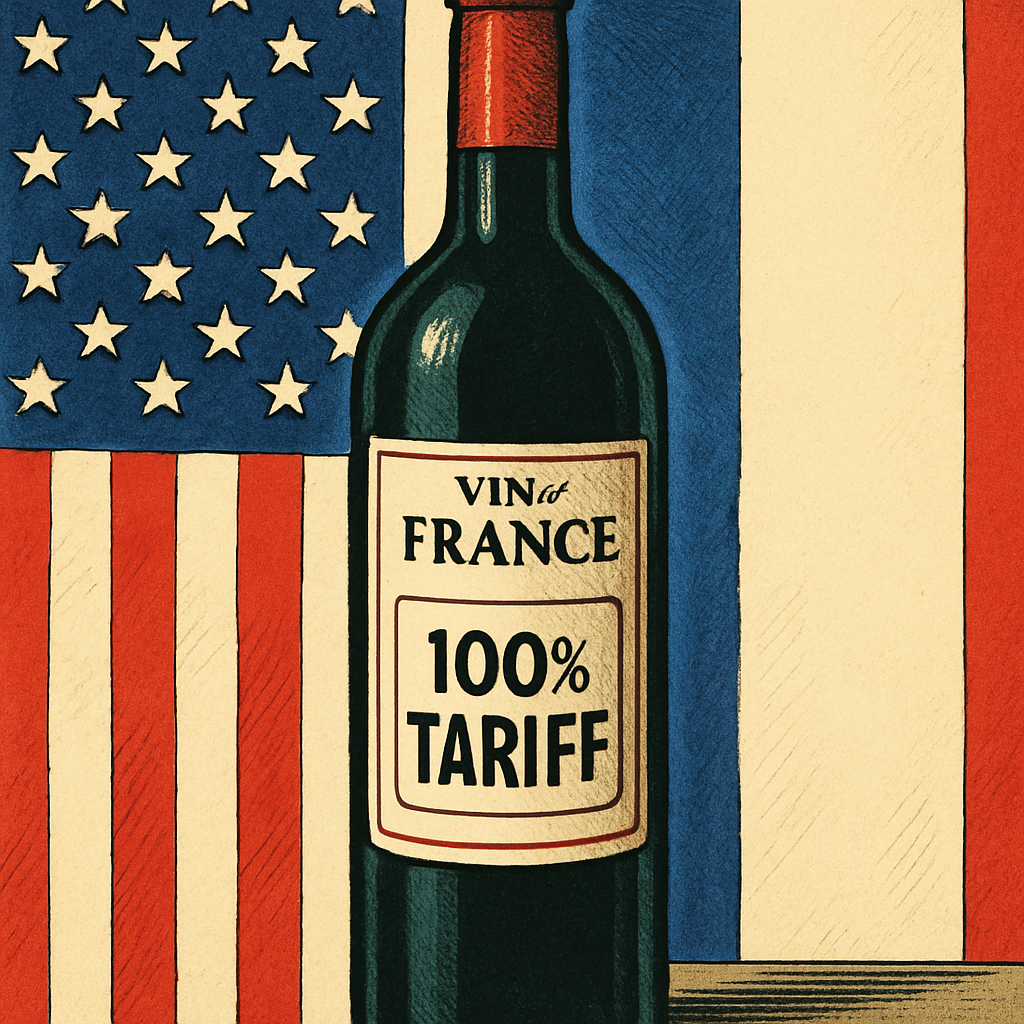
President Donald Trump has issued a stark warning to France, threatening to impose a 100% tariff on French wines if the nation does not repeal its Digital Services Tax (DST). This tax, implemented in December 2019, targets major U.S. technology companies operating within France.
The DST was introduced to ensure that tech giants like Apple, Google, Amazon, and Facebook contribute their fair share of taxes in countries where they generate significant revenue. France’s move was part of a broader European effort to address the taxation challenges posed by the digital economy.
In response to the DST, President Trump has expressed strong opposition, viewing it as an unfair targeting of American companies. He has previously indicated that such measures could lead to retaliatory actions, including tariffs on French imports.
France’s wine industry is a significant component of its economy, with exports to the United States being particularly valuable. A 100% tariff on French wines could severely impact French wine producers and exporters, potentially leading to a decline in sales and economic repercussions within the sector.
This development underscores the ongoing tensions between the United States and European nations over digital taxation and trade policies. The potential imposition of tariffs highlights the complexities of international trade relations and the challenges in reaching agreements on taxing multinational digital companies.
As the situation unfolds, stakeholders in both the tech and wine industries will be closely monitoring the actions of both governments. The outcome could set a precedent for how digital services are taxed globally and how nations respond to perceived economic injustices.
In the broader context, this standoff reflects the difficulties in balancing national interests with the realities of a globalized digital economy. It also raises questions about the effectiveness of unilateral tax measures versus coordinated international efforts to address the taxation of digital services.
Given the potential economic impact on both sides, it is crucial for the United States and France to engage in constructive dialogue to resolve this dispute. Finding a mutually agreeable solution could prevent further escalation and foster a more cooperative approach to the challenges posed by the digital economy.