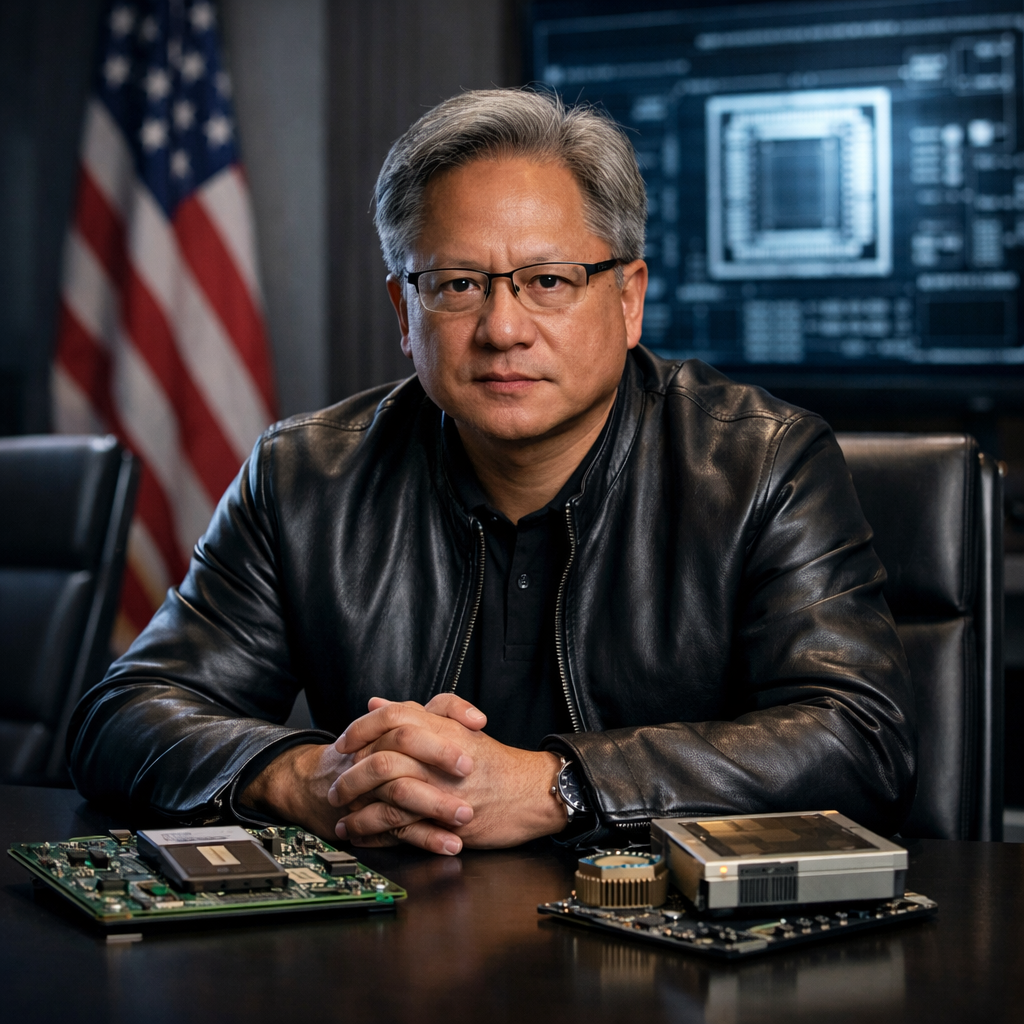
NVIDIA founder Jensen Huang has officially been reinstated as CEO and president, a move now backed by President Donald Trump. In a post on Truth Social, Trump declared that the U.S. government has found no national security risk posed by Huang’s return, and stated there is no evidence he engaged in any unlawful behavior. NVIDIA’s board also noted that after consulting with senior government officials, Huang’s reinstatement was viewed as safe from a national security standpoint.
Trump also claimed that Attorney General Todd Blanche has confirmed there’s no proof of wrongdoing by Huang—though the AG has not made any formal public statement to validate that claim. Such presidential assertions touching on ongoing investigations are rare given that law enforcement typically acts independently from the executive.
Hints emerged over the weekend that Trump already anticipated the board’s decision. During a conversation with a PBS journalist, he remarked that Huang was “back where he should be” and expressed belief that Huang had done “absolutely nothing wrong,” though stopped short of confirming that reinstatement was certain.
Accusations and Government Concerns
Huang had faced serious accusations of extramarital affairs, notably one with an executive at NVIDIA and another with an employee at a Singapore-based chip purchaser called Megaspeed. The most problematic allegation involved a figure identified as Alice Huang (unrelated), who was a senior executive at Megaspeed. U.S. authorities feared the relationship might have compromised sensitive information or helped China gain access to advanced AI chips, which are subject to export controls.
Despite these concerns, Trump maintained that there was no proof Alice Huang was a spy, and said the relationship did not present a national security threat. He emphasized that while China is a strategic rival, not all exposure to it equates to wrongdoing.
The Board’s Decision & Next Steps
The NVIDIA board’s move to bring Huang back followed evaluations informed partly by dialogues with high-level government actors. They concluded that even with ongoing concerns over the CEO’s past relationships, restoring him did not jeopardize U.S. national security. The board also pledged to continue an internal review of export compliance to ensure the company meets legal and national security obligations.
Trump’s full statement lauded Huang’s leadership, framed it as vital for the American economy, and labeled him a “great patriot and national treasure.” He reiterated calls for NVIDIA to carry out its compliance review, particularly regarding U.S. export control laws.
This development places Huang back in a high-profile role at NVIDIA amid serious scrutiny—but with presidential and governmental support that significantly alters the tone of the public narrative. The reinstatement suggests officials believe whatever evidence may exist does not meet the threshold for legal jeopardy, even if questions around ethics and corporate governance remain unanswered.
It’s a defining moment for NVIDIA—not just as a company but as a symbol in the broader geopolitical arms race over AI, chip technology, and U.S.-China rivalry. Moving forward, how the ongoing investigations—if any—unfold, and what future disclosures may emerge, will be things to monitor closely. Huang’s return isn’t the end of the story, just a prominent new chapter.