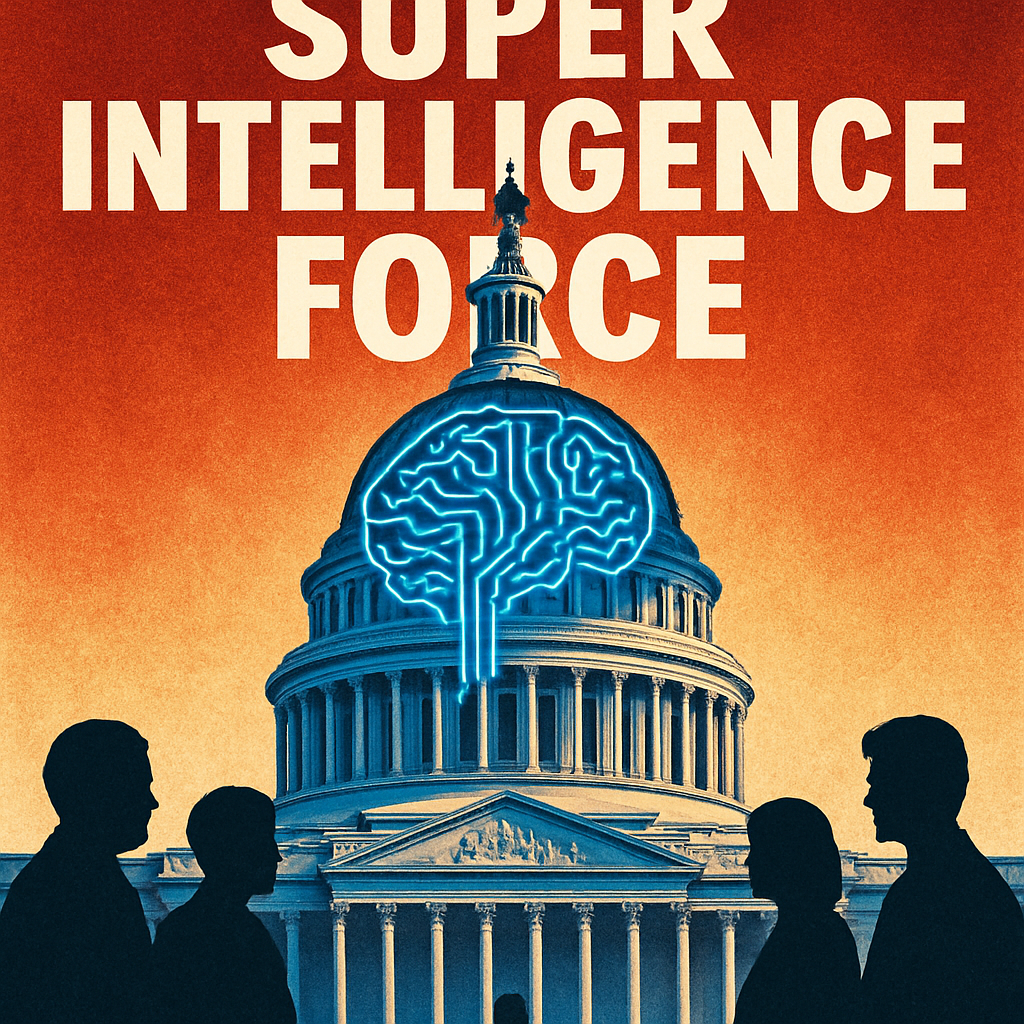
President Donald Trump has introduced a new federal initiative, the Super Intelligence Force, aiming to centralize the U.S. government’s approach to advanced AI systems—or “super intelligence.” The force will be led by National Intelligence Director Jay Clayton, who will effectively fill the role of a national AI czar, supported by prominent figures across federal regulatory and research agencies. Its mandate: ensure America retains global preeminence as AI accelerates beyond the transformations of the industrial revolution, the internet, and previous tech waves.
This move follows recent escalating tensions around AI safety debates, which the president has publicly downplayed as overhyped concerns championed by the political left. Nonetheless, earlier this year he proposed forming an AI task force with a high-IQ requirement for its members. More recently, he issued an executive order urging the federal rebranding of “artificial intelligence” as “super intelligence,” suggesting this term captures the technology’s magnitude more accurately.
Who’s in Charge — And What They’ll Do
Jay Clayton will chair the new Super Intelligence Force. He’ll oversee the group alongside several vice chairs: FTC Chair Andrew Ferguson, Undersecretary of War for Research and Engineering Emil Michael, and OPM Director Scott Kupor. Collectively, they’ll drive policy and strategy for the federal government.
The task force has 120 days to draft a comprehensive report, identifying both opportunities and risks tied to super intelligence. A key part of its mission is to anticipate threats enabled by this technology—without throttling innovation or letting regulatory capture distort the playing field.
Why “Super Intelligence”? The Branding—and the Stakes
The term “super intelligence” replaces “artificial intelligence” in official executive orders and federal rhetoric. Trump and his team are adopting this phrasing to emphasize seriousness and raise the urgency around policy and governance. The new label has already been echoed, unevenly, by some technology leaders. Notably, the White House asked industry executives to sign a non-binding safety pledge under this rebranded framing.
While safety concerns are now linked explicitly to national competitiveness, especially in relation to China, the administration has stressed that America can’t fall behind global rivals. Clayton has emphasized that one of the greatest risks is being the second mover.
The task force’s charter makes clear that while it must prepare response plans for super intelligence–driven threats, it must also guard against regulatory overreach and capture by entrenched interests. The balancing act between safeguarding innovation and protecting society is central.
Trump’s newly minted Super Intelligence Force signals a dramatic escalation in the government’s AI posture. By transforming “AI” into “super intelligence,” it reframes both the rhetoric and the stakes around these emerging technologies. What remains to be seen is how this task force will define its powers, enforce its benchmarks, and whether Congress or the courts will push back.