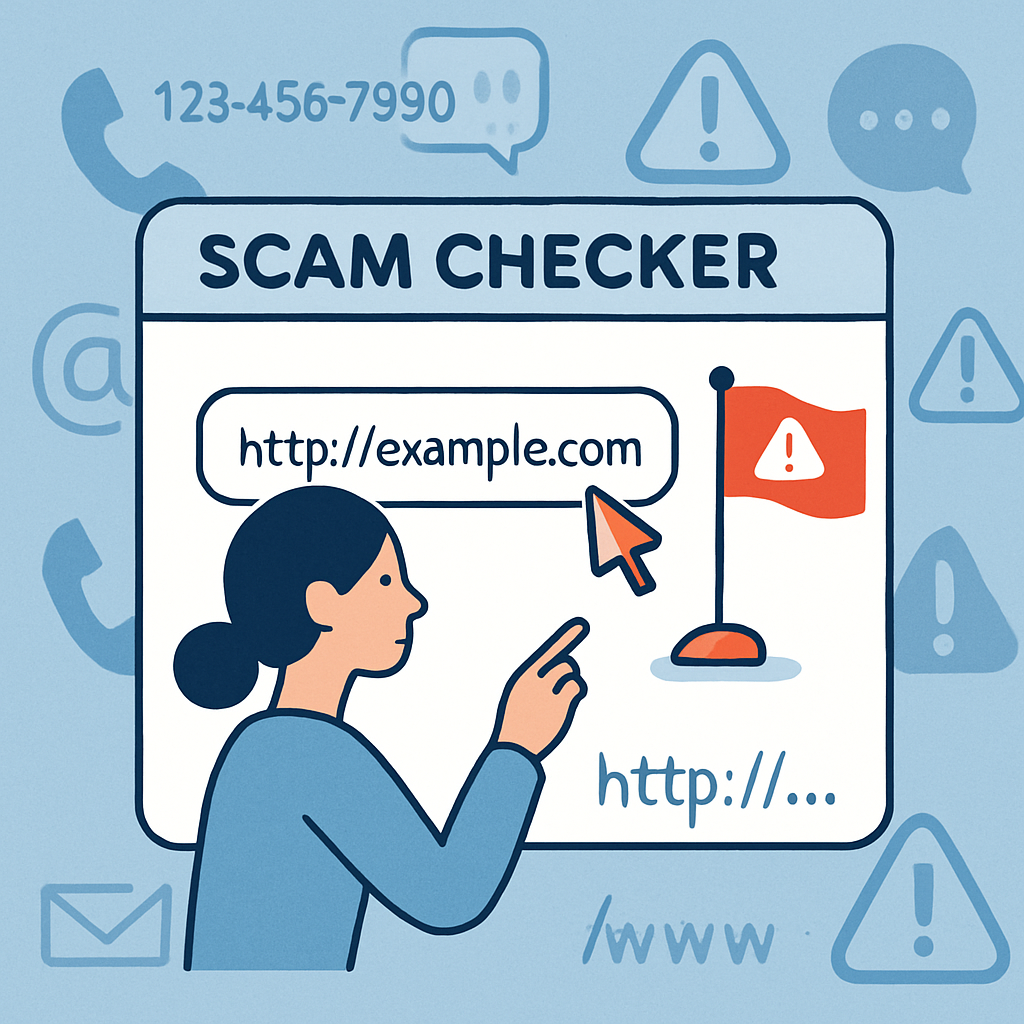
Truecaller is taking its long-accumulated scam intelligence to the public web. Today it launched Scam Checker, a service—available through web and Android—that allows anyone to paste in a phone number, message, or link to see if it’s connected to known fraud. It taps into reports from its crowdsourced ScamFeed community to surface real-time scam tracking—no app, no sign-in required for basic checks. More sensitive data, like the name tied to a number, still needs Truecaller’s signed-in service.
Initially rolling out in India, Scam Checker will later expand to Latin America, the Middle East & Africa, and Southeast Asia. For now, reports submitted by users feed directly into the tool’s detection system, helping both consumers and Truecaller’s enterprise fraud products. The company says consumer protection is its primary aim.
How Scam Checker Works
When a user submits a link, Scam Checker follows any redirects or expanded shortened URLs to land on the final destination. That endpoint is checked against Truecaller’s private risk database plus other fraud indicators. If someone submits a suspicious message instead, the service pulls out numbers or URLs and performs the same check.
Truecaller says scams aren’t just over voice calls anymore. They’ve spilled into texts, messaging apps, and online links. In one 2025 survey among Indian adults, nearly half of scammers used messaging apps, while SMS and voice accounted for 37% and 32%, respectively. That shift underlies the need for tools like Scam Checker.
The company sees real demand. Truecaller estimates people conduct about 14 million monthly searches to verify suspicious numbers or links—based on traffic and search behavior. ScamFeed, its community-report platform, already has some 20,000 live scam reports in India, with roughly 1,300 new entries weekly. Globally, in a recent seven-day span, Truecaller flagged over 20 million fraudulent messages among nearly 13 billion evaluated.
Why This Shift Matters
Truecaller’s core business—caller ID—faces growing competition, especially in India. Telecom operators are implementing government-backed Calling Name Presentation, while Google and Apple have added native caller/spam identification and protection. India’s telecom regulator recently mandated that caller-ID apps share user-reported spam data with carriers—a change Truecaller criticized as draconian and one-sided.
With scams now coming through multiple vectors—not just voice—Truecaller is evolving alongside the problem. The firm plans to add support for screenshot uploads and expand the kinds of scams Scam Checker detects. What started as a caller ID tool is fast becoming a multi-channel scam detection platform.
Truecaller built its reputation on identifying unwanted calls and spam through caller ID, and over 500 million users have used it. But as fraudsters shift tactics to exploit messaging, links, and even multimedia, the company must stretch its capabilities to stay relevant. With Scam Checker, it moves toward intercepting threats wherever they emerge—not just after the phone rings. What it pursues next—whether deeper AI risk scoring, real-time detection in chat apps, or broader geographic rollout—will show whether Truecaller can maintain its lead in scam interception as the threat landscape shifts.