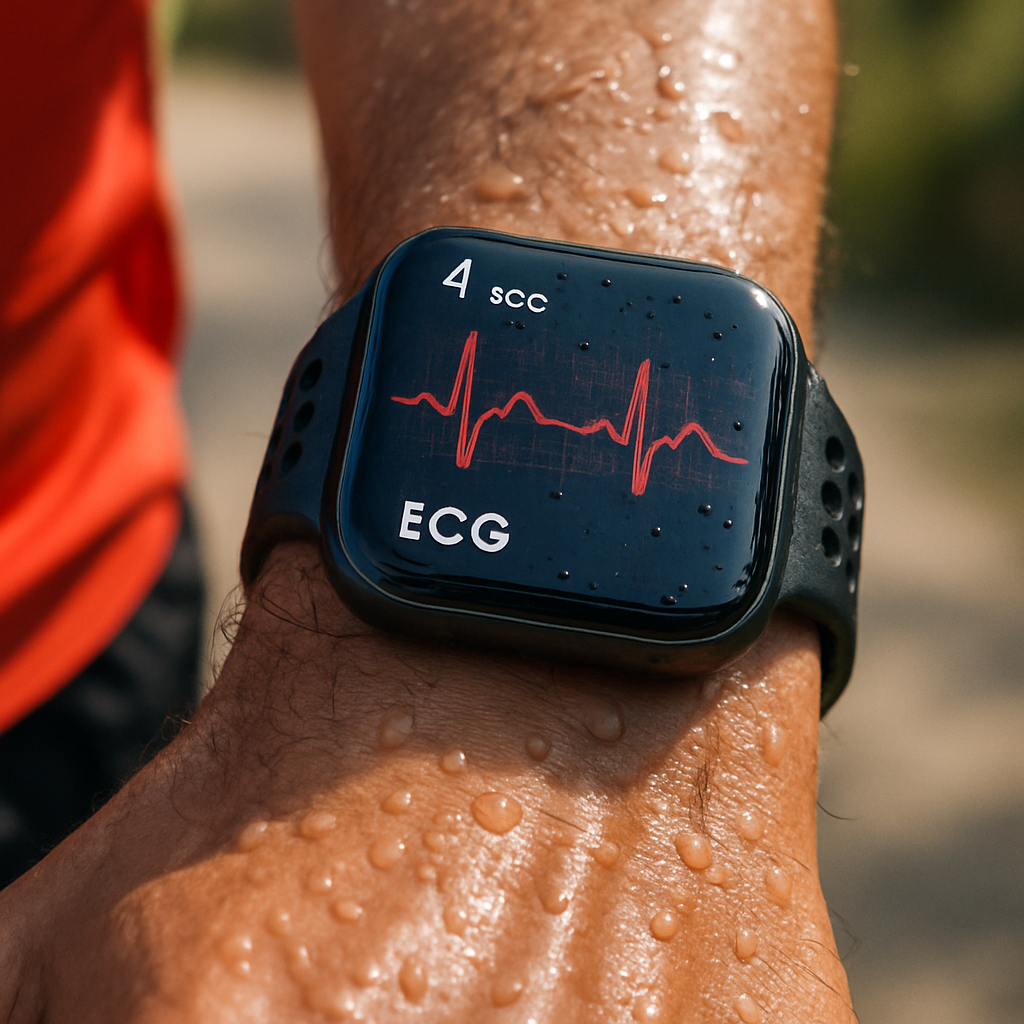
While training for a triathlon, one athlete noticed his performance was declining rapidly—despite rigorous effort. His heart was racing to an alarming 219 beats per minute. Thankfully, his Apple Watch picked up an abnormal ECG reading, triggering alarm bells that led him to seek medical attention. The diagnosis? An undetected heart condition requiring open-heart surgery. Today, he says the Watch essentially saved his life. ([appleinsider.com](https://appleinsider.com/articles/26/08/20/triathlon-runner-credits-apple-watch-for-saving-his-life/))
Apple has recently released a new installment in its “True Stories” series, featuring Connor, who describes how the Apple Watch’s ECG feature first appeared with an alert of possible atrial fibrillation during a training session. Connor explains that he’d been trying to regain fitness by entering a challenging triathlon, but noticed his heart rate was uncontrollably high during the effort. That alerted him to the ECG result shown on his wrist. ([appleinsider.com](https://appleinsider.com/articles/26/08/20/triathlon-runner-credits-apple-watch-for-saving-his-life/))
Once diagnosed, Connor underwent open-heart surgery. He now reports feeling significantly rejuvenated, describing his recovery as breathing new life into his body. The surgical procedure addressed the underlying heart condition. Today, he expresses deep gratitude for the Apple Watch and its monitoring tools, saying it’s been a transformative tool in preserving his health. ([appleinsider.com](https://appleinsider.com/articles/26/08/20/triathlon-runner-credits-apple-watch-for-saving-his-life/))
How this fits into Apple Watch’s health mission
This isn’t the first time Apple has spotlighted instances where its health and safety Wearable features made a difference. Other stories in the “True Stories” lineup are similarly dramatic—one view shows how fall detection called for help after a cycling accident resulted in a broken collarbone. What makes these narratives compelling is their personal style: footage seems self-shot, edited with small imperfections, featuring the tools in everyday use, not polished marketing. ([appleinsider.com](https://appleinsider.com/articles/26/08/20/triathlon-runner-credits-apple-watch-for-saving-his-life/))
Apple’s CEO has often emphasized the company’s legacy will likely be tied to what its products accomplish in health rather than just technological innovation. Over time, stories like Connor’s, and others with fall detection or heart monitoring, are shared more frequently, reinforcing Apple’s claim that wearable health features aren’t mere perks—they’re potentially life-changing safety nets. ([appleinsider.com](https://appleinsider.com/articles/26/08/20/triathlon-runner-credits-apple-watch-for-saving-his-life/))
The ECG feature on recent Apple Watch models is FDA-cleared to detect irregular heart rhythms such as atrial fibrillation. It is one of several health-monitoring tools that also include irregular rhythm notifications, heart rate monitoring, and fall detection. These capabilities have drawn regulatory attention, as well as growing recognition from health professionals, for detecting conditions people may not otherwise know about until late-stage symptoms or emergencies hit.
The story of Connor spotlights the promise of connected health. It suggests that wearable devices are not just fitness trackers anymore—they can serve as frontline health monitors. As smartwatches keep adding sensors and getting more sophisticated, they could become essential diagnostics tools. For those wondering whether the tradeoff of wearing one is worth it, Connor’s experience argues strongly in favor.
What this means for consumers and the industry is clear: as regulations and medical endorsements evolve, health features in consumer electronics are shifting from novelty to necessity. WatchOS updates, sensor accuracy, and data privacy will be key things to follow. If Connor’s story becomes less of an exception and more of a standard outcome, we’re entering a new era where your wristwatch might truly watch out for you.