At just 24, Aisata Diallo built hands-on experience braiding textured hair while attending Northeastern University. What began as a side gig to address limited access to braiders and stylists evolved into spotting a major problem: the physical toll of braiding. Styles can demand hours of twisting and weaving, often leaving braiders grappling with wrist pain, carpal tunnel syndrome and overall fatigue. Diallo launched Tressfecta to lighten that burden. She’s developing a hardware tool aimed at helping with one of the trickiest, most time-consuming steps—a method called Plait Pilot.
Plait Pilot: Targeting the Longest Step in Braiding
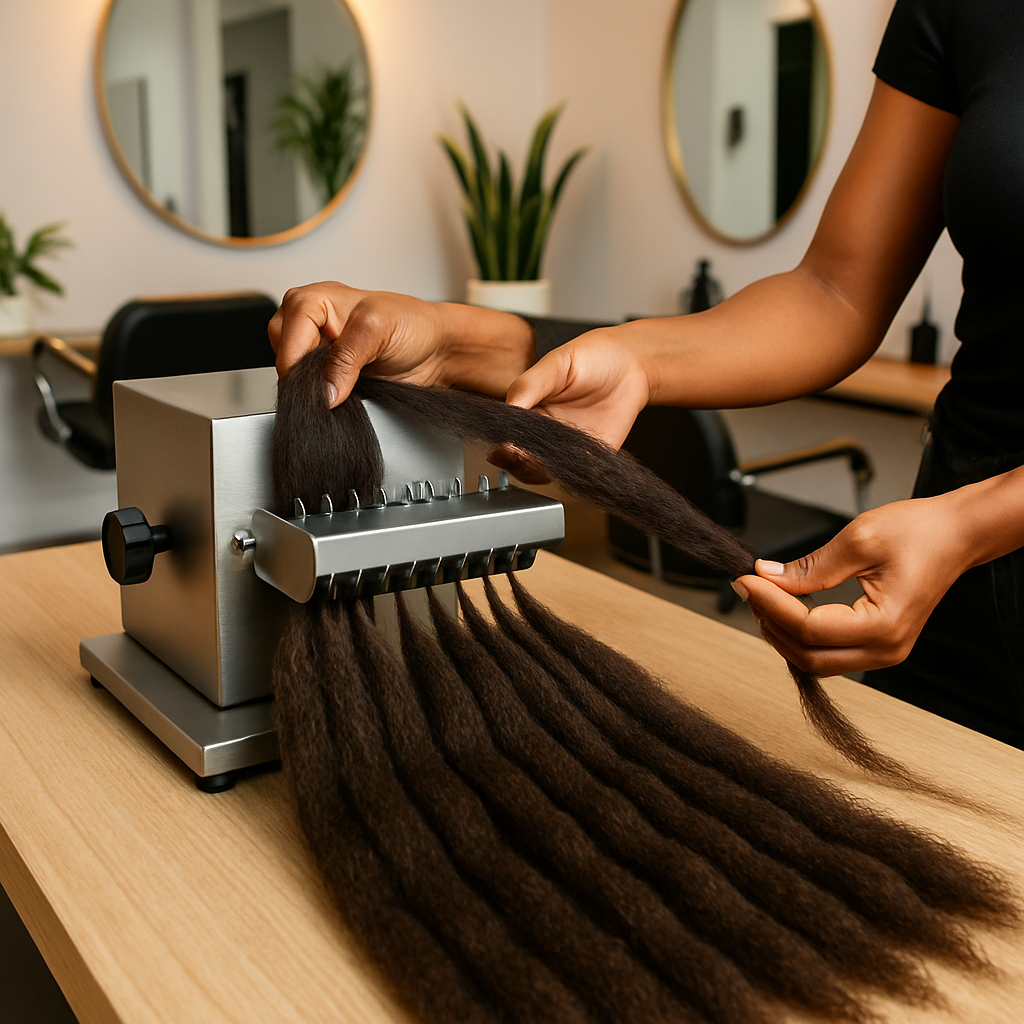
The most labor-intensive part of many braided styles is separating the braid extensions—also known as “packs”—into smaller sections before actually braiding. Depending on the size and density of the hair, this separation process alone can take hours. Diallo’s Plait Pilot is designed to simplify that prep stage. The device allows a stylist to place packs of braiding hair on top, choose the desired section size, and have the tool automatically divide and sortie the hair. Instead of spending endless time manually sorting, stylists grab sections as they braid.
Designing for Real Diversity, Prelaunch Reality
Textured hair comes in endless variations of curl, coil, thickness, width and density—and styles vary just as much. That means any device must accommodate wide disparities in length, density, and type; one size won’t suit all. Diallo has been deeply involved in styling herself to understand these nuances, and she makes clear that this isn’t a simple engineering job.
Tressfecta is still building out its prototype and hasn’t launched to market. Diallo has been bootstrapping the operation while tapping into accelerator programs and grants for early funding. On the product front, she’s partnering with working stylists and braiders to test Plait Pilot. She also participated in this year’s Startup Battlefield 200 during Disrupt, using the event to pitch her prototype and build awareness in San Francisco.
Hardware remains especially tough terrain in beauty tech. The costs of materials, manufacturing, user testing, and iterating prototypes all add up. Diallo acknowledges that preparing to raise funds—especially for a physical product—is a major part of her path ahead.
What this means
Tressfecta’s Plait Pilot could mark a meaningful shift in how braiders work—offloading some of the most tedious, physically demanding beginnings of styles. If it succeeds, the tool won’t just save time—it could preserve health and improve ergonomics in a traditionally labor-intensive craft. Key to its success will be how well it adapts to the vast variety of hair textures, and whether it can scale affordably. The coming months will show if it’s a braided revolution or just another idea waiting in prototypes.