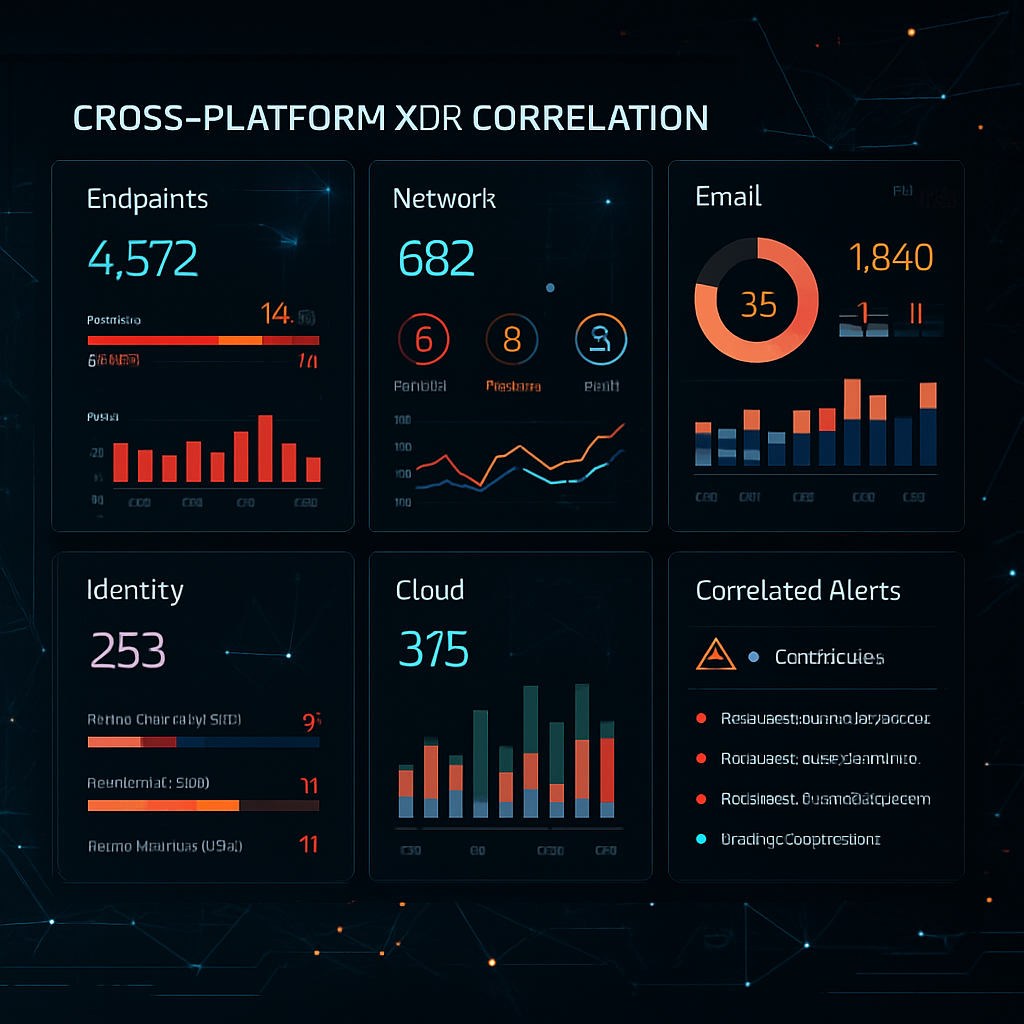
Extended Detection and Response (XDR) has become a cornerstone of modern cybersecurity, designed to stitch together telemetry from endpoints, network, email, identity, cloud, SaaS, and OT into unified, investigable incidents. Rather than managing dozens of disjointed alerts, XDR places emphasis on reducing alert volume and improving incident fidelity. In 2026, ten platforms stood out for performance—but choosing among them comes down to two architectural decisions that most affect long-term value. Here’s a deep dive into what led the field this year.
2026 XDR Scorecard: The Leaders & Key Trends
Palo Alto Cortex XDR claimed the top spot with an 8.8/10, scoring perfect marks in both data coverage and signal correlation. It remains deeply native across endpoints, networks, identity, and cloud telemetry—especially when paired with Palo Alto firewalls. But its openness and pricing on third-party data ingestion present trade-offs. CrowdStrike followed at 8.5, standing out for its detection engineering and threat intelligence assets, with strong endpoint coverage; module licensing and log volume costs, however, are areas for careful evaluation. SentinelOne Singularity ranked third with the highest response automation score and relatively openness for third-party data, though coverage breadth lags leaders.
Microsoft Defender XDR is powerful for organizations already using its ecosystem, particularly those with Microsoft 365 E5, due to how naturally its tools interlink. But its openness and pricing for data outside that stack tend to complicate procurement. Trend Micro Vision One scored strongly across several telemetry types—especially email and server workloads—but with middling correlation depth compared to the top few.
Strong Contenders & Specialized Picks
Cisco XDR stood out for openness and its ability to leverage network telemetry, especially for organizations with existing Cisco networking hardware. But it trails some leaders in detection fidelity. Trellix brings breadth through its combined McAfee and FireEye heritage; it’s solid in multi-surface detection but demands more from operations teams. Fortinet’s Security Fabric XDR performs best inside a full Fortinet estate—if your infrastructure already aligns, you get strong automation, though its native coverage and detection depth aren’t always the deepest.
Sophos XDR is especially applicable to small or mid-sized organizations—its operability is the highest across this list, with a manageable console, guided investigations, and integration with email, endpoint, and firewall security. eSentire Atlas XDR rounds out the list with an open XDR architecture plus 24/7 managed detection, threat hunting, and alerts. But for teams wanting full control, the managed-service component can feel less transparent.
Native vs. Open: The Architectural Fork in the Road
A central decision for every buyer is whether to go with “native” XDR or an “open” XDR approach. Native XDR platforms use telemetry from their own stack—endpoints, cloud, network—that vendor owns from end to end. That delivers powerful correlation and signal clarity, especially when you’re heavily invested in that vendor’s ecosystem. The downside is vendor lock-in and potentially costly data ingestion when integrating external tools.
Open XDR treats third-party telemetry as a first-class citizen. You keep existing security investments, but correlation tends to be shallower due to inconsistent logging formats. For environments that are diverse, with multiple vendors in play, open XDR is often more realistic than trying to force everything into a single platform.
What Buyers Should Focus on
First, map out all the telemetry sources you expect XDR to correlate—identity, email, network, endpoints, cloud applications, SaaS. With vendor scorecards showing data coverage as 25% of the total, that environmental fit is mission-critical.
Second, model data ingestion costs. Many XDR platforms charge significantly based on log volume, and surprises here are a frequent cause of budget overruns. Get actual usage estimates ahead of time.
Third, test whether the alert reduction really materializes. The success metric isn’t how many alerts, but how many incidents still need analyst action.
And finally, settle the native vs open question early. It shapes everything downstream—from cost, to visibility, to integration with third-party tools.
Bottom line: Palo Alto Cortex XDR remains the highest-scoring option for organizations with a mature Palo Alto foundation and a security operations center (SOC). CrowdStrike fits best when you want top-tier detection engineering and threat intelligence, while SentinelOne is compelling for operations limited in staff and looking for automation. Microsoft Defender XDR is a strong choice if you already hold Microsoft 365 E5. Meanwhile, Sophos is often the most usable pick for mid-market teams, based on its operability.
Analytical Angle: As XDR matures, it’s clear that the native vs open distinction is not simply technical—it’s strategic. Organizations centered around one vendor can get huge returns from native XDR, but the risk is locking themselves in and paying premium prices for peripheral integrations. Conversely, open XDR offers flexibility—and avoids vendor lock-in—but may demand more effort to achieve strong detection. The smartest bets will map XDR to both current security posture and where the organization plans to grow. Evaluating telemetry, cost modeling, and expected alert volume reduction now will separate platforms that save work from those that just shift it.