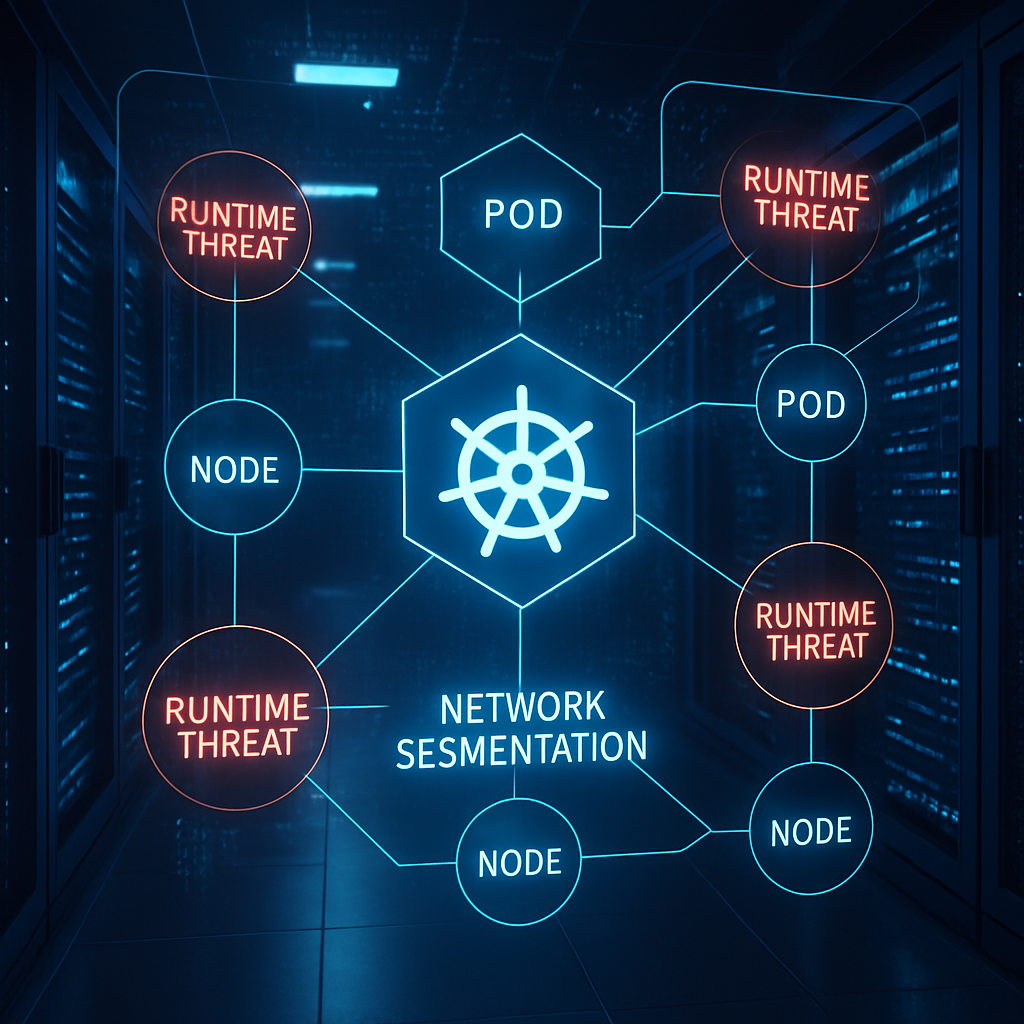
Securing Kubernetes in 2026 demands more than surface-level tools—it requires defense across four critical zones: admission control, networking policy, runtime protection, and posture management. These are the pillars guarding clusters from unauthorized workloads, lateral movement, malicious drift, and misconfigurations at the RBAC and control-plane levels. Within that framework, several security tools now stand out as essential, whether you manage a few clusters or run massive multi-cloud operations.
Top Kubernetes Tools by Phase
Runtime & Overall Depth: Sysdig leverages its Falco heritage to deliver unmatched threat detection, drift monitoring, and admission policies tightly geared for Kubernetes environments. Ideal for teams looking to lock down live workloads and enforce continuous runtime scrutiny. The tradeoff is that its support for virtual machines and Windows lags behind some more diversified platforms.
Full Lifecycle Security: Aqua Security shines by covering everything from image scanning to enforcement in production, including built-in policies and upstream open-source tools like Trivy and Tracee. It’s a strong fit for container-first teams, though broader cloud-native functionality comes somewhat weaker.
Platform-Scale CNAPP Integration: Prisma Cloud from Palo Alto Networks plays in the CNAPP space, bringing together admission, runtime, and posture policies under a unified cloud platform. Great if you want to consolidate Kubernetes security alongside other cloud pillars—though its user experience can feel heavyweight, and pricing reflects that.
Agentless Visibility First: Wiz’s graph-based model delivers visibility across clusters without heavy agents. It correlates misconfigurations, vulnerabilities, identity risks—letting you trace attack paths fast. That said, its newer runtime sensors are still catching up.
Specialized for OpenShift: Red Hat Advanced Cluster Security (formerly StackRox) is built for OpenShift and upstream Kubernetes. It’s exceptional at policy-as-code enforcement, admission controls, and guarding against privilege escalation. Buying into the Red Hat ecosystem unlocks its full value.
Shift-Left DevSecOps: Snyk focuses on scanning IaC, manifests, Helm charts in CI/CD pipelines, also offering actionable advice to fix issues early. Not built for runtime depth—but indispensable if you want developers owning security from build to deploy.
Open-Source Posture Foundations: ARMO’s Kubescape stands out as a CNCF-credited posture tool: free, easy to adopt, aligned with compliance frameworks. Its runtime and network-security depth come in commercial tiers.
Network Policy & eBPF Controls: Calico (via Tigera) is the standard for implementing granular pod-level controls using network policies and eBPF. It turns default flat networking into least-privilege isolation. Just note: it’s not a full posture or scanning platform.
Azure Ecosystem Optimization: Microsoft Defender for Containers and Defender for Cloud provide posture, runtime, and admission features tightly integrated into AKS and Azure Arc. Strong economics and multicloud logic—but stronger in Azure-aligned contexts than in mixed-cloud setups.
Unified Telemetry & Event Logging: Uptycs offers osquery and eBPF-based telemetry from laptops to clusters, giving a consistent schema for visibility into servers and workloads alike. Excellent for teams that need elegant, centralized visibility—though polish and UX still trail top-tier specialists.
Choosing the Right Stack
Admission control is your first—and often most cost-effective—line of defense. Anything that blocks unsigned images, over-privileged pods, or known-vuln workloads before they run pays dividends. Drop bad actors at the gate.
Next is network segmentation: default Kubernetes networking is flat. Tools leveraging Calico or eBPF-based policies let you limit what pods can talk to each other. That’s microsegmentation, a core Zero Trust pillar in Kubernetes security.
Open source isn’t just for proof-of-concept anymore. Kubescape, Calico core, and Falco are production-grade, free, and trusted by many teams. Commercial platforms can bring greater integration, support, and scale—but they often build atop this same foundation.
Don’t forget the control plane and RBAC: they’re high risk. Always use posture tools that audit these comprehensively. Privileged cluster roles, exposed API servers—they’re the biggest vulnerabilities when overlooked.
The biggest mistakes above all: runtime-only tools without admission gates, flat networking, skipping RBAC audits, and redundantly buying coverage you already get via your CNAPP.
Verdict: For runtime depth, go with Sysdig; for lifecycle coverage, Aqua; for OpenShift shops, Red Hat ACS; for a broad CNAPP footprint, Prisma Cloud or Wiz. Start with the open-source trio—Kubescape, Calico, Falco—as your foundation. Build from there.
What this means: Kubernetes security in 2026 isn’t about point tools—it’s about assembling coherent defenses everywhere: at admission, in the network, during runtime, and via posture. Investing early in core policies and free tools pays off exponentially when cloud scale and multi-cluster complexity hit. Watch for integration, telemetry consistency, and Zero Trust alignment as your guides going forward.