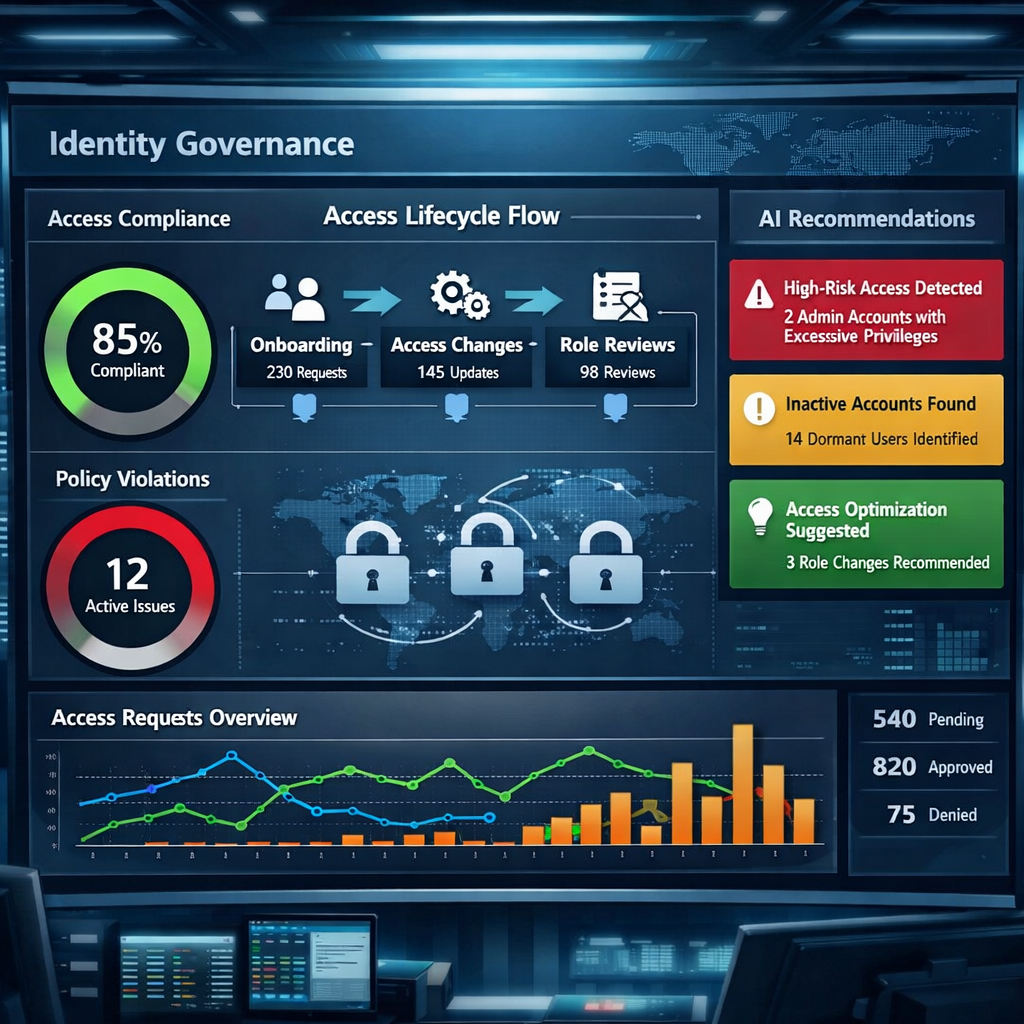
Identity Governance and Administration (IGA) has become indispensable for enterprises aiming to maintain Least Privilege, audit compliance, and control over who has access to what. In 2026, the landscape pivots not just on pure capabilities, but on how well tools automate lifecycle events, simplify audits, support non-human identities, and integrate AI to help prevent rubber-stamp access reviews. Here’s a fresh roundup of the top IGA tools this year, what sets them apart, and how to choose the right fit.
What Makes an IGA Tool Stand Out in 2026
Leading IGA platforms are measured across several axes: lifecycle automation (joiner-mover-leaver workflows), strong role-based access control and separation-of-duties (SoD), AI-assisted certification and analytics, integration depth across cloud, on-prem, HR, and ERP systems, and compliance readiness for SOX, GDPR, ISO 27001 etc. Equally important are deployment speed, pricing transparency, and the ability to handle non-employee identities including machine accounts and AI agents. The tools below represent the strongest performers across those criteria.
The Elite IGA Platforms: Strengths & Trade-Offs
SailPoint Identity Security Cloudremains the benchmark for maturity and scale. It delivers deep connector coverage (cloud, on-premises, mainframe, custom apps), advanced role-mining, strong SoD enforcement, AI recommendations in certifications, and support for non-human identities. Best suited for compliance-intensive enterprises with complex estate requirements; however, its premium pricing and scale make implementation heavier.
Saviyntexcels in converged IGA scenarios. It combines CIEM, application GRC, and IGA in a cloud-native architecture. It’s especially strong for organizations managing ERP-level SoD (SAP, etc.) or those needing fine-grained entitlement control across SaaS and multi-cloud environments. Trade-offs include configuration complexity and reliance on professional services for deep deployments.
Microsoft Entra ID Governancehas reshaped expectations around economics and native functionality. It offers lifecycle workflows, privileged identity management, access reviews, and entitlement management bundled as a published add-on—making it highly cost-effective in M365/Entra-centric environments. Still, for highly regulated environments or mixed estates with heavy ERP or legacy on-prem systems, its SoD depth and connector range may not match specialists.
One Identity (Identity Manager)is the go-to choice when your environment is dominated by Active Directory, SAP, or legacy on-prem systems. It shines with granular provisioning, certification, and control, offering operational control where newer cloud-native tools may fall short. But its interface and SaaS polish lag behind newer entrants.
Omada Identity Cloudtargets mid-enterprise buyers who need depth without the complexity of full SailPoint-scale programs. Its templated best practices, strong compliance features (especially in Europe), and relatively fast time-to-value make it appealing for organizations that want rapid wins rather than years of deployment. It is less strong in AI and wide connector breadth when compared to top two.
Other tools like Oracle Access Governance, Okta Identity Governance, IBM Verify Governance, RSA Governance & Lifecycle, and Ping (incl. ForgeRock) serve specific niches. They often shine for organizations already invested in their ecosystems, needing less extensive SoD, or looking for access governance light-touch rather than full-scale IGA programs.
Key Decision Factors: What to Prioritize
1. Existing Identity Stack & Compliance Needs: If your enterprise is deeply embedded in Microsoft, SAP, Oracle, or AD infrastructure, tools tailored to those environments reduce friction. Also, regulations (SOX, HIPAA, GDPR) demand visibility into SoD and audit trails—if you’re bound by them, “best-fit” competitors may struggle.
2. AI & Non-Human Identity Governance: AI agents, service accounts, and other non-employee identities are increasingly in scope. The platforms that govern them, treat them as first-class identities, and automate revocation will reduce risk of access creep.
3. Deployment Time & Operational Overhead: Full IGA platforms can take months or more to deploy. If fast operational impact is needed, look for options with prebuilt templates, best-practice frameworks, or lighter governance inline with identity provider consoles. Entra and Omada often require less lead time.
4. Pricing & Value Transparency: Many enterprise IGA tools use quote-based, per-identity pricing—these can balloon with scale. Microsoft’s published add-on pricing creates baseline expectations. Always ask vendors to benchmark against your expected identity volume, including non-employee and machine identities.
IGA is no longer optional compliance theater—it’s central to preventing unauthorized access, meeting audit demands, and automating what used to trigger breaches and high-severity findings. The right tool depends not just on feature checklists but on how well it fits your existing identity architecture, compliance requirements, and ability to manage the implementation. As AI recommendations mature, non-human identities loom larger, and transparency in pricing tightens, expect this market segment to evolve sharply. Watch closely how platforms handle connector extensibility, agent identity governance, and the real cost of deployment vs long-term value.