Infrastructure as Code (IaC) is no longer optional—it’s core to modern cloud operations. Misconfigurations written unchecked during reviews can turn into full-blown breaches once deployed. IaC security tools aim to catch those errors before they become costly mistakes in runtime. This year’s rankings evaluate how tools handle context, fix quality, policy enforcement, drift detection, and free/open-source (OSS) accessibility.
🏆 The 2026 Rankings—Who Leads & Why
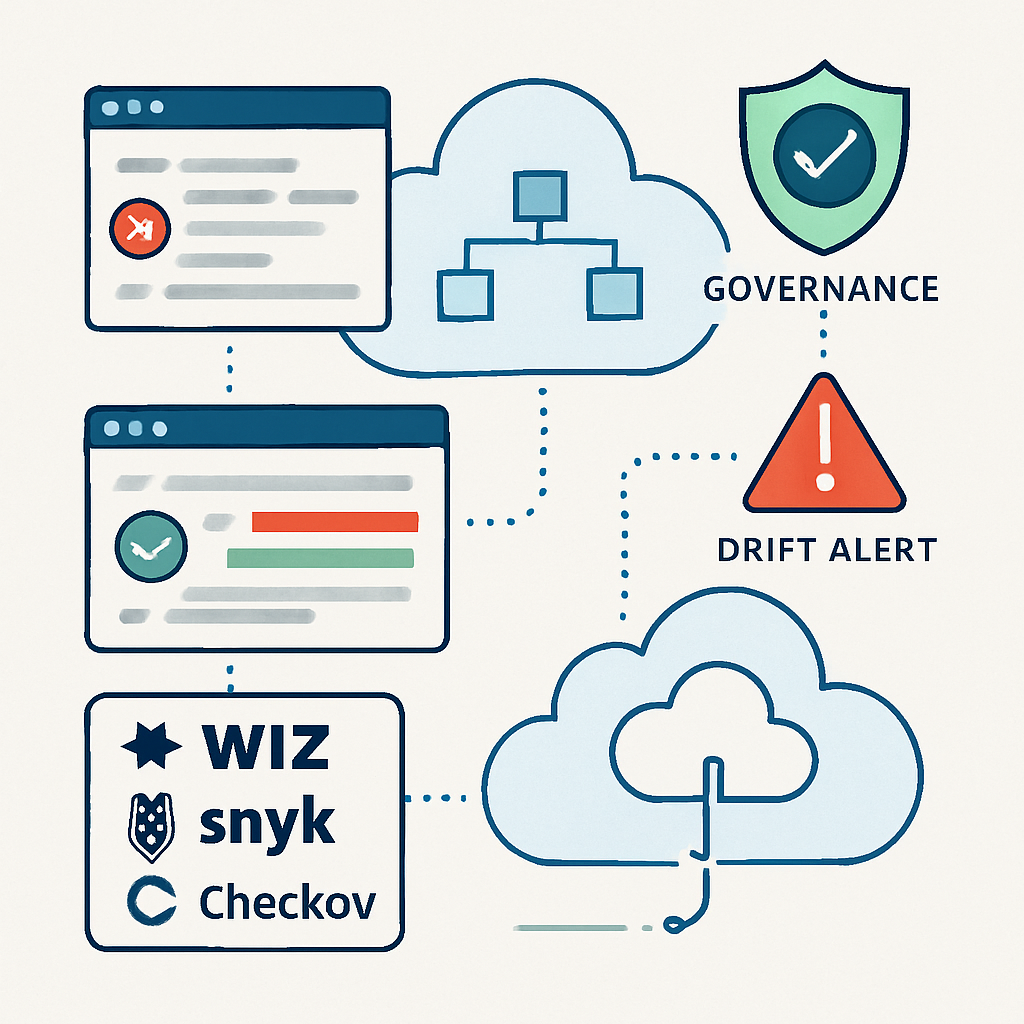
A clear standout has emerged: Wiz tops the charts by focusing on cloud context and attack paths. It connects IaC findings to runtime exposure and ranks issues by risk. This approach helps teams see which misconfigurations truly expose them. Scoring 9.0 overall, Wiz wins for what its flaws actually enable.
Snyk’s IaC tool comes in second with its pull-request–native fixes. It makes code reviews more secure by offering inline fix suggestions and drift detection—ideal for teams that want proactive remediation.
Palo Alto’s Checkov, in third, is the open-source floor everyone should have in their pipeline. It supports multiple frameworks, integrates with CI and pre-commit tools, and provides graph-based checks via its commercial counterpart, Prisma Cloud.
Aqua’s Trivy takes fourth place by combining scanning for IaC templates, container images, and dependencies all in one. It helps streamline CI/CD pipelines without having to chain together separate tools.
Tools Carving Out Specialized Roles
Governance gets two strong contenders: Spacelift is ranked fifth for integrating Open Policy Agent (OPA) deep into deployment workflows, ensuring policy-as-code isn’t an afterthought. env0 (sixth) offers guardrails like cost controls and approvals placed right at the moment of running infrastructure changes.
Firefly, seventh, fills an important gap: it identifies cloud infrastructure not declared in IaC, codifies it, and alerts teams about drift. That helps minimize risks tied to unmanaged resources.
Looking at broader exposure, Tenable (via Terrascan) integrates IaC scanning with cloud security posture and operational risk. HashiCorp’s Sentinel, powerful for Terraform-heavy environments, offers policy enforcement natively during plan stages. Microsoft delivers native IaC checks via Defender for Cloud, especially useful if your infrastructure is Azure-based.
How Tools Were Evaluated
Scoring was based on five major criteria: how well tools handle cloud-context correlation and prioritization (25%), quality of fixes (25%), integration into pipelines/PR workflows (20%), OSS and pricing transparency (20%), and how well tools manage drift (10%). Free/open-source floor tools like Checkov and Trivy got special emphasis—they’re foundational and accessible. Ranking is research-driven; no lab tests or vendor-paid placements influenced results.
Buying Advice: What to Consider
Start with the free floor: run Checkov or Trivy in your CI/CD pipelines. They provide broad language/framework support and cover the basics. Don’t skip context—tools like Wiz or Snyk help prioritize what’s most dangerous.
Governance comes next: tools like Spacelift, env0, and Sentinel add policy enforcement at deployment time so you define who can do what—and when. For infrastructure that isn’t declared (resources outside IaC), codification tools (Firefly) close those gaps. When operating in Azure, Microsoft’s built-in tools give an easy baseline.
Verdict
Wiz makes IaC findings more meaningful by showing actual exploitation paths. Snyk turns findings into ready-to-apply fixes. Checkov keeps an essential, freely-available baseline everyone should at least have running. Together, these tools map a well-rounded IaC security strategy—identify and prioritize, enforce policy, and reconcile what’s in code vs what’s running.
Analysis: As cloud complexity keeps rising, so do attack surface risks. Free, OSS tools are no longer enough on their own—but they remain essential. The real differentiators now are how deeply a tool understands context, policy enforcement timing, and visibility into infrastructure drift. Security leaders should watch for players integrating exposure management and codification deeply—those will be the most valuable going forward.