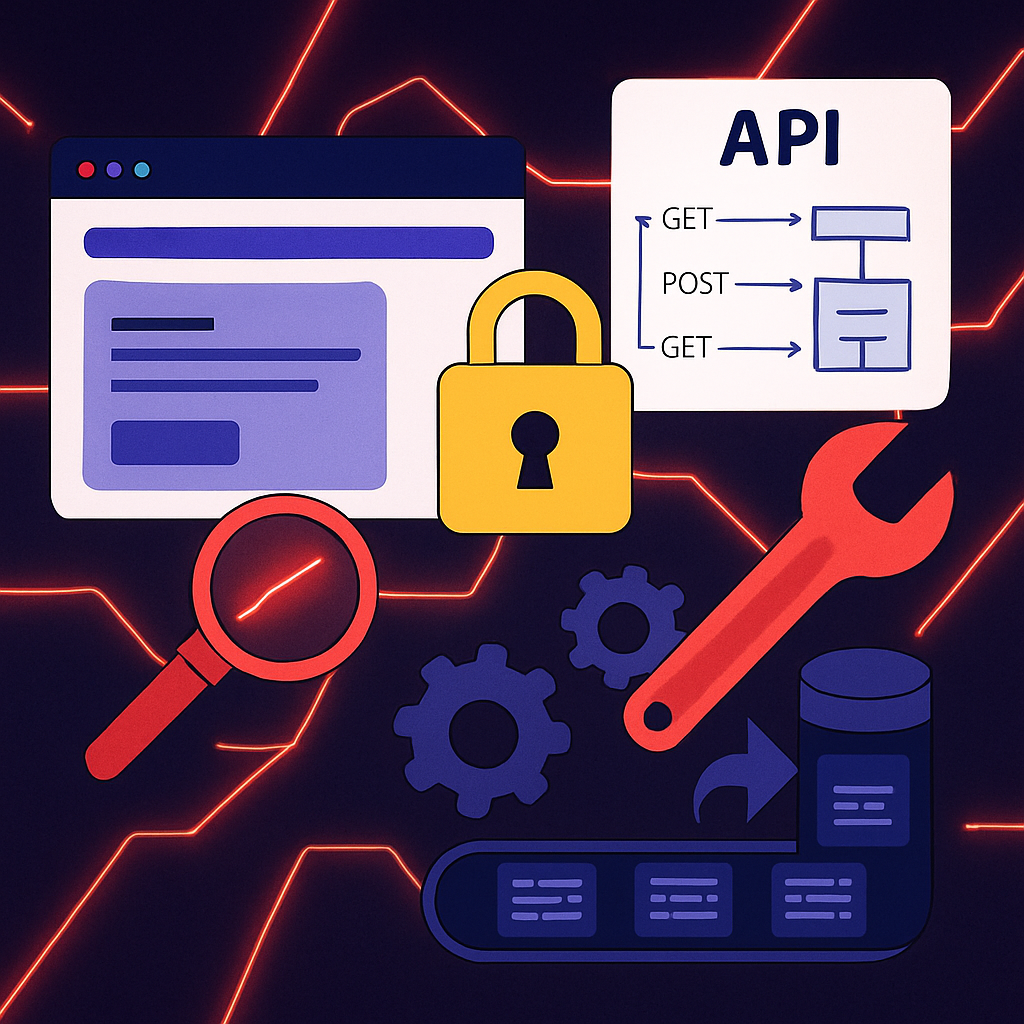
Dynamic Application Security Testing (DAST) has evolved. The days of shallow scans that are limited to unauthenticated endpoints and surface-level app crawling are over. To be credible in 2026, a DAST tool needs to handle authentication, crawl single-page apps (SPAs), consume API schemas, and prove findings through accurate validation.
Ranking the Leading DAST Tools
After evaluating more than ten modern DAST options against criteria like SPA/API support, authentication handling, accuracy, pipeline fit, pricing transparency, and ecosystem strength, here are the top performers:
- 1. Burp Suite (PortSwigger): The benchmark for practitioners. Excels in depth of testing, offers an extensive extension ecosystem, scales for DAST use, and has published pricing. ☑️
- 2. Invicti (Acunetix): Ideal for large fleets. Automatically confirms vulnerabilities via safe proof-based exploitation. Strong crawler with API support and rich scheduling features.
- 3. StackHawk: Built into CI pipelines. API-aware, supports REST/GraphQL/gRPC, config-as-code, with a free tier and transparent, developer-friendly pricing.
- 4. Detectify: Crowd-powered and externally focused. Leverages ethical hacker-generated payloads and merges external attack surface monitoring with detection and exposure workflows.
- 5. Qualys WAS: Delivers solid value within its large vulnerability management ecosystem. Good web/API scanning and clear subscription tiers.
- 6. Rapid7 InsightAppSec: Bridges AppSec and SOC. Correlates findings with threat exposure and helps prioritize real risk via platform-level tools.
- 7. Checkmarx DAST: Unifies dynamic findings with static analysis (SAST) in a single queue. Strong for teams wanting runtime and code-level alignment.
- 8. Veracode DAST: Tailored for regulated environments. Supports unified reporting across DAST/SAST, fits governance workflows.
- 9. WebInspect (OpenText Fortify): Best for on-premises, air-gapped or sovereign environments. Built for deep, isolated scanning and heavy compliance loads.
- 10. HCL AppScan: Veteran enterprise choice. Offers audit-grade reporting, multiple deployment methods, and excels in compliance continuity.
What to Look for When Choosing
Don’t just compare tool feature checklists. Focus on verifying three core capabilities:
- Authenticated testing: All modern DAST platforms must accept credentials to test protected parts of the application; unauthenticated scans give false security. Ensure you provide valid login flows.
- SPA & API schema support: Tools must be able to work with OpenAPI/Swagger and modern frontend stacks so you don’t miss AJAX-based or schema-driven endpoints.
- Pipeline integration & unified feed: Findings should feed into your development lifecycle (e.g. pull request comments) and join your SAST/SCA results in one queue to eliminate fragmented vulnerability tracking.
Pricing clarity is also crucial. Some tools publish tiers or free options (e.g. Burp, Detectify, StackHawk, Qualys), while others still quote per-target or handle enterprise deals on a case-by-case basis.
Full Scorecard Snapshot
| Tool | Use-Case Lane | API/SPA Support | Free or Trial Entry | Pricing Clarity |
|---|---|---|---|---|
| Burp Suite | Practitioner depth | Strong | Community edition | Published pricing |
| Invicti | Fleet | Strong | Demo | Quote-based |
| StackHawk | CI-native | API-deep | Free tier | Published |
| Detectify | External surface | Good | Trial | Published |
| Qualys WAS | Platform value | Good | Trial | Published |
| Rapid7 InsightAppSec | SOC-integration | Good | Trial | Quote-based |
| Checkmarx DAST | Platform unification | Good | Demo | Quote-based |
| Veracode DAST | Governance & compliance | Good | Demo | Quote-based |
| WebInspect | On-prem depth | Good | Demo | Quote-based |
| HCL AppScan | Compliance continuity | Good | Trial | Quote-based |
Spending more won’t help if you’re using tools for superficial crawls. Feed your scanners real workflows, API schemas, and login flows to surface true risks, not just low-hanging fruit.
Why This Shift Matters
DAST used to be a checkbox. Now it’s central to secure development lifecycles. As apps grow increasingly dynamic—rich JavaScript frontends, microservices, serverless APIs—tools that only scan static endpoints or external surfaces leave gaps. Authenticated, schema-fed scanning reveals real vulnerabilities in live code. Unified reporting (sharing queues with SAST/SCA) ensures teams address issues holistically, not in silos.
The top tools in 2026 aren’t just about features—tool behavior, pricing, and clarity matter. Burp still leads in practitioner trust. Invicti shows fleets can be precise. StackHawk demonstrates that CI-native testing is no longer optional. Organizations should replace once-infrequent scans with continuous, integrated, modern-stack DAST.