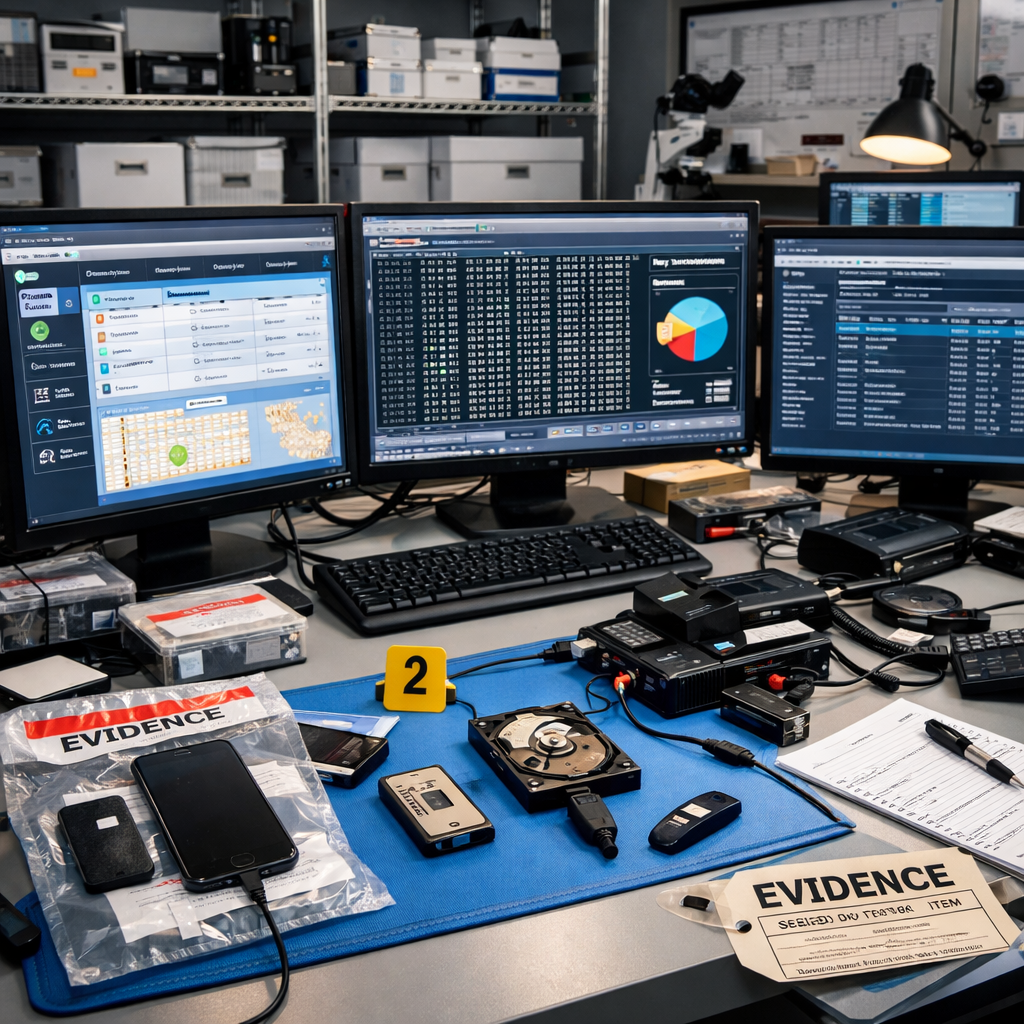
In 2026, digital forensics remains a high-stakes field where every piece of evidence must hold up in court. Digital forensics tools are evaluated based on how well they extract artifacts, stand up in legal proceedings, handle large caseloads, cover multiple platforms, automate workflows, and justify their price. The latest rankings reveal who’s leading in mobile extraction, multi-source analysis, disk forensics, lab speed, open-source pillars, and value suites.
Leaders in Extraction, Cross-Source Analysis, and Courtroom Pedigree
At the top of the power rankings sits Cellebrite, which wins Best Mobile Extraction Depth. It’s unmatched in dealing with locked devices, parsing across thousands of app versions, and offering analytic timelines via its Pathfinder component. What holds it back slightly is its premium charging and governance scrutiny that comes with the most powerful extraction tools. Magnet Forensics follows closely with Best Cross-Source Investigation Platform: its Axiom suite unifies mobile, disk, and cloud artefacts into one timeline, supported by automation and AI tools to tackle backlog pressure. Then there’s OpenText EnCase, which still dominates for disk forensics when legal precedent matters—its formats and long court record keep it in judges’ good graces despite rivals pulling ahead in ergonomics.
Best for Labs, Value, Broad Coverage & Open Source
Exterro FTK takes Best Lab-Scale Processing Speed, built for handling massive data volumes with stable distributed systems and tight integration with legal and privacy suites. For labs that need strong mobile capability without breaking the bank, MOBILedit Forensic offers solid extraction and app parsing, plus smartwatch and wearable device support. MSAB earns Best Frontline Mobile Extraction Kiosks for its deployment model that extends extraction out of centralized labs into field units and kiosks, maintaining chain-of-custody rigor.
If you’re after a full suite without the top-tier price tag, Belkasoft is the top all-in-one value pick: disk, memory, mobile, and cloud artifacts all under one roof. Paraben E3 expands that coverage even further, adding support for IoT, memory, cloud, email, and chats. On the free/open-source side, Autopsy (and Sleuth Kit) remains essential as a training standard, validation tool, and budget option, while Volatility continues to be the go-to for memory forensics and fileless attack discovery—especially when speed in response matters.
Choosing the Right Tool & Best Practices
Most real-world caseloads are roughly 70% mobile evidence, which makes decisions about mobile extraction—especially getting into locked devices—crucial to procurement planning. It’s best to match analysis platforms to examiner counts rather than reach for the fanciest features. Dual-tool validation—running commercial tools alongside open-source ones like Autopsy and Volatility—is now standard practice to ensure findings hold up.
Process matters as much as product. Labs must enforce hash-verified acquisition, use write-blockers, document every link in the chain of custody, and ensure tools are properly validated. Jurisdiction-specific procurement rules can affect whether certain extraction tools are legal to use, so agencies need to plan accordingly before selecting software and vendors.
What all this means: Cellebrite remains the top choice for deep mobile extraction; Magnet Axiom is pushing cross-source story-building skills; EnCase holds onto its courtroom advantage. Other tools like FTK, Belkasoft, Paraben E3, and MOBILedit offer strong alternatives depending on budget and lab size, while Autopsy and Volatility form the open source backbone. As for what to watch next—pay attention to how tools automate workflows and maintain legal defensibility, especially in edge deployments and locked-device scenarios.
What This Means Going Forward: Tool choice isn’t about more features—it’s about evidence you can defend. Labs need to balance extraction depth, speed, and courtroom history. Vendor claims matter less than demonstrable proof under cross-examination. In a world drowning in devices and data volume, automation isn’t a nice-to-have—it’s a lifeline.