Leaking credentials or newly disclosed vulnerabilities often serve as the earliest warning signs defenders receive—but knowing about them doesn’t always protect you. Recent developments show that threat intelligence alone may leave most organizations exposed well before breaches occur.
The Exploitation Gap: When Knowing Isn’t Acting
Security teams often find themselves drowning in indicators—such as leaked credentials or zero-day disclosures. But those alerts sit in ticketing backlogs because only specialists with offensive testing experience can determine which threats are exploitable in a specific environment. That delay allows exposure to accumulate, effectively creating a dangerous gap between awareness and action.
This isn’t a matter of insufficient intelligence. It’s a matter of capacity. Most organizations simply don’t have the time or offensive security skillsets needed to validate each piece of threat data across their environments. The backlog, the lag in validating exploitability, becomes the true vulnerability—not just missing alerts.
Threat-Led Penetration Testing: Closing the Gap with Proof
Threat-Led Penetration Testing (TLPT) shifts security validation from theoretical to evidence-based. Instead of scheduled, compliance-friendly pentests or passive risk ratings, TLPT starts with live intelligence—such as a leaked credential or a disclosed vulnerability—and tests whether it can actually be exploited under current conditions.
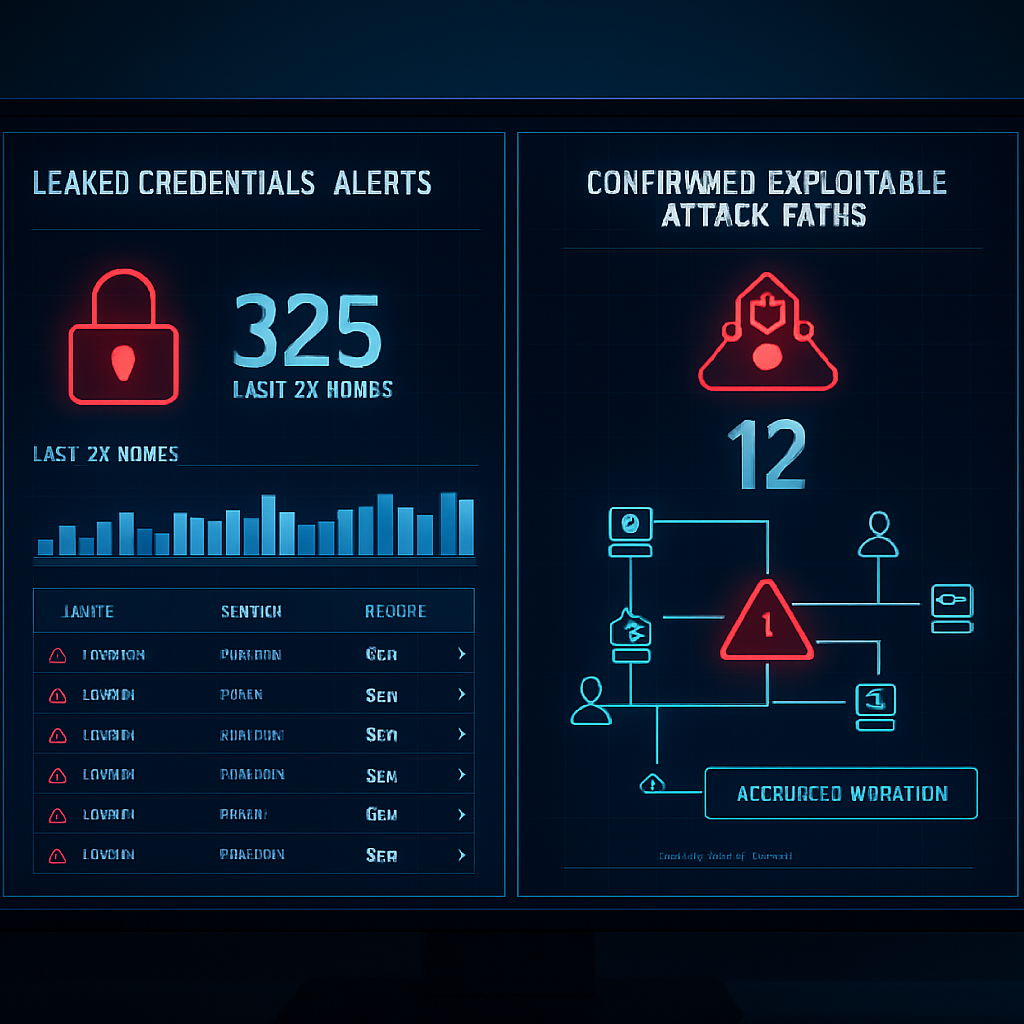
A concrete example comes from a recent collaboration between Recorded Future and Pentera. Their integration triggers automated validation runs against an organization’s external attack surface when new threat signals appear. So instead of flagging every leaked credential as equally urgent, teams can discern which ones are truly exploitable. For customers involved in early trials, this has marked a clear change: shifting spending and resources toward proving exposure, rather than chasing every alert.
Recorded Future’s role remains that of earliest signal producer—identifying leaked credentials, volcano uncertainties, and emerging threats. Pentera’s platform then joins in by running safety-governed tests that map out confirmed exposure. This duo allows organizations not just to “know” what threats exist, but to “prove” whether those threats matter in their own environments right now.
Real-World Impacts and When It All Kicks In
One early adopter in this space is Wyndham Hotels & Resorts, where the head of cybersecurity described this convergence of intelligence and validation as pivotal. Knowing a threat exists is no longer enough—being able to test it quickly, in one’s own network, is what builds real resilience in an era of accelerating AI-assisted attacks.
The first public capability from this integration—automated testing of leaked credentials from Recorded Future via Pentera’s platform—is set to release shortly after Black Hat USA 2026. Customers who have both the identity module of Recorded Future enabled and access to Pentera Surface will be able to immediately validate whether surfaced credentials are live and exploitable, enabling prioritization based on proof.
This threat-led validation is also becoming tightly aligned with evolving regulatory requirements that emphasize ongoing operational validation over static assessments: frameworks like EU’s DORA and TIBER-EU increasingly expect evidence that defenses work against actual adversary behavior, not just theoretical risk.