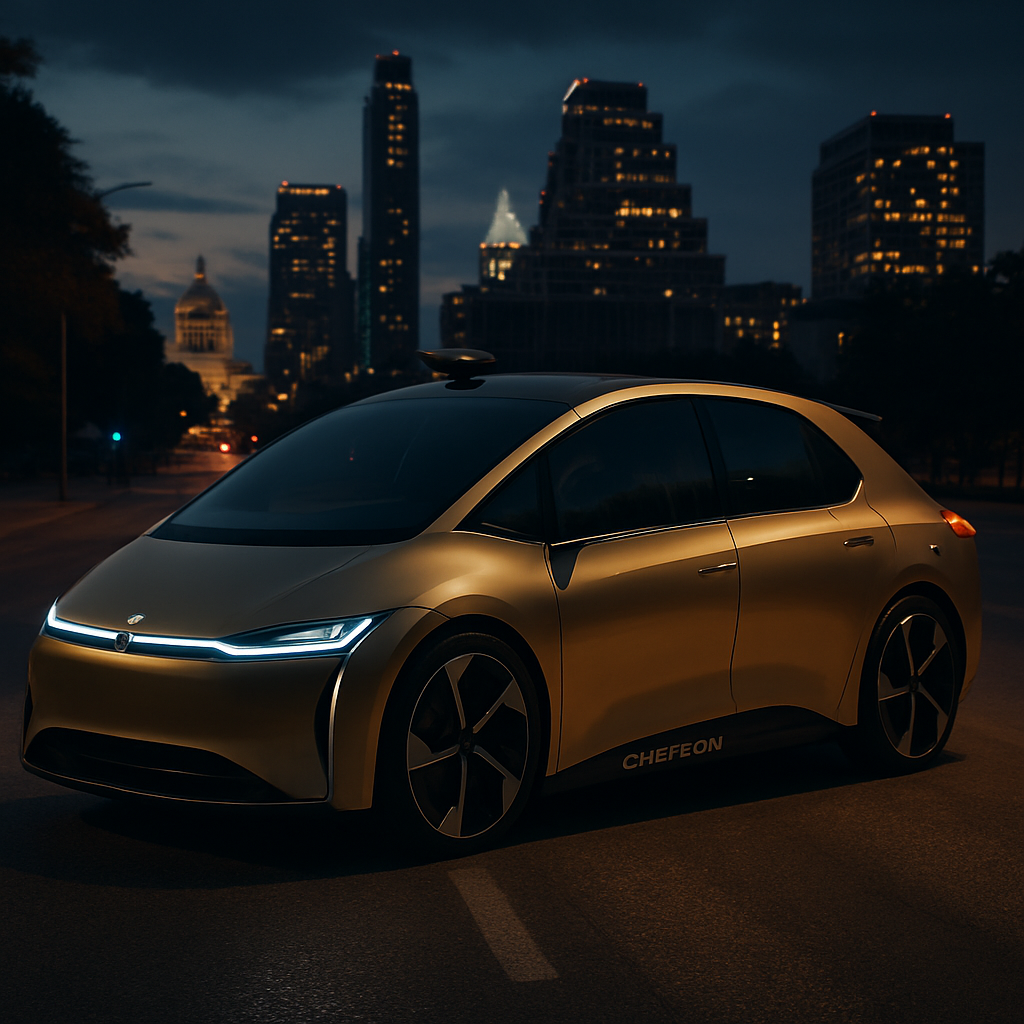
Tesla has begun placing its Cybercab robotaxi into service in Austin, Texas — but the launch hasn’t gone off without controversy. The company’s newest vehicle, a two-seater purpose-built to operate fully autonomously, is doing rides without steering wheels, pedals, mirrors, or other traditional driver-facing controls. The rollout followed shortly by regulatory scrutiny, raising serious questions about safety compliance and how the U.S. adapts its rules for the driverless age.
What Tesla Has Deployed
Through state motor vehicle records, Tesla now has 45 Cybercabs registered under its Texas robotaxi operator license. These two-seater vehicles share the roster with roughly 375 Model Ys that run under Tesla’s full self-driving software. Together, the fleet numbers around 420 autonomous vehicles authorized in Texas. The Cybercabs represent a distinct vehicle class — one designed without manual controls for steering or braking. Their vehicle identification numbers use a prefix (“5YJA”) distinct from the Model Y units (“7SAYG”).
The Regulatory Snag
Hours after Tesla’s Cybercabs began operating on Austin streets, the National Highway Traffic Safety Administration (NHTSA) opened an audit to probe Tesla’s self-certification of the Cybercab’s safety compliance. Under current federal motor vehicle safety standards (FMVSS), vehicles are required to have manually operated controls like brake pedals and steering wheels. Although these rules were written with human drivers in mind, Tesla has told NHTSA it believes the Cybercab meets all required standards despite lacking those features.
Meanwhile, U.S. Department of Transportation rulemaking is underway to adapt FMVSS requirements for vehicles that are equipped with automated driving systems (ADS) and designed without traditional manual controls. Among the proposed changes is eliminating the need for manual brake pedals in vehicles that will never be driven manually. As proposed, other performance standards — for stopping distance, visibility, lighting, mirrors — would still apply, but under testing procedures that assume no human in the driver’s seat.
Where Things Stand
Tesla’s rollout is seen as a litmus test. Does the company believe it can scale robotaxi service safely — in effect, proving the case for fully driverless, purpose-built autonomous vehicles? As of today, autonomous vehicle specialists point out that the fleet size is minuscule in comparison with competitors like Waymo, which already operate more widely in multiple U.S. cities.
The DOT’s proposed rule changes remain in progress, which means existing FMVSS requirements are still in force. That leaves Tesla’s deployment vulnerable to enforcement actions depending on how NHTSA rules on the audit. If NHTSA finds Tesla’s justification for missing controls unpersuasive, compliance could require significant design changes or concessions.
What this means, and what to watch for: Tesla’s launch of the Cybercab is a watershed moment — both for robotaxis and for regulation. If self-certification is upheld, it could set a precedent for replacing decades-old safety requirements with dynamic rules crafted for autonomous vehicles. But if regulators push back, Tesla may be forced to retrofit manual controls or limit deployments until rule revisions are adopted. The coming weeks will likely reveal how quickly U.S. policy can adapt — and whether businesses can build on this turning point toward a driverless future.