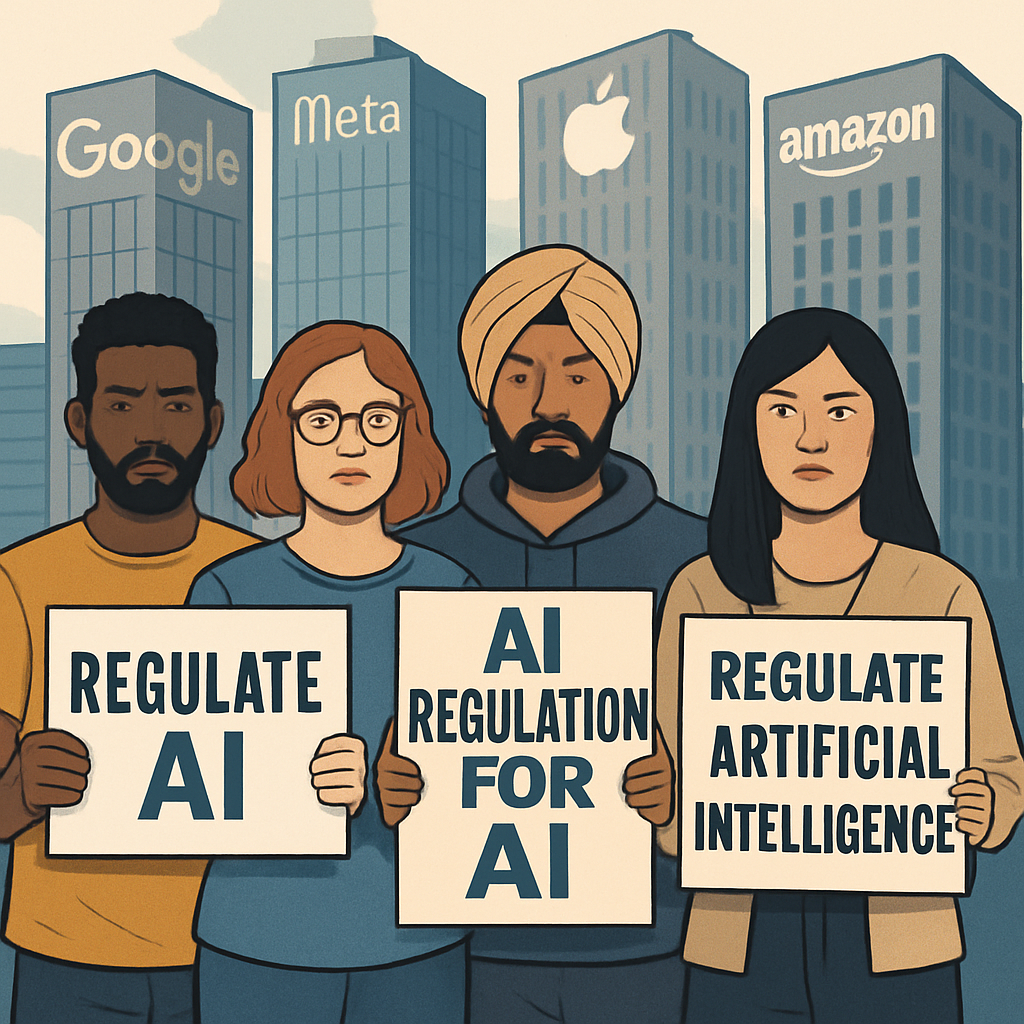
A new political action committee (PAC) called the Guardrails Alliance has been established to advocate for responsible artificial intelligence (AI) legislation. Spearheaded by Democratic strategists Shaunna Thomas and Leah Hunt-Hendrix, the PAC is backed by tech employees, labor unions, and various advocacy groups. With an initial fund of approximately $5 million, the Guardrails Alliance aims to raise $15 million during this election cycle to support candidates who favor AI regulation.
This initiative emerges in response to substantial financial efforts by major tech companies opposing AI regulation. For instance, the super PAC Leading the Future, supported by tech leaders including OpenAI President Greg Brockman, has amassed over $100 million to influence AI policy in favor of minimal regulation.
The Guardrails Alliance plans to utilize its resources to support candidates like Alex Bores, a New York congressional hopeful who has been targeted by Leading the Future due to his pro-regulation stance. Bores recently released an advertisement featuring the parents of Adam Raine, a teenager who tragically died by suicide after prolonged interactions with ChatGPT, highlighting the potential dangers of unregulated AI technologies.
In addition to the Guardrails Alliance, Bores has received backing from Public First Action, another pro-regulation super PAC with support from AI safety company Anthropic. This collective effort underscores a growing movement among tech workers and advocacy groups to challenge the influence of major tech corporations in shaping AI policy.
Despite OpenAI’s attempts to distance itself from Brockman’s contributions to Leading the Future, internal dissent has surfaced. Several employees have expressed concerns on social media about the organization’s attacks on candidates like Bores, reflecting a broader unease within the tech community regarding the ethical implications of AI development and deployment.
Beyond electoral politics, tech workers have been actively advocating for ethical practices within their companies. Efforts include urging executives to terminate contracts with U.S. Immigration and Customs Enforcement (ICE) and calling on the Pentagon to reconsider its designation of Anthropic as a supply chain risk—a label critics argue was applied without due process in retaliation for the company’s restrictions on its technology’s use in mass surveillance and autonomous warfare.
Shaunna Thomas emphasized that the Guardrails Alliance does not intend to match Leading the Future’s financial resources dollar for dollar. Instead, the PAC aims to provide a political platform for individuals concerned about the tech sector’s attempts to influence elections and resist AI regulation.
The formation of the Guardrails Alliance signifies a pivotal moment in the ongoing debate over AI regulation. It highlights the growing mobilization of tech workers and advocacy groups striving to ensure that AI technologies are developed and implemented responsibly, balancing innovation with ethical considerations and public safety.