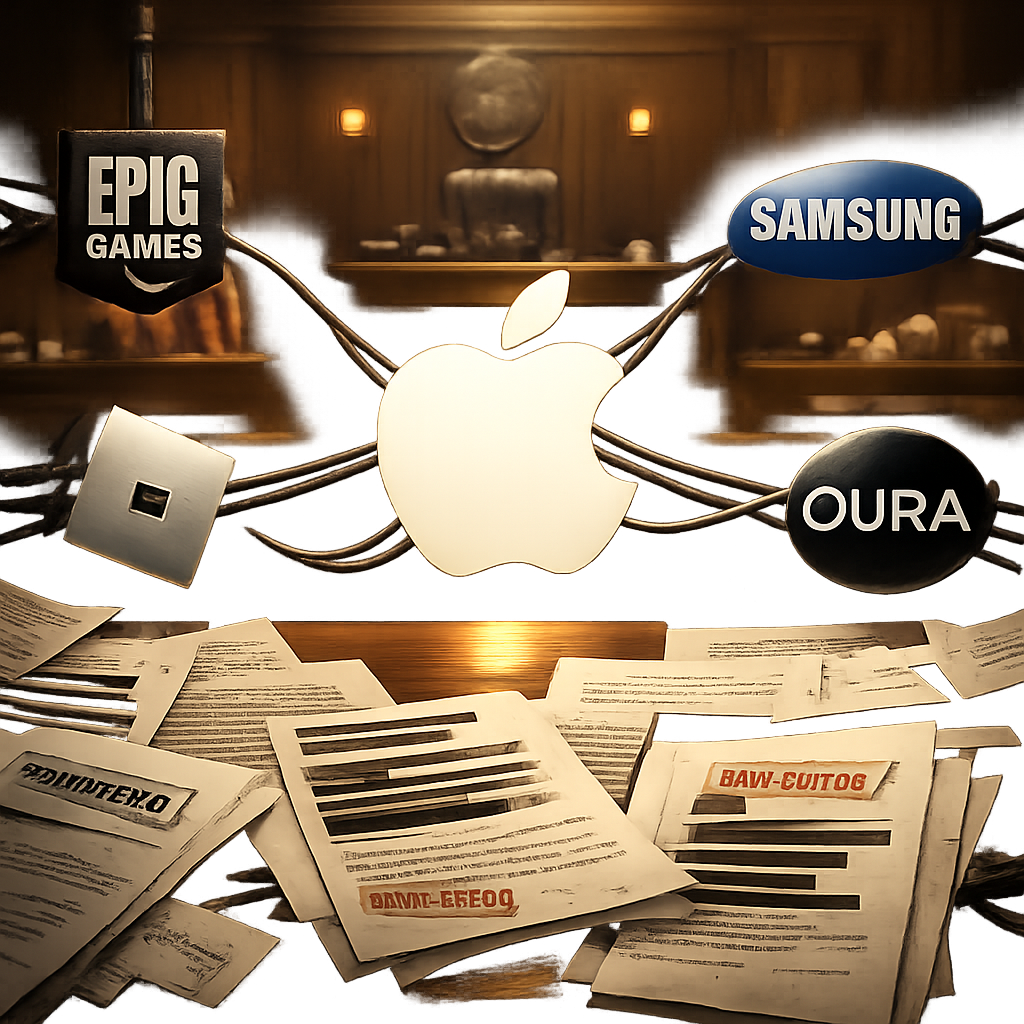
Apple’s antitrust showdown with the U.S. Department of Justice (DOJ) has widened, as several major tech companies—like Epic Games, Samsung, Oura, Roblox, Playco, and others—are pushing back against subpoenas in what’s fast becoming a tangled dispute over evidence gathering. The clash underscores how contested the discovery process is in cases of this scale.
What’s Behind the DOJ’s Case—and Apple’s Defense
The DOJ filed a lawsuit in March 2024, joined by multiple states, accusing Apple of monopolizing several consumer product markets by making it too hard for users and rival companies to compete. The government alleges that Apple restricted interoperability, strengthened barriers to switching, and made it more difficult for competing devices and services to gain footholds. Apple has denied wrongdoing. The litigation has since entered discovery, where both sides are demanding documents from third parties to support their claims or defenses. Meanwhile, behind-the-scenes settlement discussions have reportedly been underway, though no agreement has been reached so far. This remains a core antitrust battle over how far a platform’s control over commerce, hardware integration, and digital ecosystems can stretch.
Third Parties Fight Back—What They’re Pushing Against
Apple has served subpoenas demanding internal documents from companies like Epic, Samsung, Oura, Garmin, Match Group, Ultrahuman, and the Connectivity Standards Alliance. On the other side, the DOJ and associated states have filed subpoenas targeting firms including Roblox, Epic, Snap, and others—requesting communications and data about Apple’s App Store rules or business practices. These third parties argue implementation varies widely, often invoking burdens like combing through tens of thousands of documents, revealing trade secrets, or involving foreign parent companies in disclosure. Some also claim constitutional protections could apply, especially when lobbying work is in question.
Epic, for example, says that Apple’s requests—spanning multiple global lawsuits and demanding executive-level documents—are overly burdensome. Samsung reported that at least 900,000 documents from two of its leaders match Apple’s agreed search terms, but Apple wants to widen the net to include additional executives and even production from its parent company abroad. Oura has protested the cost and scope of reviewing massive numbers of documents, particularly when some might involve sensitive trade-secret materials. Roblox is pushing back on requests about how Apple enforces its App Store policies among developers. Playco has raised First Amendment concerns over being forced to turn over lobbying or policy outreach documents.
Federal Agency Documents also in the Mix
In a related thread, Apple is demanding records from 14 federal agencies—including the CIA, FBI, NSA, Department of Defense, and more—to help defend its stance that many DOJ claims stem from legitimate security and privacy policies. A special master has twice sided with Apple, ruling that these agencies fall under “party discovery” rather than third-party discovery, meaning lower barriers for disclosure. The DOJ has challenged each decision, citing concerns about burden and relevance.
Where It Goes from Here & What to Watch
Many of these third parties are asking for additional negotiation time before pushing disputes with the court. Some deadlines for resolution loom in mid-November, potentially setting the stage for court rulings that could shape the rest of discovery. Apple, for its part, continues to assert that certain scope limitations are warranted, especially around trade secrets, executive document involvement, and foreign-based entities.
This isn’t just a legal procedural fight—it cuts to the heart of how much transparency platforms like Apple will have to provide about internal decision-making. The boundaries set here could ripple outward, influencing everything from how App Store policy arguments are made to how courts treat big-tech obligations around data sharing and regulatory scrutiny.
Analysis: The resistance from Epic, Samsung, Oura, Roblox, and others signals that Apple’s defense strategy may be under serious strain—not because it lacks arguments, but because the logistical and reputational costs of disclosure are growing harder to contain. Courts will need to navigate how much confidentiality—but also accountability—is reserved for platforms. What tech firms and regulators extract from this phase of discovery could shape legal standards for transparency and platform power for years.