TCL’s Ascent in the TV Market: Implications for Google TV’s Future
In the dynamic landscape of the global television industry, TCL has emerged as a formidable contender, challenging long-standing market leaders and reshaping the competitive dynamics. Recent analyses indicate that TCL is on the verge of surpassing Samsung to become the world’s leading TV brand. According to Counterpoint Research, Samsung held a 17% share of the global TV market in 2025, with TCL closely trailing at 16%. This marks a significant shift from 2024, where TCL’s market share was 13% and Samsung’s was 18%. TCL’s impressive 20% year-over-year growth in shipments underscores its escalating competitiveness and strategic market positioning.
A pivotal development in this evolving scenario is the strategic partnership between Sony and TCL. Sony has announced plans to transfer control of its TV and home audio business to a joint venture with TCL, wherein TCL will hold a 51% stake and Sony 49%. This collaboration is poised to leverage Sony’s esteemed picture and audio technologies alongside TCL’s manufacturing prowess and cost efficiencies. The joint venture is expected to commence operations by April 2027, potentially introducing a new era of Sony-branded televisions produced under TCL’s operational leadership.
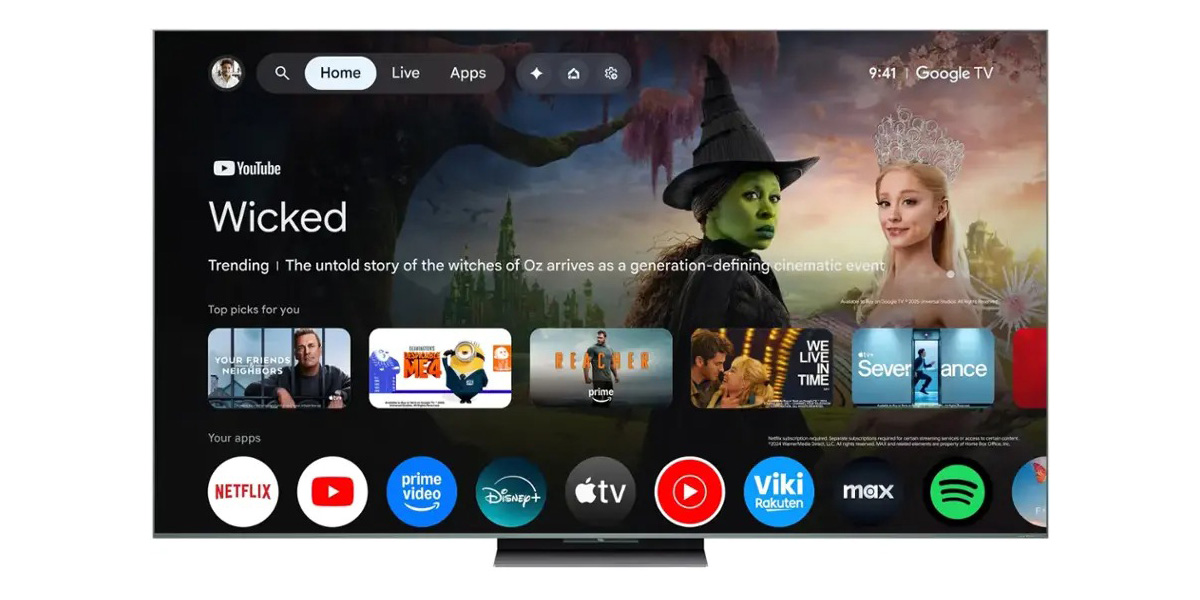
This alliance raises pertinent questions about the future of Google TV, particularly given TCL’s prominent role as a key partner in Google’s living room initiatives. TCL predominantly utilizes Google TV as its primary platform in global markets, making it a significant contributor to the platform’s proliferation. Despite this, projections from research firm Omdia suggest a potential decline in Google TV’s market share. Currently, Google TV leads with a 40% share in global markets excluding North America and China. However, this dominance is anticipated to diminish as competitors like Vidaa, Titan, and TiVo gain traction over the next two years. Even so, Google TV is expected to maintain a substantial presence, commanding over 35% of the market through 2029.
In North America, the outlook for Google TV appears more challenging. The platform’s market share is currently estimated between 10-13%. The recent acquisition of Vizio by Walmart is projected to bolster CastOS, potentially elevating it to the leading position in the region. Additionally, Amazon’s Fire TV is expected to continue its growth trajectory. Consequently, Google TV’s share in North America could decline to below 10% in the coming years.
These developments underscore the fluidity of the television market and the intricate interplay between hardware manufacturers and software platforms. TCL’s rapid ascent and strategic alliances are not only reshaping competitive hierarchies but also influencing the trajectories of platforms like Google TV. As the industry continues to evolve, stakeholders will need to navigate these shifts thoughtfully to maintain relevance and market share.