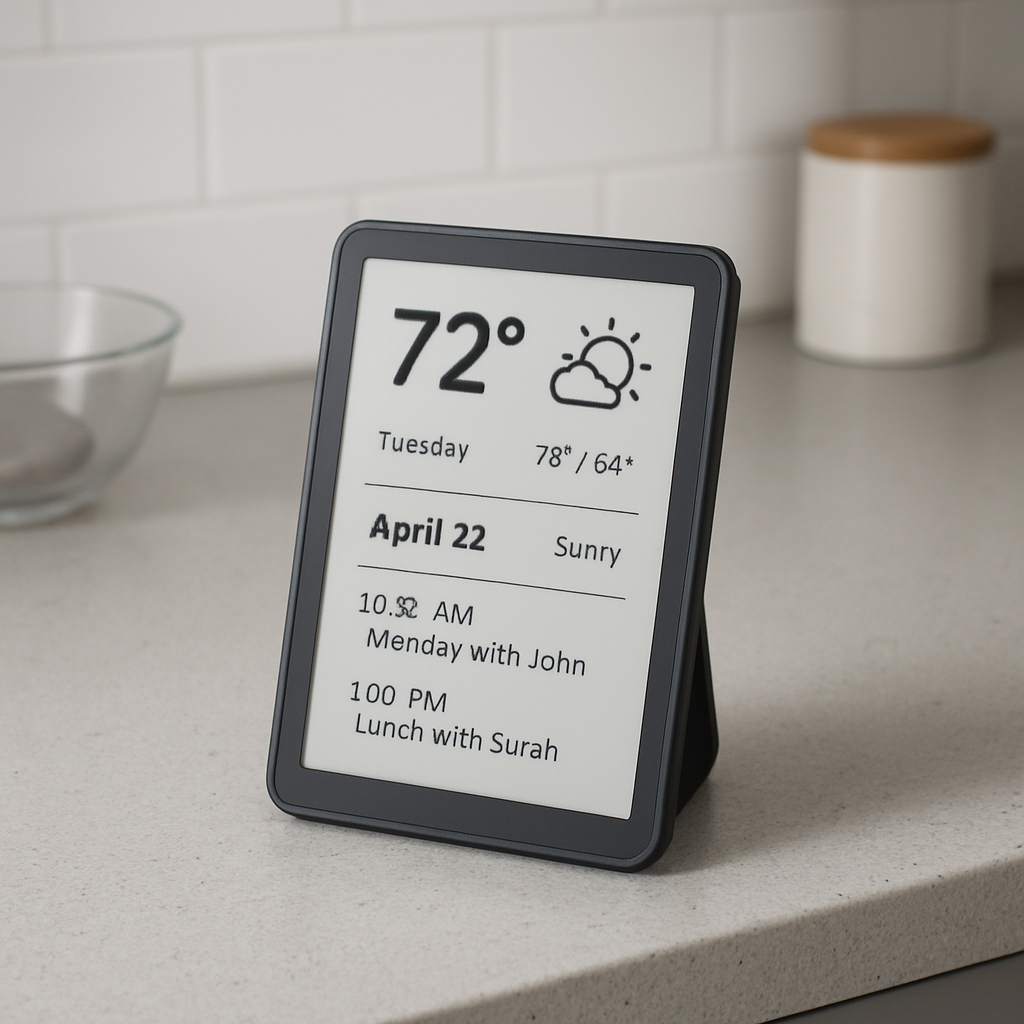
SwitchBot has unveiled its latest innovation, the SwitchBot Weather Station, which seamlessly combines an E-Ink display with smart home functionalities. This device offers users a clear, paper-like visual experience, enhanced by a built-in front light for optimal readability in various lighting conditions. Designed for versatility, it can be mounted on walls or placed on flat surfaces like counters or tables.
Powering the Weather Station is a 5000mAh rechargeable lithium-ion battery, capable of lasting up to a year on a single charge when set to refresh data every three hours via Wi-Fi. For those desiring more frequent updates, the device includes a USB-C port for continuous power supply.
Beyond displaying current temperatures and a five-day weather forecast, the Weather Station functions as a dynamic family calendar. It supports one-way synchronization with major calendar platforms, including Google, Microsoft, and Apple, allowing users to sync up to five calendars and display up to 30 events per person daily. To cater to individual preferences, SwitchBot offers six customizable display themes, such as Daily Overview, Countdown, and Custom Text.
In terms of smart home integration, the Weather Station is equipped with built-in temperature and humidity sensors. To utilize this data for automations within the Apple Home app, users need to pair the device with a Matter-compatible SwitchBot hub. Once connected, these environmental metrics can trigger actions like activating smart plugs, adjusting thermostats, or controlling fans. Additionally, the device features two hardware scene buttons, enabling users to initiate various smart home scenarios directly from the Weather Station.
SwitchBot’s introduction of the Weather Station signifies a thoughtful blend of traditional display technology with modern smart home capabilities. By integrating calendar synchronization, local climate monitoring, and smart home controls into a low-power E-Ink display, the company addresses the growing demand for multifunctional yet energy-efficient devices. This approach not only enhances user convenience but also reflects a broader trend towards integrating diverse functionalities into single, cohesive devices.